
REQUEST A FREE ESTIMATE!
Bottle Conveyor Solutions for Stability in Bottling Lines
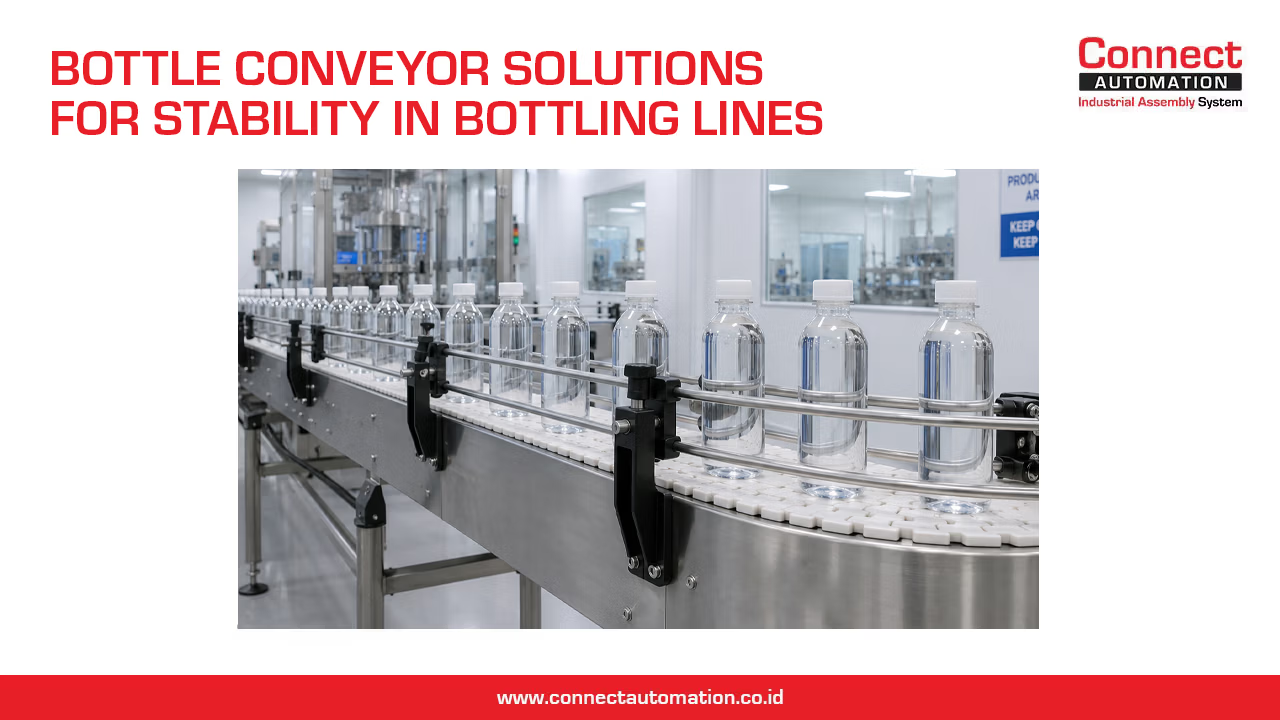
In modern beverage industries, bottle stability during transfer is one of the key factors in maintaining smooth and efficient production. In high-speed bottling lines, unstable bottles can cause various issues such as product tipping, accumulation, and disruptions in filling, labeling, and packaging processes.
Therefore, a conveyor system for bottle handling requires more than just a standard conveyor. It needs a well-designed system that can maintain a stable, organized, and consistent product flow throughout the production process. In many beverage industries, modular conveyor systems such as FlexLink and Modu are widely used because they provide better stability compared to conventional table top chain conveyor systems.
Challenges in Bottle Handling on Bottling Lines
Bottles are transported in an upright position, making them more sensitive to instability compared to many other types of products. As production speed increases, the risk of bottles shifting or falling during transfer becomes higher.
Common challenges in bottle conveyor systems include:
- Unstable bottle movement
- Product accumulation in specific areas
- Pressure between bottles during accumulation
- Disruptions at transfer points between machines
- Risk of tipping on conveyor curves
These issues can lead to downtime and reduce overall production efficiency.
Why Conventional Conveyors Often Face Limitations
In many conventional conveyor systems, maintaining bottle stability becomes challenging, especially in high-speed applications. This is usually caused by:
- Less precise chain surfaces
- Inconsistent conveyor movement
- System vibration
- Insufficient chain-to-chain alignment
- Large curve radii
When bottles pass through curve or transfer sections, these conditions can lead to unstable flow and increase the risk of bottle jams or product falls.
Table Top Chain for Bottle Conveyors
For bottling line applications, table top chain conveyors are commonly used because they provide a flat and stable surface for bottle transportation.
This system allows products to move continuously while maintaining their upright position along both straight and curved conveyor paths. It is also well-suited for automated production systems with high capacity requirements.
In beverage industries, modular conveyor systems such as FlexLink and Modu are increasingly used because they offer improved bottle stability, especially in modern high-speed bottling line applications. Typical applications include:
- Bottled water
- Soft drinks
- Bottled tea
- Juice products
- Dairy products
- Sauce and Condiment
Industries That Use Bottle Conveyors
Bottle conveyors are widely used across various industries that require stable, efficient, and hygienic liquid filling and packaging processes. The system plays a critical role in ensuring smooth production flow from filling to packaging stages. Below are the main industries that commonly use bottle conveyor systems:
- Beverage industry Used in bottling lines for mineral water, soft drinks, juices, and health beverages. Bottle conveyors help maintain a stable production flow throughout filling, capping, and packaging processes.
- Pharmaceutical industry Applied in the filling of liquid medicines, syrups, and other sterile products that require high precision and strict hygiene standards.
- FMCG (Fast Moving Consumer Goods) industry Used for household liquid products such as liquid soap, detergents, floor cleaners, and other large-scale consumer products.
- Cosmetics industry Supports the filling of products such as shampoo, lotion, toner, and skincare items in bottle packaging with stable and clean handling requirements.
- Special chemical industry Used for handling certain non-food liquid chemicals that require specific safety and controlled handling standards.
Importance of Precise Curve Radius Design
One of the most critical aspects in bottle conveyor design is the curve radius. Modern bottling lines often require complex layouts with multiple turns and direction changes. If the curve radius is too large or the chain movement lacks precision, bottle stability can be compromised when passing through curved conveyor sections.
Modular systems such as FlexLink and Modu allow for tighter and more precise curve radii compared to conventional table top chain conveyors. This results in smoother product transfer and improved bottle stability throughout the system.
This advantage is one of the main reasons why FlexLink systems are widely used in high-speed bottling and beverage production lines.
The Role of Side Guides in Bottle Stability
In addition to the conveyor chain, side guides or guide rails play an important role in maintaining bottle positioning during transfer. Side guides help to:
- Maintain bottle alignment along the conveyor path
- Reduce the risk of product tipping
- Stabilize bottles in curved sections
- Ensure smooth and organized product flow
In modular conveyor systems such as FlexLink and Modu, side guides are typically designed with higher precision to follow the conveyor path, including tight curve sections.
Turntables and Accumulators in Bottling Lines
In bottling systems, additional components are often used to ensure smooth production flow.
Turntable
A turntable is commonly used as a temporary buffer zone to assist product transfer between operators or machines.
Accumulator
An accumulator is used to temporarily store bottles when there is a speed difference between production machines. These components are essential for maintaining stable flow and preventing bottlenecks in modern bottling lines. Find more detailed information about accumulators in the following article: What Is an Accumulation Conveyor and Why Is It Important.
Why Many Bottling Lines Use FlexLink and Modu Systems
In modern bottling industries, the demand for stable and precise conveyor systems continues to grow. As a result, many production lines adopt modular conveyor systems such as FlexLink and Modu, especially in high-speed and complex layout applications.
Unlike conventional table top chain conveyors, FlexLink and Modu systems are designed with a modular and highly precise structure, allowing smoother and more consistent product movement. Key reasons for their widespread use include:
- Improved bottle stability
- Tighter and more precise curve radius
- Reduced vibration during product transfer
- Suitable for continuous flow production
- High flexibility for conveyor layout expansion
- Improved long-term operational reliability
With this level of stability, risks such as bottle jams, product falls, and flow disruptions can be significantly reduced.
Why Modular Conveyor Systems Are Widely Used
Today, many industries are shifting toward modular conveyor systems because they offer better flexibility and stability compared to conventional systems. Key advantages include:
- More stable product movement
- Minimal vibration
- High flexibility for complex layouts
- Easy system expansion and modification
- Suitable for automated production systems
FlexLink and Modu conveyor systems are also known for their high precision, which helps maintain consistent product flow in high-speed bottling operations.
The Importance of Selecting the Right Conveyor System
In bottling line applications, product stability is not determined solely by the type of conveyor chain, but by the overall system design. A proper combination of:
- Table top chain
- Correct curve radius
- Side guides
- Turntables
- Accumulators
will significantly impact overall conveyor performance. Selecting the right system helps reduce downtime, maintain product stability, and improve long-term production efficiency.
Hygienic Standards and the Use of Stainless Steel in Bottle Conveyor Systems
In bottle conveyor applications, especially in industries that handle liquid products, hygiene standards are a critical factor. This is particularly important in the food and beverage, pharmaceutical, and cosmetics industries, where product safety and cleanliness directly affect quality and compliance with industrial regulations. Therefore, conveyor systems must be designed to minimize contamination risks and support easy cleaning processes.
One of the most commonly used materials to meet these hygienic requirements is stainless steel. Stainless steel conveyor structures offer high corrosion resistance, strong durability, and easy cleanability, making them suitable for washdown production environments. In addition, stainless steel helps maintain a clean and professional production environment while supporting the implementation of industry standards such as GMP (Good Manufacturing Practice) and HACCP (Hazard Analysis and Critical Control Points), which are widely applied in the food, beverage, pharmaceutical, and FMCG industries. Both standards play an important role in ensuring that production processes remain safe, hygienic, and compliant with applicable regulations.
Conclusion
Bottle conveyors in bottling lines require systems specifically designed to maintain product stability during transfer. In modern high-speed production lines, precision conveyor systems play a critical role in ensuring smooth and efficient operations. In addition to table top chain conveyors, supporting components such as side guides, turntables, and accumulators are essential in creating a stable and consistent product flow.
Modular conveyor systems such as FlexLink and Modu have become widely used solutions due to their superior stability, layout flexibility, and higher precision compared to conventional conveyor systems. With the right system design, bottle conveyors can significantly improve production efficiency, reduce downtime risks, and ensure stable performance across the entire bottling line.
As the speed and complexity of modern bottling lines continue to increase, conveyor design plays a critical role in maintaining product stability and ensuring smooth production flow. In addition to selecting the appropriate chain type, factors such as conveyor construction, ease of maintenance, and overall system design approach also contribute to long-term operational performance. To learn more about the standards and design principles commonly applied to modern Table Top Chain Conveyor systems, you can read our article Modern Table Top Chain Conveyor Standards for Hygienic Industries.
Connect Automation specializes in providing automation solutions, including conveyor systems, to improve efficiency across various industries. The company delivers cutting-edge technology to help organizations automate tasks and optimize workflows. Connect Automation helps businesses reduce manual efforts, boost productivity, and achieve better outcomes. With a customer-focused approach, the company designs tailored solutions to ensure smooth and effective automation transitions for long-term success.
Kawasan Industri Jababeka Tahap 1, Jl. Jababeka II D Blok C14L Cikarang, Indonesia (17530)
(021) 893 5060 Google Maps
Rungkut Industri III, No. 37, Rungkut Menanggal, Kec. Gn. Anyar Surabaya, Indonesia (60293)
(031) 9985 8624 Google Maps