
REQUEST A FREE ESTIMATE!
Table Top Chain Conveyor for Modern FMCG Production Efficiency
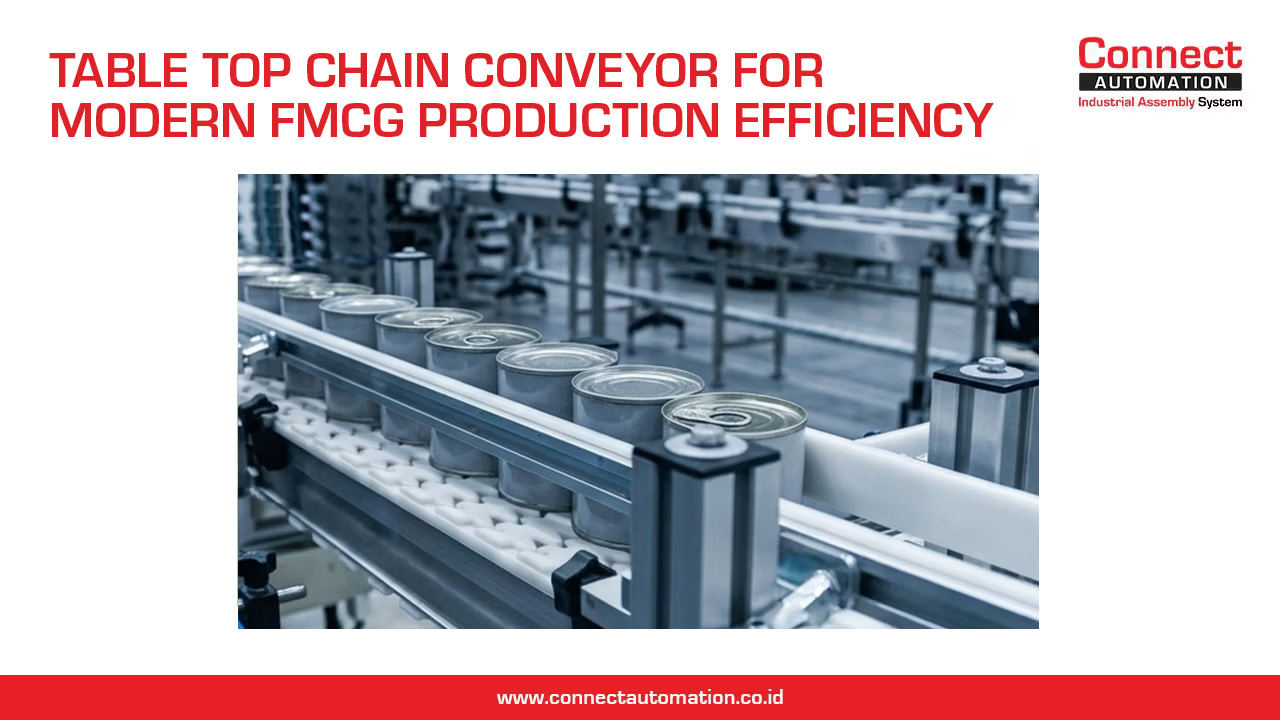
Table Top Chain Conveyor for the FMCG (Fast Moving Consumer Goods) Industry
The FMCG (Fast Moving Consumer Goods) industry is one of the largest manufacturing sectors with extremely high production volume and continuous operation requirements. Products such as soap, shampoo, detergent, packaged food, beverages, and various personal care items are produced at large scale to meet fast-moving market demand.
In modern production systems, smooth and stable product flow is a key factor in maintaining efficiency and consistency. Therefore, the Table Top Chain Conveyor (TTC) plays a crucial role in FMCG material handling systems.
1. Introduction to the FMCG Industry and Mass Production Characteristics
The FMCG industry is characterized by high-speed, continuous, and high-volume production processes. Production lines are designed to operate for long hours with minimal downtime.
In this environment, conveyors are not only transport systems but also an essential part of production synchronization between machines.
2. Product Types in FMCG Production Lines
Common FMCG products include:
- liquid and bar soap
- shampoo and conditioner
- detergents and household cleaners
- packaged food products
- ready-to-drink beverages
- personal care products
- Sauce and kitchen seasoning products
Each product has different packaging characteristics, requiring flexible and stable conveyor systems.
3. Mass Production Characteristics
FMCG production lines typically involve:
- high-volume production
- high-speed filling and packaging
- various packaging formats such as bottles, pouches, and sachets
- continuous production flow
- focus on efficiency in time and cost
Therefore, material handling systems must ensure consistent and uninterrupted product flow.
4. Material Handling Challenges
Common challenges in FMCG material handling include:
- handling large product volumes
- stability of lightweight and liquid products
- synchronization between production machines
- frequent changeovers in packaging formats
- requirement for continuous flow without downtime
These challenges make conveyor selection a critical factor in production efficiency.
5. Role of Table Top Chain Conveyor
Table Top Chain Conveyor plays an important role in FMCG production lines, such as:
- transfer between filling, capping, and labeling machines
- line integration for high-speed production systems
- buffering and accumulation systems
- maintaining stable product flow
- supporting mass production automation
With stable product flow, the entire production process becomes more efficient and controlled. With stable product flow, the entire production process becomes more efficient and controlled.
6. Conveyor System Requirements
To support modern FMCG production, conveyor systems must provide:
- high speed with consistent stability
- flexible production layout
- easy cleaning system
- compatibility with multiple packaging formats
- durability for 24/7 operation
In addition, the system must be easily integrated with automated production machines.
7. Conveyor Design for Modern Production
Common conveyor configurations in FMCG industries include:
- straight line conveyor systems
- curved conveyors for optimized layout
- accumulation conveyors for buffering products
- multi-lane conveyor systems
- adjustable guide systems for different package sizes
Proper conveyor design improves space efficiency and production stability.
8. Conveyor Integration with Production Machines
In FMCG production lines, conveyors are typically integrated with:
- high-speed filling machines
- sealing and packaging machines
- automatic labeling systems
- cartoning and secondary packaging systems
- palletizing system integration
This ensures continuous and synchronized production flow.
9. High-Speed Conveyor for FMCG
As modern FMCG production continues to evolve, the demand for higher stability and precision in conveyor systems is also increasing, especially in high-speed production lines.
In many applications, modular conveyor systems such as FlexLink are used as a reference due to their ability to maintain stable product flow in high-speed environments. FlexLink is well known for its precise flow control compared to conventional conveyor systems.
In addition, systems such as Modu are widely used in FMCG production lines that require flexible layouts and modular integration in complex production environments.
These modular approaches, including FlexLink and Modu, help improve product stability, maintain consistent flow, and enhance efficiency in modern production systems.
10. Hygienic Standards in Mass Production (Summary)
In the FMCG industry, hygienic standards are essential for ensuring product quality. Key aspects include:
- hygiene control in mass production environments
- use of safe and food-grade materials
- prevention of product contamination
- easy-to-clean system design
- compliance with general industry regulations
(For detailed explanations, refer to HACCP, GMP, and BPOM-related articles.)
11. Efficiency and Optimization in Modern Production
Proper conveyor system selection can improve production efficiency through:
- increased production throughput
- reduced downtime
- stable product flow
- optimized plant layout
- improved automation efficiency
12. Conclusion
Table Top Chain Conveyor is an essential material handling system in modern FMCG production. It helps maintain product flow stability, improves production efficiency, and ensures synchronization between machines in mass production lines.
As industry requirements continue to evolve, modular conveyor approaches such as FlexLink and Modu are increasingly used as references in modern conveyor system development.
In practice, conveyor systems developed by Connect Automation follow design principles similar to FlexLink, where product flow stability and motion precision are key factors in achieving optimal performance in modern FMCG production lines.
At many modern FMCG facilities, the need for production efficiency often goes hand in hand with requirements for hygiene and ease of system maintenance. Therefore, understanding conveyor design standards plays an important role in supporting overall production line performance. To learn more about the standards commonly applied to modern hygienic conveyor systems, you can read our article Modern Table Top Chain Conveyor Standards for Hygienic Industries.
13. Supporting Conveyor Solutions for the FMCG Industry
While table top chain conveyors are widely used in FMCG production lines, several other conveyor types also play an important role in supporting overall production efficiency. The selection of a conveyor system is typically based on product characteristics, hygiene requirements, and the specific processes involved within the production line.
For applications that require high hygiene standards, PU belt conveyors are often preferred due to their smooth surface and ease of cleaning. In secondary packaging areas and carton handling processes, green PVC belt conveyors provide a cost-effective and reliable solution. Meanwhile, modular conveyors are commonly used in production lines that require flexible layouts, easy maintenance, and the ability to accommodate both straight and curved conveyor paths.
In practice, many FMCG manufacturers integrate multiple conveyor technologies within a single production line to create a more efficient, streamlined, and application-specific material handling system.
Connect Automation specializes in providing automation solutions, including conveyor systems, to improve efficiency across various industries. The company delivers cutting-edge technology to help organizations automate tasks and optimize workflows. Connect Automation helps businesses reduce manual efforts, boost productivity, and achieve better outcomes. With a customer-focused approach, the company designs tailored solutions to ensure smooth and effective automation transitions for long-term success.
Kawasan Industri Jababeka Tahap 1, Jl. Jababeka II D Blok C14L Cikarang, Indonesia (17530)
(021) 893 5060 Google Maps
Rungkut Industri III, No. 37, Rungkut Menanggal, Kec. Gn. Anyar Surabaya, Indonesia (60293)
(031) 9985 8624 Google Maps