REQUEST A FREE ESTIMATE!
What Is a Conveyor Filling Line Functions and Key Benefits
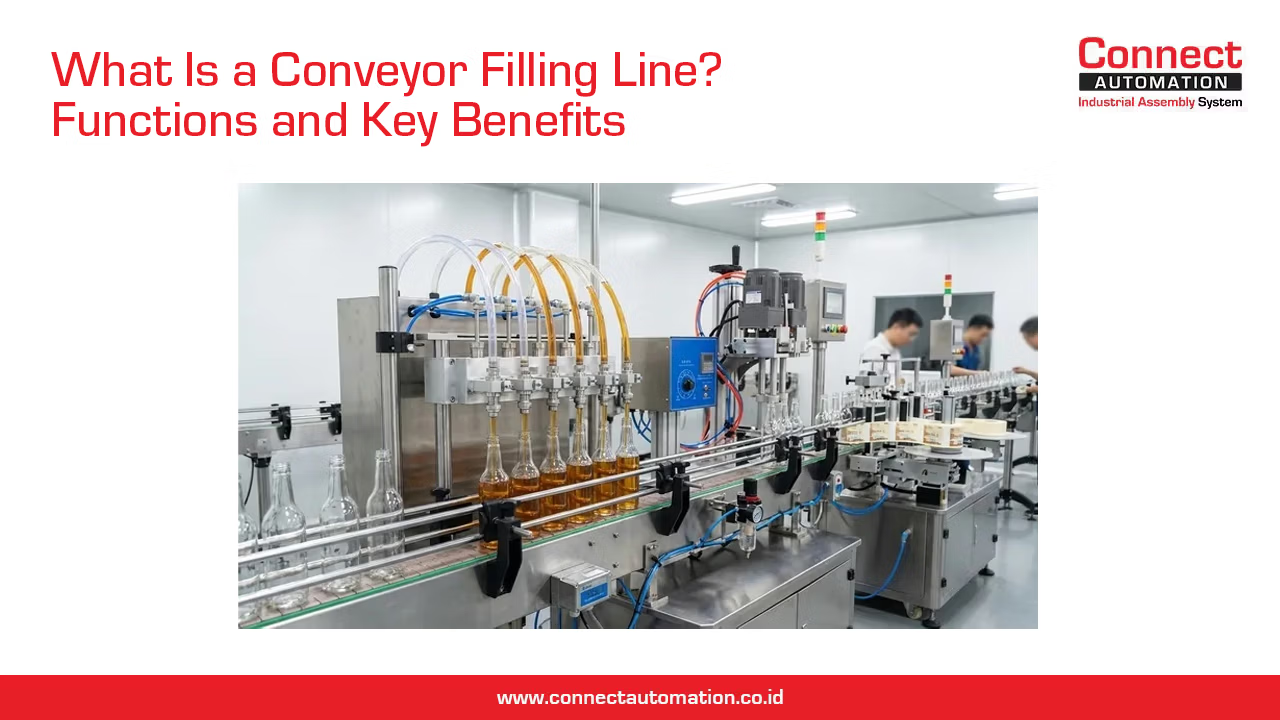
In industries such as food and beverage, pharmaceuticals, cosmetics, FMCG, and chemicals, the filling process is one of the most critical stages in the production line. During this process, products are filled into containers before moving on to subsequent operations such as capping, labeling, inspection, and final packaging.
To ensure these processes run efficiently, manufacturers require a system that can transport products smoothly and consistently between machines. This is where a conveyor filling line plays an essential role. More than just a product transfer system, a conveyor helps maintain a continuous product flow, supports machine synchronization, and improves overall production efficiency.
By implementing the right conveyor system, manufacturers can reduce bottlenecks, increase productivity, and maintain product quality throughout the entire production process.
What Is a Conveyor Filling Line?
A conveyor filling line is a conveyor system designed to support the filling process by transporting products through different stages of production. It connects multiple machines within the production line, ensuring products move in a controlled and efficient manner from one process to the next.
In a typical filling line, the conveyor system connects:
- In a typical filling line, the conveyor system connects:
- Filling machine
- Capping machine
- Labeling machine
- Inspection system
- Packaging area
A properly designed conveyor system ensures each machine receives products consistently, helping the entire production line operate at peak performance.
Common products handled in filling lines include:
- Plastic bottles
- Glass bottles
- Cans
- Jars
- Pharmaceutical vials
- Yogurt cups
- Cosmetic products
- Liquid chemical products
Common Challenges in Filling Lines
Although filling lines appear straightforward, several operational challenges can impact productivity and efficiency.
1. Inconsistent Product Flow
Filling machines require a continuous and stable supply of products. When product flow becomes inconsistent, machine performance may decline and production output can be reduced.
2. Different Machine Speeds
Each machine within a filling line may operate at different speeds. Filling, capping, labeling, and packaging equipment often have varying capacities, requiring a conveyor system that can maintain a balanced product flow.
3. Production Bottlenecks
When one machine slows down or temporarily stops, products may accumulate in certain areas, creating bottlenecks that disrupt the overall production process.
4. Limited Production Space
Many manufacturing facilities operate within space constraints. Conveyor systems must be able to adapt to available layouts while maintaining efficient product movement.
5. High-Speed Production Requirements
Modern manufacturing environments often operate at high production rates and extended operating hours. Conveyor systems must provide reliable performance under demanding conditions.
Why Is a Conveyor Important in a Filling Line?
The role of a conveyor in a filling line extends far beyond simply moving products from one point to another.
1. Maintaining Continuous Product Flow
Conveyors ensure products move smoothly and continuously through each stage of production, minimizing interruptions and improving efficiency.
2. Connecting Multiple Production Machines
Modern filling lines consist of several interconnected machines. Conveyor systems serve as the link between these processes, ensuring seamless operation throughout the production line.
3. Supporting Production Automation
Conveyors can be integrated with sensors, control systems, and automation technologies, helping manufacturers improve operational efficiency and process consistency.
4. Reducing Manual Handling
By automating product transportation, conveyor systems reduce the need for manual handling, minimizing the risk of product damage and operational errors.
Types of Conveyors Commonly Used in Filling Lines
The choice of conveyor depends on the product characteristics, production capacity, and application requirements.
Table Top Chain Conveyor
Table Top Chain Conveyors are among the most widely used conveyor systems in filling line applications, particularly for handling bottles, cans, jars, and other rigid containers.
Key advantages include:
- Suitable for high-speed production environments
- Capable of handling straight sections and curves
- Provides smooth and consistent product flow
- Easy integration with filling, capping, and labeling equipment
Because of their versatility, Table Top Chain Conveyors are commonly found in food and beverage, pharmaceutical, cosmetic, and FMCG production facilities.
Modular Belt Conveyor
Modular Belt Conveyors are often selected for products requiring a larger contact surface area.
Typical applications include:
- Yogurt cups
- Food trays
- Plastic containers
- Products with wider bases
Their modular design also simplifies maintenance and component replacement while providing excellent product stability. Learn more about modular conveyors through the following article: Benefits from Using Modular Conveyor.
Why Is FlexLink Widely Used in Filling Lines?
In modern filling line applications, particularly within pharmaceutical, food and beverage, cosmetic, and FMCG industries, FlexLink conveyor systems have become one of the most widely adopted solutions.
It is important to understand that FlexLink is fundamentally a Table Top Chain Conveyor system. However, FlexLink has been specifically engineered for industries that demand higher levels of hygiene, reliability, and operational performance.
One of the main reasons FlexLink is frequently chosen for filling lines is its ability to maintain a smooth and consistent product flow. Since filling operations rely heavily on stable product movement, any disruption can negatively affect filling accuracy and overall line efficiency.
FlexLink systems are specifically designed to support these demanding production environments by providing excellent product stability throughout the entire process.
Another significant advantage is the use of conveyor components and chain materials designed for hygienic production environments. The white chain material commonly used in FlexLink systems allows easier visual inspection and supports facilities that maintain strict sanitation and quality standards.
This makes FlexLink particularly suitable for industries operating under stringent regulatory and quality requirements, including facilities that follow HACCP principles, food safety regulations, and pharmaceutical manufacturing standards.
Key advantages of FlexLink conveyor systems in filling line applications include:
- Consistent product flow in high-speed production environments
- Excellent product stability during transportation
- Efficient handling of both straight and curved conveyor layouts
- Easy integration with filling, capping, labeling, and packaging equipment
- Support for accumulation systems to minimize bottlenecks
- Space-efficient layouts for optimized factory floor utilization
- Suitable for hygienic production environments
- Flexible design that supports future line expansion and modifications
The combination of hygiene, flexibility, and operational reliability has made FlexLink one of the preferred conveyor solutions for modern filling lines across multiple industries.
Factors to Consider When Selecting a Conveyor Filling Line
Several factors should be evaluated before choosing a conveyor system for a filling line application.
1. Product and Packaging Type
Different products and container designs require different conveyor solutions to ensure reliable handling.
2. Production Capacity
The required production output directly influences conveyor specifications and system design.
3. Hygiene Requirements
Food, beverage, pharmaceutical, and cosmetic manufacturers often require conveyor systems that support easy cleaning and compliance with strict hygiene standards.
4. Conveyor Material
Material selection, such as aluminum or stainless steel construction, should be based on environmental conditions and operational requirements.
5. Accumulation Requirements
Many modern filling lines utilize accumulation systems to manage speed differences between machines and maintain a smooth production flow.
6. Future Expansion Potential
Flexible conveyor systems make it easier to modify layouts or increase production capacity as operational requirements evolve.
Conclusion
A conveyor filling line is a critical component of modern manufacturing operations, connecting multiple filling and packaging processes into one integrated production flow. Beyond product transportation, conveyor systems help improve efficiency, support automation, and reduce production disruptions.
Among the available solutions, FlexLink Table Top Chain Conveyor systems are widely used in modern filling lines because they are specifically designed for industries that require high hygiene standards, excellent product stability, and flexible layouts. These advantages make FlexLink an ideal solution for food and beverage, pharmaceutical, cosmetic, FMCG, and other manufacturing environments where reliable and consistent production performance is essential.
Connect Automation specializes in providing automation solutions, including conveyor systems, to improve efficiency across various industries. The company delivers cutting-edge technology to help organizations automate tasks and optimize workflows. Connect Automation helps businesses reduce manual efforts, boost productivity, and achieve better outcomes. With a customer-focused approach, the company designs tailored solutions to ensure smooth and effective automation transitions for long-term success.
Kawasan Industri Jababeka Tahap 1, Jl. Jababeka II D Blok C14L Cikarang, Indonesia (17530)
(021) 893 5060 Google Maps
Rungkut Industri III, No. 37, Rungkut Menanggal, Kec. Gn. Anyar Surabaya, Indonesia (60293)
(031) 9985 8624 Google Maps