
REQUEST A FREE ESTIMATE!
Table Top Chain Conveyor in Modern Cosmetic Industry
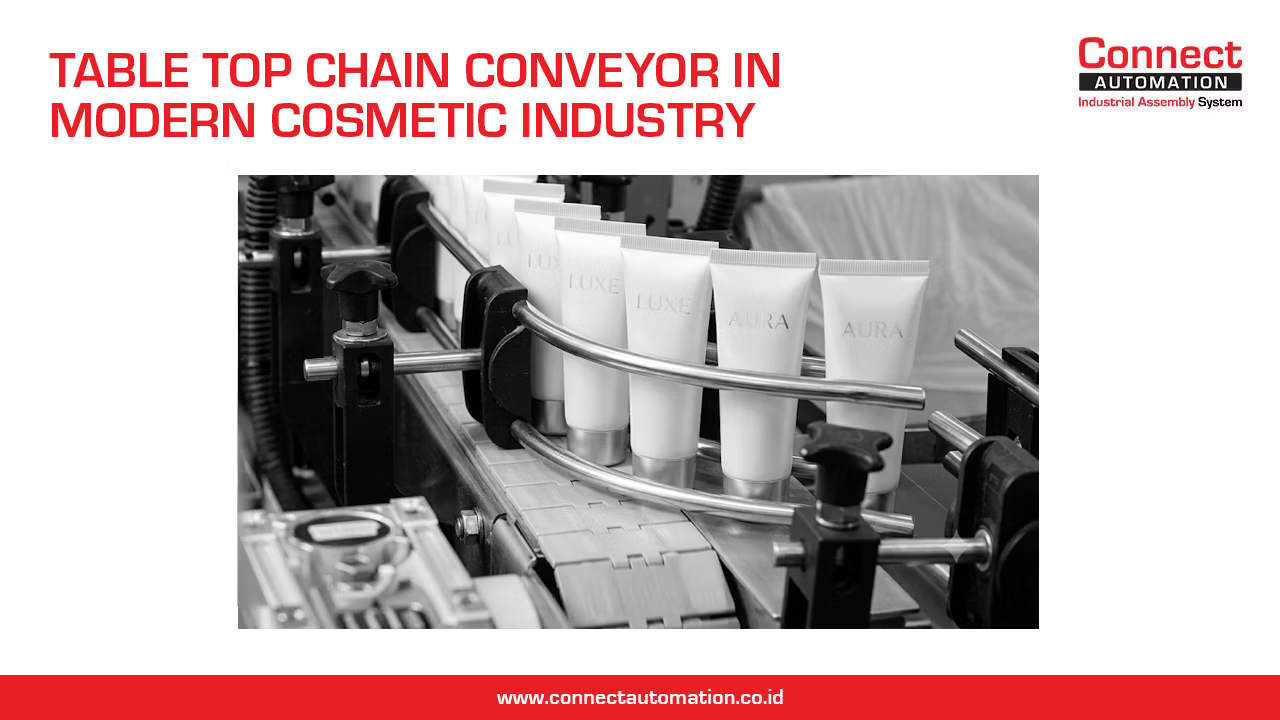
The cosmetic industry is one of the fastest-growing manufacturing sectors, with increasing demand for efficiency, consistency, and flexibility in production systems. Products such as lotion, cream, serum, shampoo, and face wash come in various packaging types and characteristics, requiring a stable and adaptable material handling system.
In modern production systems, the Table Top Chain Conveyor (TTC) plays a crucial role in ensuring smooth and consistent product flow between different production stages.
1. Introduction to the Cosmetic Industry and Modern Production Systems
Modern cosmetic manufacturing is not only focused on product quality but also on production efficiency. Each production line is designed to operate continuously with high speed and stable performance.
In this system, conveyors act as a critical link between machines and play an important role in maintaining production flow consistency.
2. Characteristics of Cosmetic Products in Production Lines
Cosmetic products vary widely, including:
- lotion
- cream
- serum
- shampoo
- face wash
These products are typically packed in bottles, tubes, and jars of different sizes, requiring a flexible and stable handling system.
3. Production Requirements in the Cosmetic Industry
Modern cosmetic production lines require systems that can support:
- high-speed production
- various packaging shapes and sizes
- handling of liquid and semi-liquid products
- stable transfer conditions
- efficient inter-machine synchronization
4. Material Handling Challenges in the Cosmetic Industry
Key challenges in cosmetic material handling include:
- risk of product spillage
- instability of lightweight packaging
- variations in bottle and container sizes
- synchronization between production machines
- requirement for continuous flow systems
5. Role of Table Top Chain Conveyor in the Cosmetic Industry
Table Top Chain Conveyor functions as a key connection between production processes, such as:
- transfer from filling to capping machines
- integration with labeling systems
- connection between packaging machines
- maintaining stable product flow
- supporting high-speed production lines
This system ensures a more controlled and efficient production process.
6. Conveyor System Requirements for the Cosmetic Industry
To meet cosmetic industry needs, conveyor systems must provide:
- high product flow stability
- hygienic and easy-to-clean design
- compatible and safe material selection
- flexible production layout
- compatibility with various packaging types
7. Conveyor Design in Cosmetic Production Lines
Common conveyor configurations include:
- straight-line conveyors for simple production flow
- curved conveyors for optimized factory layout
- accumulation systems for buffering products
- side guide systems for bottle stability
- adjustable width conveyors for different package sizes
8. Integration of Table Top Chain Conveyor with Production Machines
Conveyor systems in the cosmetic industry are typically integrated with:
- filling machines for liquid and semi-liquid products
- capping machines for sealing processes
- labeling machines for product identification
- sealing systems for packaging
- cartoning and final packaging systems
This integration ensures a continuous and efficient production flow.
9. Evolution of Modular Conveyor Systems in Cosmetic Industry
In modern cosmetic production systems, the need for higher stability, precision, and flexibility continues to increase, especially in high-speed production lines.
Conventional table top chain conveyor systems are still widely used in the cosmetic industry. However, for applications requiring higher control of product flow, modular conveyor approaches are increasingly adopted.
One of the most commonly used references in modern conveyor design development is modular systems such as FlexLink, known for its high precision in maintaining stable product flow in high-speed production lines. FlexLink is often used as a benchmark in cosmetic conveyor systems that require consistent product movement and controlled flow.
In addition, systems such as Modu are widely applied in layouts that require higher flexibility and complex routing configurations. Modu is often preferred in cosmetic production lines with dynamic space requirements and multiple production paths.
In several industrial implementations, design approaches combining both FlexLink and Modu are used as references for developing modern conveyor systems due to their ability to improve stability, flexibility, and production efficiency.
This modular approach using FlexLink and Modu reflects the evolution of cosmetic conveyor systems toward more precise and controlled designs compared to conventional systems. Read more about why Flexlink and Modu are perfect for the cosmetics industry through the following article: Application of Chain Modu and FlexLink in Hygienic Industry.
10. Hygienic Standards in the Cosmetic Industry (Summary)
Hygienic standards in the cosmetic industry are generally applied through:
- implementation of basic hygiene principles in production
- control of production areas and equipment
- use of safe and compatible materials
- prevention of cross-contamination
- easy-to-clean system design
- quality control in filling and packaging processes
- compliance with cosmetic industry regulations
(For more detailed standards, refer to HACCP, GMP, and BPOM-related articles.)
In addition to conveyor design, the selection of frame materials is also an important factor in supporting hygienic standards in the cosmetics industry. Stainless steel is one of the most commonly used materials due to its corrosion resistance, ease of cleaning, and ability to maintain a hygienic production environment over the long term. However, not all stainless steel grades offer the same characteristics. The choice between stainless steel 304 and 316 should be based on the production environment, cleaning procedures, and the level of exposure to chemicals used during manufacturing. To learn more about the differences between these materials, you can read the article on stainless steel 304 vs 316 for conveyor applications.
11. Production Efficiency in Modern Cosmetic Lines
Proper conveyor system selection can improve production efficiency through:
- increased production throughput
- reduced machine downtime
- stable product flow
- optimized plant layout
- improved output consistency
12. Conclusion
Table Top Chain Conveyor is an essential component in modern cosmetic manufacturing. It plays a vital role in maintaining product flow stability, improving production efficiency, and supporting flexible production layouts.
As industrial demands continue to evolve, conveyor systems are also shifting toward more modular and precision-based designs. Systems such as FlexLink and Modu serve as key references in developing modern conveyor solutions that emphasize stability, flow control, and layout flexibility.
In practice, conveyor systems developed by Connect Automation follow design principles similar to FlexLink, where stability and precision are the key factors in achieving optimal performance. This approach ensures that conveyor systems can operate efficiently across various cosmetic production applications with high reliability, For more detailed information about this conveyor standard, you can read the article Modern Table Top Chain Conveyor Standards for Hygienic Industries.
Connect Automation specializes in providing automation solutions, including conveyor systems, to improve efficiency across various industries. The company delivers cutting-edge technology to help organizations automate tasks and optimize workflows. Connect Automation helps businesses reduce manual efforts, boost productivity, and achieve better outcomes. With a customer-focused approach, the company designs tailored solutions to ensure smooth and effective automation transitions for long-term success.
Kawasan Industri Jababeka Tahap 1, Jl. Jababeka II D Blok C14L Cikarang, Indonesia (17530)
(021) 893 5060 Google Maps
Rungkut Industri III, No. 37, Rungkut Menanggal, Kec. Gn. Anyar Surabaya, Indonesia (60293)
(031) 9985 8624 Google Maps