
REQUEST A FREE ESTIMATE!
Stainless Steel 304 vs 316 for Industrial Conveyor Applications
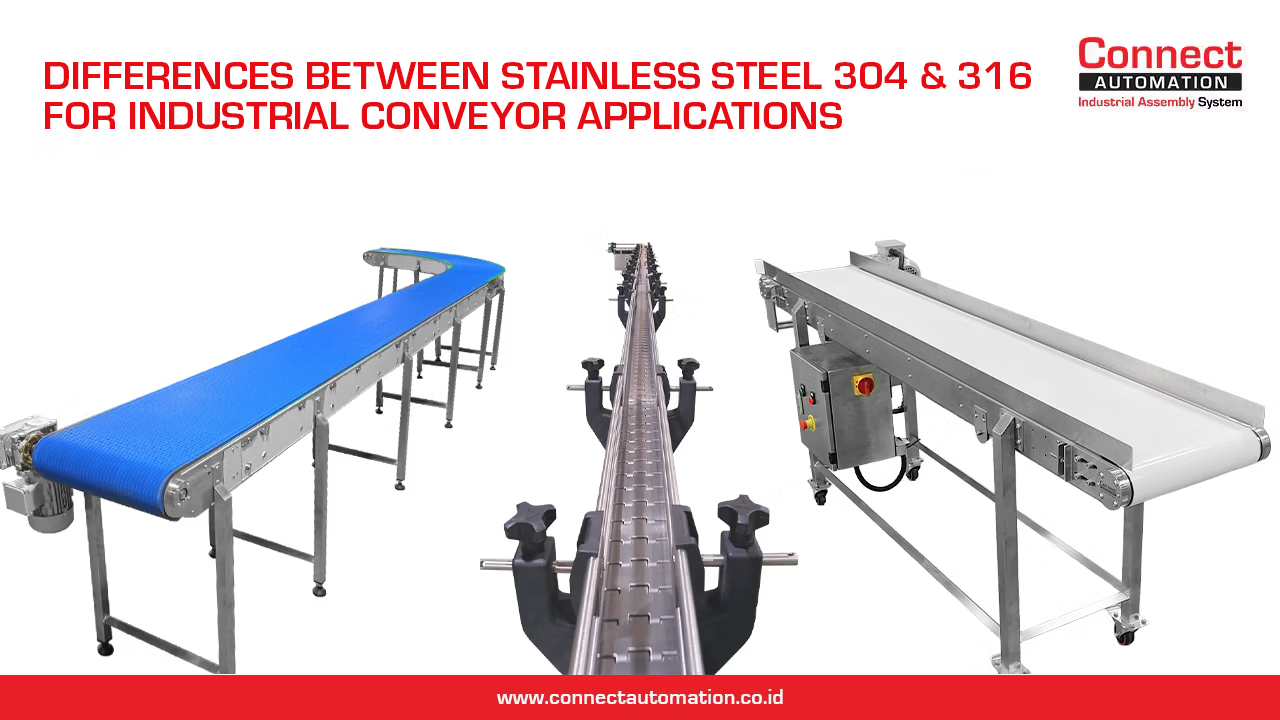
Why Material Selection Matters in Conveyor Systems
In industrial conveyor systems, material selection is not merely about appearance or initial cost. The frame, support structure, housing, and other components directly influence durability, lifespan, and long-term maintenance expenses.
Different production environments expose equipment to varying levels of humidity, chemicals, cleaning agents, and even salt content in the air. Therefore, choosing the correct stainless steel grade is a critical technical decision.
The two most commonly used stainless steel grades in industrial conveyor applications are Stainless Steel 304 and Stainless Steel 316. While they may appear similar visually, their performance differs significantly when exposed to corrosive environments.
What Is Stainless Steel 304?
Stainless Steel 304 is the most widely used austenitic stainless steel grade across many industries.
Key Characteristics:
- Contains approximately 18% chromium and 8% nickel
- Good corrosion resistance in standard environments
- Resistant to oxidation and moderate humidity
- Easy to fabricate and weld
In conveyor applications, SS 304 is commonly used for:
- Conveyor frames
- Covers and guards
- Structural supports
- Dry or moderately humid production areas
SS 304 is popular because it provides a balanced combination of corrosion resistance and cost efficiency.
What Is Stainless Steel 316?
Stainless Steel 316 is similar to 304 but includes an additional element: molybdenum (approximately 2–3%). This addition significantly enhances corrosion resistance, especially against:
- Chlorides
- Saltwater exposure
- Harsh cleaning chemicals
- High-moisture environments
Key Characteristics:
- Superior corrosion resistance compared to 304
- Higher resistance to pitting and crevice corrosion
- Suitable for aggressive and corrosive environments
In industrial conveyor systems, SS 316 is typically selected for areas exposed to frequent washdowns, chemical cleaning agents, or salt-rich environments. SUS 316 is a term commonly used in industrial material standards to refer to Stainless Steel 316. This material is well known for its excellent corrosion resistance, particularly in environments exposed to high humidity, chemicals, and salt-containing substances. Due to these characteristics, SUS 316 is widely selected for conveyor applications in the food and beverage, pharmaceutical, and other production environments that require high hygienic standards and superior corrosion resistance. By understanding that SUS 316 is a material designed for more aggressive environments than SS 304, companies can make more informed decisions when selecting conveyor materials that best suit their operational requirements.
Is stainless steel 316 safe for food? In general, stainless steel 316 can be used for food and beverage applications when the material, components, and manufacturing processes meet the requirements applicable to the intended application. Its high corrosion resistance makes stainless steel 316 for food applications a common consideration in production environments that require high levels of hygiene, including areas subject to frequent washdown or exposure to more aggressive substances.
However, the question of whether stainless steel 316 is safe for food cannot be determined based on the material grade alone. Food application suitability is also influenced by material quality, surface finishing, equipment design, fabrication processes, and the implementation of appropriate sanitation standards and procedures. Therefore, using stainless steel 316 for the food and beverage industry requires consideration of the overall system, rather than the stainless steel grade alone.
Comparison Between Stainless Steel 304 and 316
Below is a practical comparison in the context of industrial conveyor applications:
Chemical Composition
304: No molybdenum
316: Contains molybdenum (improved corrosion resistance)
Corrosion Resistance
304: Suitable for normal industrial environments
316: Excellent for corrosive environments
Resistance to Chlorides and Saltwater
304: Limited resistance
316: High resistance
Suitability for Intensive Washdown Areas
304: Acceptable for light cleaning
316: Recommended for frequent and aggressive washdowns
Cost
304: More economical
316: Higher initial cost due to enhanced composition
Although SS 316 has a higher upfront cost, it can reduce long-term maintenance expenses and premature replacement in harsh environments.
So, is stainless steel 304 or 316 better? The answer depends on the operating environment and the requirements of the conveyor application. Stainless Steel 304 can be a suitable choice for production environments with relatively normal operating conditions, while Stainless Steel 316 should be considered for applications exposed to chlorides, salt water, high humidity, or more intensive washdown processes. To determine whether stainless steel 304 or 316 is better, the material characteristics and conveyor operating conditions should be considered as a whole to ensure the selected material is appropriate for the application.
Industries Commonly Using Stainless Steel 304
Stainless Steel 304 is widely used in industries where environmental conditions are relatively stable and non-aggressive.
- Dry Food Processing Industry : Snack manufacturing, bakery products, and dry packaged goods typically operate in low-moisture environments.
- Beverage Industry (Non-Corrosive Areas) : Certain production sections that are not exposed to aggressive cleaning chemicals may use SS 304.
- General Manufacturing : Assembly plants, electronics manufacturing, and automotive component production often rely on SS 304 for conveyor structures
- Packaging Industry : Conveyors used in packaging areas frequently utilize SS 304 due to its adequate corrosion resistance and cost efficiency.
In these environments, SS 304 provides reliable performance at a competitive cost.
Industries Commonly Using Stainless Steel 316
SS 316 is typically required in industries where corrosion risks are significantly higher.
- Seafood Processing Industry : Salt exposure dramatically increases corrosion risk. SS 316 offers enhanced protection against salt-induced damage.
- Meat Processing Industry : Frequent washdowns and sanitization procedures demand higher corrosion resistance.
- Pharmaceutical Industry : Strict hygiene standards and chemical cleaning agents require materials with superior durability
- Chemical Industry : Exposure to corrosive substances necessitates stronger resistance properties.
- Coastal Manufacturing Facilities : Factories located near coastal areas are exposed to salt-laden air, making SS 316 a safer long-term choice.
In these industries, selecting SS 316 for conveyor systems significantly reduces the risk of early material degradation.
When Should You Choose 304, and When Should You Upgrade to 316?
When selecting conveyor materials, the comparison of sus 304 vs sus 316 is one of the most common considerations because both grades share similar base properties but differ significantly in corrosion resistance and suitability for specific environments. The decision between sus 304 vs sus 316 is mainly influenced by exposure conditions such as humidity levels, presence of chlorides, and hygiene requirements in production areas. Therefore, understanding sus 304 vs sus 316 is essential to ensure that material selection is not only cost-effective but also fully aligned with operational demands.
Material selection should always be based on an evaluation of the operational environment. Choose Stainless Steel 304 if:
- The production area is relatively dry
- Chemical exposure is minimal
- There is no significant chloride or salt exposure
- Cost efficiency is a primary consideration
Choose Stainless Steel 316 if:
- The area undergoes frequent washdowns
- Chlorides or salt exposure are present
- The environment is highly humid
- Ideal for wet food, seafood, and pharmaceutical manufacturing
In understanding stainless steel 304 vs 316, the differences between the two should be considered based on the operating environment and application requirements, rather than only on material specifications or price. Stainless Steel 304 can generally be used for applications with relatively normal operating conditions, while Stainless Steel 316 can be considered when the conveyor is exposed to chlorides, high humidity, or more intensive washdown processes. By understanding the characteristics of stainless steel 304 vs 316, material selection can be made more appropriately according to the requirements of the production line.
There is no universally “better” material — only the material that is more appropriate for the specific application.
Conclusion
The difference between Stainless Steel 304 and 316 in industrial conveyor applications lies primarily in their corrosion resistance and suitability for specific environmental conditions. SS 304 offers a cost-effective solution for general industrial use, while SS 316 provides enhanced durability in corrosive and high-humidity environments. Selecting the right material for a conveyor system is not just about initial investment — it directly impacts system lifespan, maintenance costs, and operational reliability. Careful evaluation of industry requirements, environmental exposure, and cleaning procedures ensures the optimal choice between Stainless Steel 304 and 316.
Connect Automation specializes in providing automation solutions, including conveyor systems, to improve efficiency across various industries. The company delivers cutting-edge technology to help organizations automate tasks and optimize workflows. Connect Automation helps businesses reduce manual efforts, boost productivity, and achieve better outcomes. With a customer-focused approach, the company designs tailored solutions to ensure smooth and effective automation transitions for long-term success.
Kawasan Industri Jababeka Tahap 1, Jl. Jababeka II D Blok C14L Cikarang, Indonesia (17530)
(021) 893 5060 Google Maps
Rungkut Industri III, No. 37, Rungkut Menanggal, Kec. Gn. Anyar Surabaya, Indonesia (60293)
(031) 9985 8624 Google Maps