REQUEST A FREE ESTIMATE!
HACCP GMP and BPOM in Modern Hygienic Industry Standards
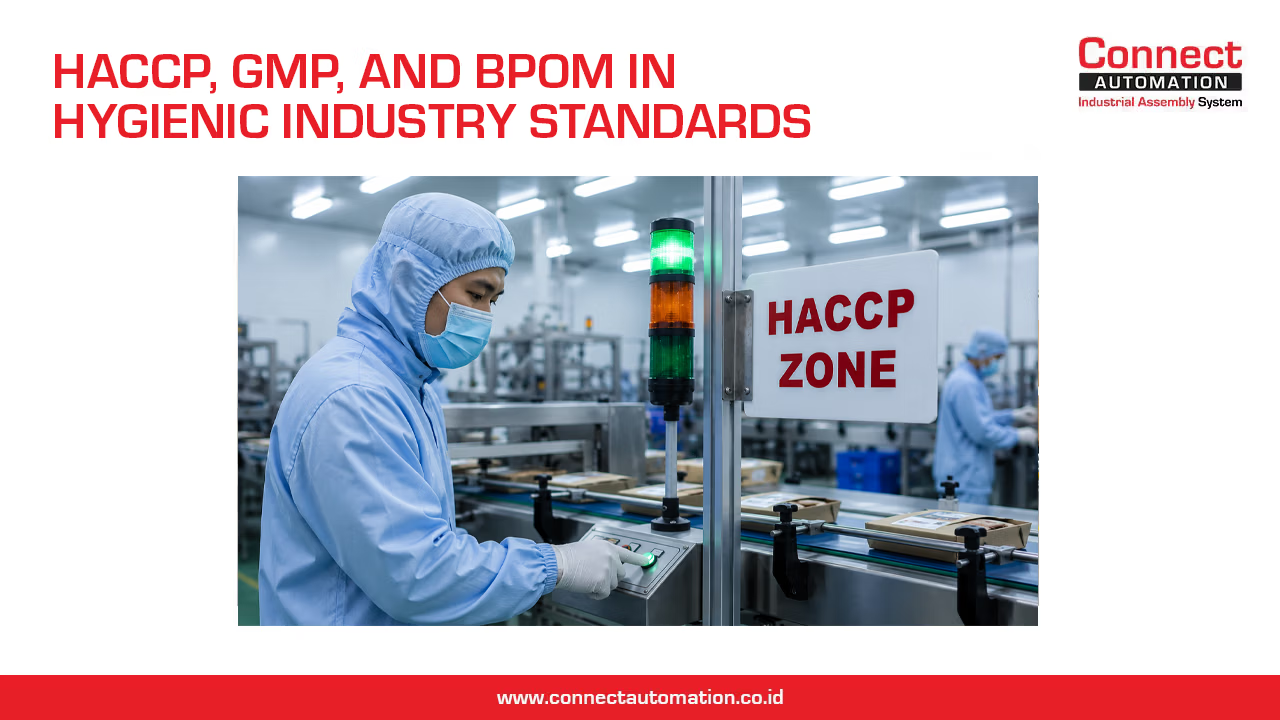
Hygienic industries such as food and beverage, pharmaceuticals, FMCG, cosmetics, and even cigarette manufacturing operate under strict production requirements. Every process must be designed to ensure safety, cleanliness, and consistency while minimizing any risk of contamination.
In modern production systems, the Table Top Chain Conveyor (TTC) plays a critical role in material handling because it ensures stable product flow across multiple stages of production.
However, conveyor usage in hygienic industries is not only about mechanical design, but also compliance with key standards such as HACCP, GMP, and BPOM.
1. Introduction to Conveyor Systems in Hygienic Industries
Conveyor systems are essential components in modern production lines, responsible for transferring products from one process to another in a continuous flow.
In hygienic industries, conveyors are not only transport systems but also part of the overall quality and hygiene control system within production facilities.
2. Role of Table Top Chain Conveyor in Hygienic Production Systems
Table Top Chain Conveyor is widely used in hygienic industries because it provides stable product movement, especially for small and lightweight products such as bottles, cartons, and packaging units.
It can also be easily integrated with various production machines such as filling, capping, labeling, and packaging systems, ensuring an efficient and controlled production flow.
3. Introduction to HACCP in Material Handling Design
HACCP (Hazard Analysis and Critical Control Points) is an international food safety management system focused on identifying potential hazards within production processes.
In conveyor systems, HACCP requires:
- easy-to-clean design
- minimal contamination traps
- food-safe material selection
- stable product flow to prevent damage or contamination
4. Implementation of GMP in Conveyor-Based Production Lines
GMP (Good Manufacturing Practice) ensures that production processes are carried out consistently and in a controlled manner.
In conveyor systems, GMP is related to:
- stable production flow
- consistent speed and product movement
- precise integration between machines
- ease of maintenance and cleaning
5. BPOM and Production Regulations in Indonesia
BPOM (Indonesian Food and Drug Authority) is the regulatory body responsible for ensuring the safety and quality of food, pharmaceutical, and cosmetic products in Indonesia.
In production systems, BPOM is associated with:
- production facility hygiene standards
- process safety compliance
- regulatory approval requirements
6. Relationship Between HACCP, GMP, and BPOM in Conveyor-Based Production Systems
HACCP, GMP, and BPOM complement each other in modern industrial production systems.
HACCP focuses on risk analysis, GMP ensures consistent production processes, while BPOM acts as the regulatory authority ensuring compliance with national standards.
In implementation, conveyor systems play an important role in supporting these standards by maintaining stable, hygienic, and controlled product flow.
7. Requirements of Table Top Chain Conveyor in HACCP, GMP, and BPOM Standards
To comply with hygienic industry standards, Table Top Chain Conveyor systems must meet several key requirements such as stable product flow, hygienic design, food-grade or pharma-grade materials, and the ability to operate at high production speeds.
In addition, the system must ensure consistent product movement to minimize risks of contamination or product damage during production.
8. Evolution of Modular Conveyor Systems in Hygienic TTC Applications
The development of conveyor systems in hygienic industries shows a clear shift from conventional table top chain conveyors toward more modular and precision-based systems.
In conventional systems, the main focus is only product transfer. However, in modern systems, industrial requirements have become more complex, including stable product flow, precise motion control, and greater layout flexibility.
In this context, modular systems such as FlexLink and Modu are often used as references in modern conveyor design development.
FlexLink is known for its high precision in product flow control, especially in high-speed production lines. Meanwhile, Modu is commonly used in applications that require flexible layouts without compromising product stability.
This modular approach shows that modern TTC systems are evolving toward more controlled and efficient designs to meet increasingly strict hygienic industry requirements.
9. Implementation in Food, Pharmaceutical, FMCG, and Cigarette Industries
Table Top Chain Conveyor systems are widely used across various industries such as food and beverage, pharmaceuticals, FMCG, cosmetics, and cigarette manufacturing.
Although each industry has different characteristics, the main principle remains the same: maintaining stable, hygienic, and efficient product flow throughout the production process.
10. Challenges in Implementing Hygienic Standards in TTC Systems
Some of the main challenges in conveyor system implementation include maintaining consistent product flow at high speeds, ensuring easy cleaning and maintenance, and adapting to complex factory layouts.
In addition, synchronization between machines is also a critical factor in maintaining smooth production flow.
11. Conclusion
HACCP, GMP, and BPOM are the fundamental standards in hygienic industrial production systems. In implementation, Table Top Chain Conveyor plays a crucial role as a material handling system that ensures product stability and continuous flow.
As the industry evolves, conveyor systems are also shifting toward more modular and precision-based approaches. Systems such as FlexLink and Modu serve as references in developing modern conveyor designs that are more stable, flexible, and efficient in supporting hygienic industry requirements.
Connect Automation specializes in providing automation solutions, including conveyor systems, to improve efficiency across various industries. The company delivers cutting-edge technology to help organizations automate tasks and optimize workflows. Connect Automation helps businesses reduce manual efforts, boost productivity, and achieve better outcomes. With a customer-focused approach, the company designs tailored solutions to ensure smooth and effective automation transitions for long-term success.
Kawasan Industri Jababeka Tahap 1, Jl. Jababeka II D Blok C14L Cikarang, Indonesia (17530)
(021) 893 5060 Google Maps
Rungkut Industri III, No. 37, Rungkut Menanggal, Kec. Gn. Anyar Surabaya, Indonesia (60293)
(031) 9985 8624 Google Maps