
REQUEST A FREE ESTIMATE!
Benefits from Using Modular Conveyor
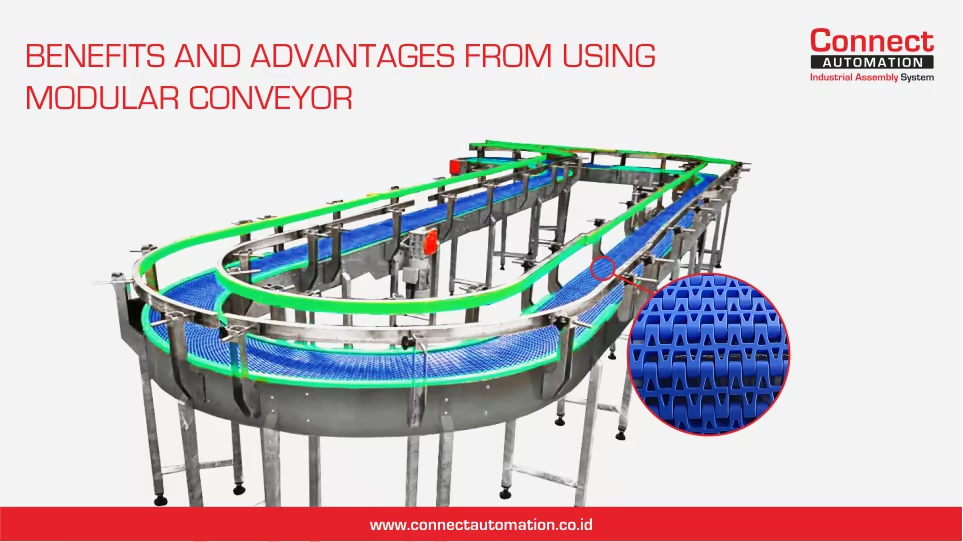
Conveyors have various kinds and their respective advantages. Conveyors can be made into many shapes using various materials for various uses also in production lines. As with this modular conveyor, this type has advantages and disadvantages that make it unique compared to the others. This Modular Conveyor uses a series of plastic modules that function as a belt. This aims to ensure that when the plastic belt experiences problems or is damaged, repairs will not be as expensive and time consuming as traditional conveyor belts. In addition, modular conveyors are usually used in industries that require a high level of sterility.
What Is Modular?
A modular system is a design approach that utilizes standardized components that can be assembled, removed, replaced, or reconfigured as needed. This concept is widely used across various industrial applications because it offers greater flexibility than conventional systems. In conveyor applications, a modular system allows conveyor lines to be extended, shortened, or reconfigured more easily, enabling manufacturers to adapt to changes in production layouts or increased production capacity without replacing the entire conveyor system.
In the context of conveyor systems, the term modular refers to a design built from components that can be assembled, removed, and rearranged according to layout requirements. A modular conveyor consists of standardized parts designed to simplify adjustments in length, direction, and system configuration without requiring custom fabrication. This modular concept makes the system more flexible, easier to maintain, and adaptable to changes in production processes.
Advantages of Using Modular Conveyors
The first advantage of using a modular conveyor is that if there is damage to the belt which functions to lift or move goods, there is no need to replace a complete belt. All that needs to be done is to replace only the damaged modular chain. This will affect time savings, repair costs, as well as work efficiency and effectiveness. The second advantage of a modular conveyor is that this type of conveyor has a belt or belt made of food grade materials. Because the belt is made from food grade material, modular conveyor feeders can be used in industries that require a fairly high level of sterility and are safe for chemicals.
A modular belt conveyor is also known for its flexible design because it is constructed from interconnected plastic modules that can be disassembled and reassembled more easily than conventional belts. This design allows the conveyor system to adapt to various production layouts, including straight lines, curves, and areas with special configurations. In addition, modular belt conveyor systems are widely used in the food, beverage, and packaging industries because they are easier to clean and support modern industrial hygiene standards.
The difference between Belt Conveyors and Modular Conveyors
Modular belt conveyors are conveyors that use belts to move goods from one end to the other just as traditional belt conveyors do. So what is the difference between traditional belt conveyors and modular belt conveyors? Modular belt conveyors use belts designed for modularity. Unlike traditional belts, these modular belts are made from small plastic modules that are joined together, using connecting rods, into a complete modular belt.
Very Low Costs Compared to Conveyor Belts
Changing the belt on a regular conveyor belt requires a lot of processes and also takes a long time to do. With modular conveyor belts, you only need to remove the damaged modular belt and then install a new one. This will reduce the duration of maintenance time and breakdown time so that the production line can run again.
Materials Using Food Grade Materials
Most of the belts on the modular conveyor use plastic materials that are permitted by the FDA (Food and Drug Administration) for direct contact with food. These materials are Polyethylene (PE), Polypropylene (PP) and Polyacetal (POM). If your industry requires a certain level of cleanliness, then use this modular conveyor belt. Don't worry! Not only the food & beverage industry can use it, other industries can also use this modular conveyor belt to move their products.
In addition to meeting food-grade standards, plastic materials used in modular belts are also engineered for durability under various operating conditions. Each material type, such as Polyethylene (PE), Polypropylene (PP), and Polyacetal (POM), offers distinct characteristics, including resistance to temperature, wear, and chemical exposure. This makes modular belts not only hygienic but also reliable for long-term use across different industries. To learn more about material types, durability, and their applications, you can read our article on modular belt plastic materials and their characteristics
In addition to material properties and durability, compliance with industry standards is also a key consideration when selecting a conveyor system, especially in food, beverage, and pharmaceutical industries. The use of food-grade modular conveyor belts can support companies in meeting hygiene and product safety requirements set by regulatory authorities. To gain a deeper understanding of applicable regulations in Indonesia, particularly regarding production facilities and manufacturing processes, you can read our article on BPOM Standards for Manufacturing Facilities and Processes.
One of the most common applications of modular conveyors can be found in wet food processing environments. In these applications, the conveyor system must not only utilize food-grade materials but also support routine cleaning and sanitation procedures. As a result, the hygienic design and ease of maintenance offered by modular belts make them a widely used solution in modern food processing facilities. To learn more about their application, you can read our article Modular Conveyors for Hygienic Wet Food Processing Lines.
In addition to wet food processing, modular conveyors are also widely used in the frozen food industry. Certain modular belt materials are designed to maintain their performance at low temperatures while supporting regular cleaning and sanitation procedures. These characteristics make modular conveyors a reliable solution for conveying, cooling, and packaging frozen food products. Learn more about modular conveyors for frozen food products to discover how these systems help maintain hygienic production standards while improving operational efficiency.
In addition to frozen food production, modular conveyors are also widely used during the product cooling process before packaging. At this stage, the conveyor helps transport products smoothly and consistently while allowing them to cool to the required temperature before entering the packaging line. Modular belts made from food-grade materials offer excellent resistance to moisture and are easy to clean, making them well suited for cooling applications in food manufacturing. To learn more about this application, read our article on Modular Conveyor for Product Cooling Before Packaging.
Modular Conveyor Applications for Multi-Level Material Handling
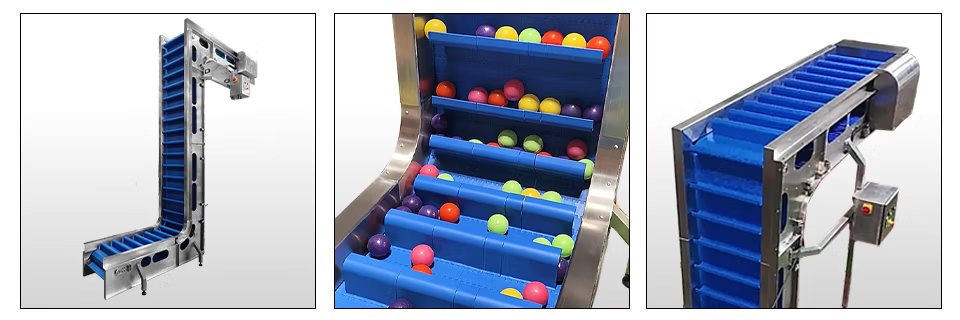
Modular conveyors are often used to move materials to higher levels through incline systems, especially in production layouts with limited space. However, in certain conditions such as significant height differences or the need for higher space efficiency, this solution may no longer be the most optimal. In such cases, vertical conveyor systems can provide better efficiency. To learn more, you can read our article on why vertical conveyors are needed in production systems
No More Manual Labor to Move Goods
The great thing about conveyors is that they completely replace the need for manual labor to move your product. If you have 1 person doing this manual work, not only will you save labor costs for that person and you will also save time by moving product more quickly and consistently by using a modular conveyor belt and also eliminating the risks that may occur to that person during manual work. With modular conveyor belts you get consistent, reliable and continuously faster processes! Then what are you waiting for, immediately place an order here right now!
Related Applications and System Integration :
Below is content related to the “Modular Conveyor” principle, Explore these topics for a deeper understanding:
- Time to Revolutionize Workflows with Modular Conveyors
- Transferring Plastic Cup Products Using Modular Conveyors
- Is It True That Using A Modular Belt Conveyor Saves Cost
Connect Automation specializes in providing automation solutions, including conveyor systems, to improve efficiency across various industries. The company delivers cutting-edge technology to help organizations automate tasks and optimize workflows. Connect Automation helps businesses reduce manual efforts, boost productivity, and achieve better outcomes. With a customer-focused approach, the company designs tailored solutions to ensure smooth and effective automation transitions for long-term success.
Kawasan Industri Jababeka Tahap 1, Jl. Jababeka II D Blok C14L Cikarang, Indonesia (17530)
(021) 893 5060 Google Maps
Rungkut Industri III, No. 37, Rungkut Menanggal, Kec. Gn. Anyar Surabaya, Indonesia (60293)
(031) 9985 8624 Google Maps