
REQUEST A FREE ESTIMATE!
Table Top Chain Conveyor for Pharmaceutical Industry
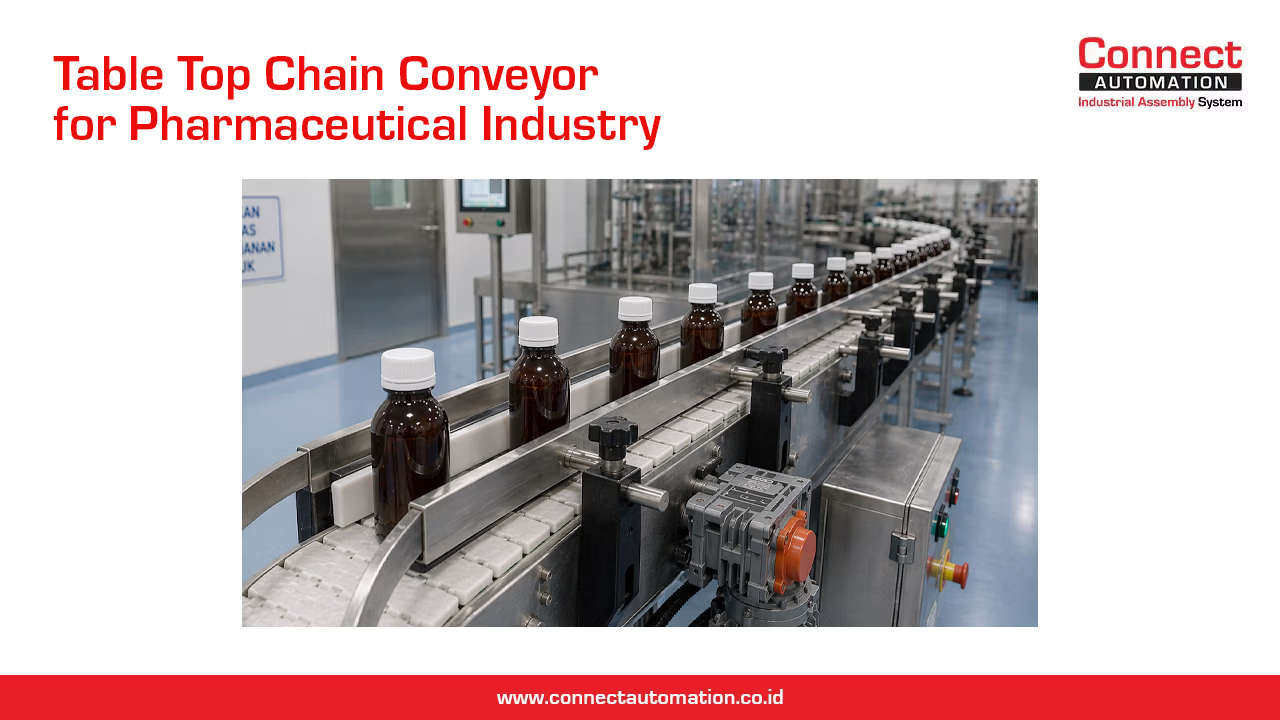
The pharmaceutical industry operates under strict standards in terms of hygiene, safety, and process consistency. Every stage of production, from processing to packaging, must be carefully controlled to ensure product quality and to prevent contamination.
In such environments, material handling systems cannot rely on conventional conveyors. A more specialized solution is required—one that can support hygienic, stable, and efficient production processes. One of the most widely used systems in this context is the table top chain conveyor, designed to handle products such as medicine bottles and small packages with high precision.
What Is a Table Top Chain Conveyor?
A table top chain conveyor is a type of conveyor system that uses modular chains with a flat surface to transport products. It is commonly made from engineering plastics or stainless steel, making it suitable for environments that require high levels of cleanliness.
Its flexible design allows it to operate in both straight and curved layouts, making it easy to adapt to complex production lines.
Special Requirements in the Pharmaceutical Industry
Compared to other industries, pharmaceutical manufacturing has stricter requirements, especially in material handling. Key considerations include:
- Hygienic processes with minimal contamination risk
- Stable product movement, especially for small packaging
- Compliance with standards such as GMP (Good Manufacturing Practice)
- Equipment that is easy to clean and maintain
Because of these requirements, choosing the right conveyor system is critical, as it directly impacts product quality and safety. Learn more about conveyor standards that comply with BPOM regulations in the following article: Food Grade Conveyors Under CPPOB BPOM Standards.
Role of Table Top Chain Conveyor in Pharmaceutical Production
Table top chain conveyors play an important role in maintaining a smooth and controlled production flow. They are used to transport products such as medicine bottles, vials, and blister packs in a stable manner. These conveyors also act as connectors between different machines within a production line, such as:
- Filling machines
- Capping machines
- Labeling machines
- Packaging machines
With smooth and consistent movement, the risk of product tipping, spillage, or disruption is significantly reduced.
Materials Used
Material selection is a key factor in pharmaceutical applications. Table top chain conveyors are typically made from:
- Engineering plastic (POM / acetal) : Provides a smooth surface, good chemical resistance, and low contamination risk
- Stainless steel : Offers excellent corrosion resistance and is suitable for high-hygiene environments
These materials are generally compliant with food-grade or pharma-grade standards, making them safe for use in pharmaceutical production.
Hygienic Design Considerations
In addition to material selection, the design of the conveyor plays a crucial role in maintaining cleanliness. Table top chain conveyors are designed with hygiene in mind, including:
- Smooth surfaces that are easy to clean
- Minimal gaps where dirt or contaminants can accumulate
- Support for regular cleaning procedures
- Accessible for maintenance and sanitation
Such design features help ensure effective cleaning and reduce contamination risks.
Advantages for Pharmaceutical Applications
Table top chain conveyors offer several advantages in pharmaceutical production:
- Stable and controlled product movement
- Minimal vibration, reducing the risk of spillage
- Flexible layout design, including curves
- Easy integration with automated machinery
- Supports continuous and efficient production
These benefits make them a preferred solution for modern pharmaceutical production lines.
Modular Conveyor Systems in Modern Pharmaceutical Applications (FlexLink and Modu)
In the pharmaceutical industry, table top chain conveyors are still widely used as a material handling solution for various production needs. This system is capable of handling product transfer processes with a stable performance level that is sufficient for many standard applications.
However, in applications that require higher levels of precision and process control, modern pharmaceutical manufacturing increasingly adopts modular conveyor systems that provide more consistent performance in maintaining product flow stability.
Systems such as FlexLink and Modu have become references in the development of modern pharmaceutical conveyors because they offer a higher level of stability compared to conventional table top chain conveyor systems, especially in high-speed production environments with complex layouts.
Why FlexLink and Modu Are Used as Benchmark Systems
FlexLink and Modu are widely used as benchmark systems in the pharmaceutical industry because they provide performance characteristics that are not fully achieved by standard table top chain conveyor systems.
Their advantages are primarily seen in motion control and system consistency, which are critical when handling sensitive pharmaceutical products such as vials, ampoules, and medicine bottles.
Key characteristics that make FlexLink and Modu a benchmark include:
- Higher precision movement compared to conventional conveyor systems
- More consistent product stability at high production speeds
- Modular design that allows flexible and complex layout configurations
- Ability to maintain stable product flow in curved conveyor sections
- Better system repeatability for long-term production consistency
- Easier integration with process equipment such as filling, capping, and labeling machines
In practical applications, FlexLink is often used in systems that require high precision and tight process control, while Modu is more commonly applied in layouts that require flexibility while still maintaining product stability.
With these characteristics, both systems are frequently used as design references in modern pharmaceutical conveyor systems as a performance standard above conventional table top chain solutions.
Common Applications
Table top chain conveyors are widely used in various stages of pharmaceutical production, including:
- Liquid filling lines
- Syrup bottle transfer
- Labeling and coding areas
- Packaging processes such as cartoning
- Handling of small packaged products
Their use helps ensure a smooth and coordinated production flow.
When Should You Use a Table Top Chain Conveyor?
This type of conveyor is particularly suitable when:
- Production scale is medium to large
- Multiple processing stages are involved
- Products are in bottles, vials, or small packages
- A stable and hygienic handling system is required
In these situations, table top chain conveyors help improve efficiency while maintaining product quality.
Comparison with Other Conveyor Types
In pharmaceutical applications, selecting the right conveyor depends on product characteristics and process requirements. In general:
- Belt conveyors may lack stability for small items
- Roller conveyors are less suitable for small packages
- Table top chain conveyors provide better stability and flexibility
This makes them a more suitable choice for many pharmaceutical production environments.
Conclusion
Table top chain conveyors are a reliable solution for pharmaceutical industries that require hygienic, stable, and efficient material handling systems. With appropriate materials, hygienic design, and seamless integration into production lines, these conveyors help maintain product quality while improving operational efficiency.
In modern pharmaceutical manufacturing, the right conveyor system is not just about moving products—it is an essential part of maintaining quality standards and ensuring production reliability.
Connect Automation specializes in providing automation solutions, including conveyor systems, to improve efficiency across various industries. The company delivers cutting-edge technology to help organizations automate tasks and optimize workflows. Connect Automation helps businesses reduce manual efforts, boost productivity, and achieve better outcomes. With a customer-focused approach, the company designs tailored solutions to ensure smooth and effective automation transitions for long-term success.
Kawasan Industri Jababeka Tahap 1, Jl. Jababeka II D Blok C14L Cikarang, Indonesia (17530)
(021) 893 5060 Google Maps
Rungkut Industri III, No. 37, Rungkut Menanggal, Kec. Gn. Anyar Surabaya, Indonesia (60293)
(031) 9985 8624 Google Maps