
REQUEST A FREE ESTIMATE!
Guide to Choosing Chain and Frame for Table Top Chain Conveyor
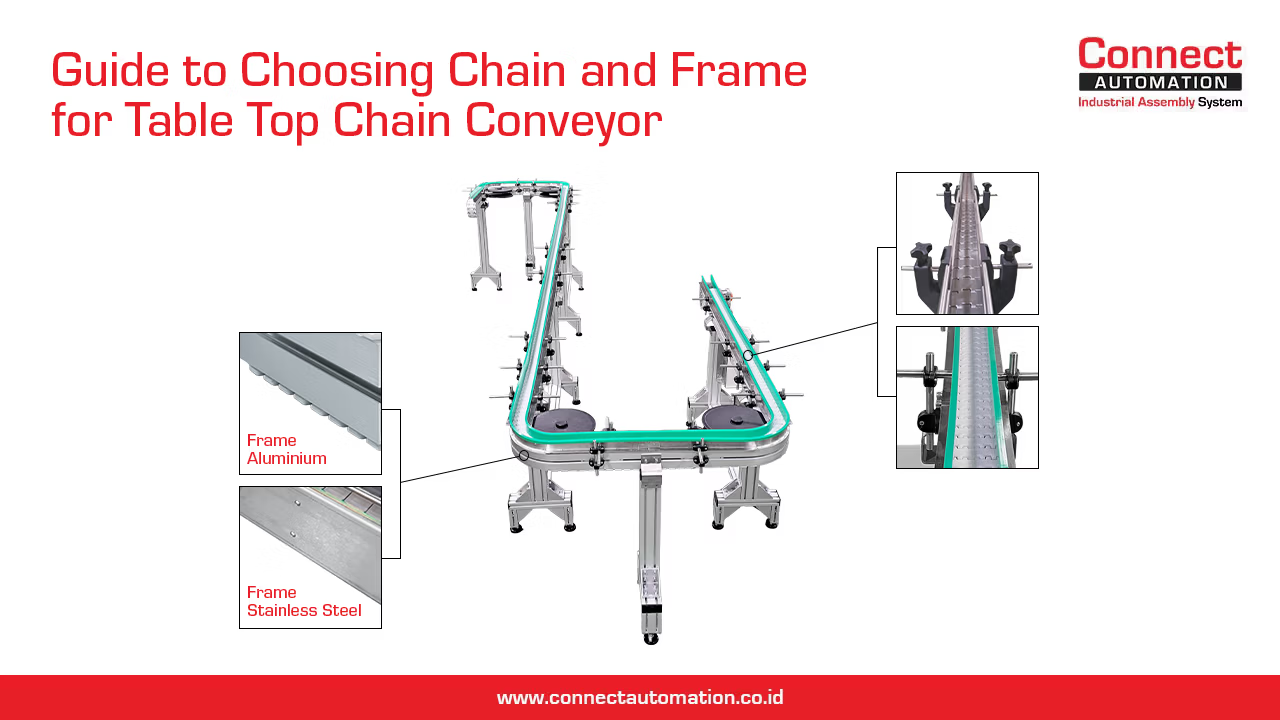
In modern production systems, conveyors are not just tools for moving products, but essential components that directly impact efficiency, stability, and overall production flow. Choosing the wrong conveyor specification can lead to various issues, such as unstable product movement, high downtime, and increased maintenance costs.
One of the most widely used conveyor systems across industries is the table top chain conveyor. However, despite its relatively simple appearance, selecting the right system still requires careful technical consideration to ensure it matches the application requirements in the field.
What Is a Table Top Chain Conveyor
A table top chain conveyor is a conveyor system that uses a flat top chain as the primary medium to transport products. The flat surface of the chain allows products to remain stable during movement, especially for items in an upright position.
This type of conveyor is commonly used to handle:
- Bottles (PET and glass)
- Cans
- Plastic cups
- Cosmetic packaging
Due to its high stability, this system is widely applied in production lines that require continuous product flow.
Key Factors in Choosing a Table Top Chain Conveyor
1. Type of Product Being Conveyed
The type of product is the primary factor in determining the conveyor specification. Products such as bottles and cans require a stable surface to prevent tipping or falling.
In addition, the base shape of the product should be considered. Products with flat bottoms are easier to handle compared to those with unstable shapes.
2. Product Capacity and Weight
Product weight influences the selection of chain material and overall conveyor structure.
- Lightweight products → suitable for plastic chain
- Heavier products → require stronger materials
If not properly considered, the conveyor system may experience faster wear or operational failure.
3. Conveyor Layout and Path
Each production facility has a different layout, so the conveyor design must adapt to site conditions.
Important considerations include:
- Straight or curved paths
- Space limitations
- Integration with other machines
Table top chain conveyors are highly flexible, as they can be designed in both straight and curved configurations.
Chain Material Selection
1. Plastic Chain (POM / Acetal)
Plastic chains are the most commonly used option, especially in food and beverage industries.
Advantages:
- Lightweight
- Corrosion resistant
- Smooth surface
- Stable for upright products
This material is ideal for light to medium-duty applications with continuous operation.
2. Stainless Steel Chain
For heavier-duty applications or more demanding environments, stainless steel chains are a better choice.
Advantages:
- High strength
- Resistant to high temperatures
- Chemical resistance
- Longer service life
This material is often used in pharmaceutical industries or specific applications requiring higher durability.
Chain Color Selection (Industry Standard)
In table top chain conveyor applications, chain colors generally follow commonly accepted industry standards.
- White : The most widely used color, especially in food and beverage industries. It provides a hygienic appearance and makes visual inspection easier.
- Cream / Natural : This is the natural color of materials such as POM (acetal). It is commonly used in general industrial applications due to its stability and durability.
- Stainless Steel : Used for specific applications where strength and resistance are more important than visual appearance.
Important note:
In practice, material selection is far more important than color, as it directly affects performance and durability.
Frame Material Selection
1. Stainless Steel Frame (SS304 / SS316)
Stainless steel is the preferred choice for industries with high hygiene standards.
Suitable for:
- Food industry
- Beverage industry
- Pharmaceutical industry
Advantages:
- Corrosion resistant
- Easy to clean
- Resistant to chemicals
- Suitable for hygienic environments
The choice between SS304 and SS316 should be based on the operating environment and conveyor application requirements. SS304 is generally sufficient for many industrial applications, while SS316 can be a suitable option when the conveyor is exposed to more corrosive environments or requires higher material resistance. Learn more about the difference between stainless steel 304 and 316 for conveyor applications and the factors to consider when selecting the right material.
2. Aluminum Profile Frame
Aluminum profiles are widely used in applications that require flexibility and ease of installation.
Suitable for:
- Packaging industry
- Warehousing and distribution
- Light to medium-duty applications
Advantages:
- Lightweight
- Modular and flexible
- Easy installation
- Clean and modern appearance
Production Environment Considerations
The working environment significantly affects conveyor material and design selection.
Factors to consider include:
- Wet or dry areas
- Chemical exposure
- Operating temperature
- Sanitation requirements
An unsuitable conveyor specification for the environment can lead to faster wear and higher operational costs.
Integration with Production Systems
Table top chain conveyors are typically part of an integrated production system rather than standalone equipment.
Key considerations:
- Machine-to-machine connection
- Production flow synchronization
- Continuous flow vs stop-and-go systems
Proper integration improves efficiency and reduces bottlenecks.
Common Mistakes in Selecting Table Top Chain Conveyor
Some common mistakes found in the field include:
- Incorrect chain material selection
- Ignoring environmental conditions
- Over-specifying or under-specifying the system
- Not considering maintenance requirements
These mistakes can significantly impact long-term performance and cost.
Industries Using Table Top Chain Conveyor
Table top chain conveyors are widely used in industries that require stable and continuous product transfer, including:
- Food industry
- Beverage industry
- Pharmaceutical industry
- Cosmetics and personal care industry
- FMCG industry
- Packaging industry
- Household product industry
Conclusion
Table top chain conveyors are an efficient and flexible solution for various industrial applications, especially for handling products that require stable movement.
However, to achieve optimal performance, the selection process must consider product type, capacity, chain material, frame material, and environmental conditions.
With the right specifications, a conveyor system not only improves production efficiency but also helps maintain product quality and reduce long-term operational costs.
Connect Automation specializes in providing automation solutions, including conveyor systems, to improve efficiency across various industries. The company delivers cutting-edge technology to help organizations automate tasks and optimize workflows. Connect Automation helps businesses reduce manual efforts, boost productivity, and achieve better outcomes. With a customer-focused approach, the company designs tailored solutions to ensure smooth and effective automation transitions for long-term success.
Kawasan Industri Jababeka Tahap 1, Jl. Jababeka II D Blok C14L Cikarang, Indonesia (17530)
(021) 893 5060 Google Maps
Rungkut Industri III, No. 37, Rungkut Menanggal, Kec. Gn. Anyar Surabaya, Indonesia (60293)
(031) 9985 8624 Google Maps