
REQUEST A FREE ESTIMATE!
Why Belt Conveyor Design Layout Matters in Industrial Production
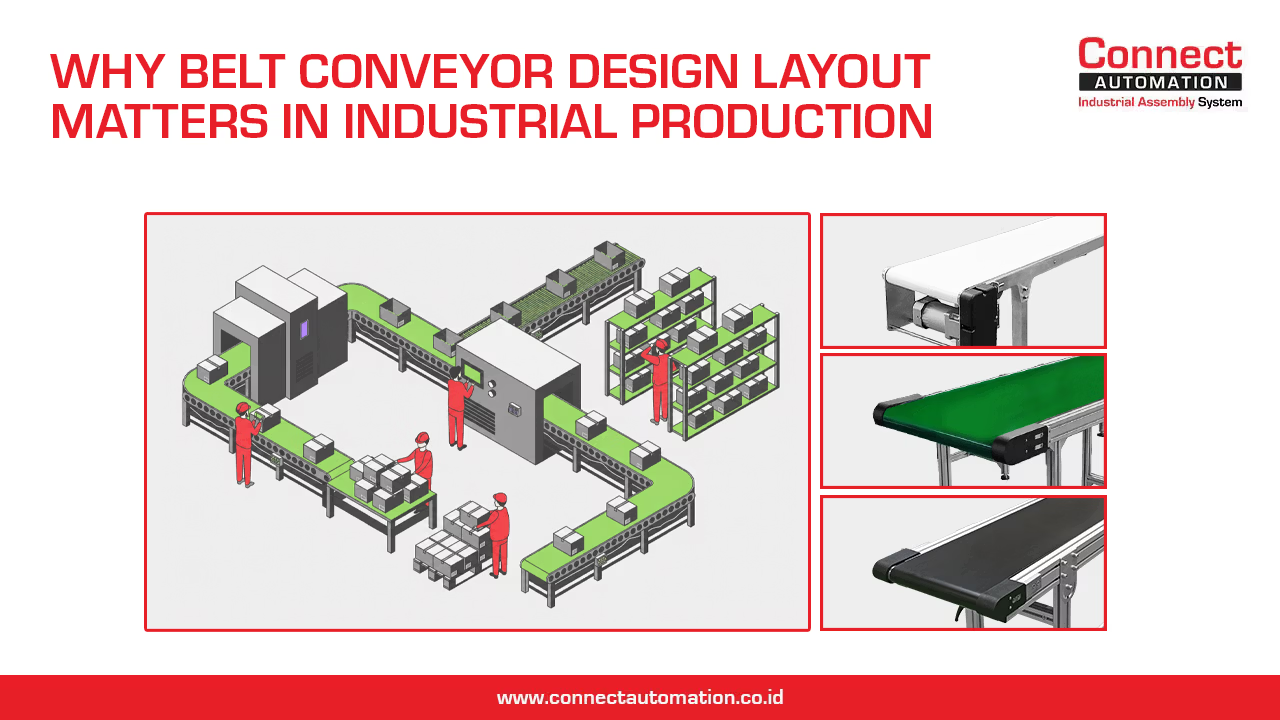
Why Belt Conveyor Design Layout Is Important for Industrial Production Systems
In modern industry, production efficiency is one of the key factors that determine a company's competitiveness. Many manufacturers invest in new machinery, automation systems, and advanced technologies to increase productivity. However, one important aspect that is often overlooked is the planning of a proper belt conveyor design layout within the production system.
A well-planned conveyor layout helps ensure that materials move smoothly from one process to the next. Without proper planning, even advanced production machines may experience bottlenecks, product accumulation, or inefficient workflow.
Therefore, understanding how to design conveyor systems that fit the overall production layout is essential for creating an efficient and integrated production line.
What Is Belt Conveyor Design in Industrial Production?
In general, belt conveyor design refers to the process of designing belt conveyor systems used to transport materials or products from one point to another within a production process.
In practice, this design process is not only related to the technical specifications of the conveyor itself but also involves considering how the system fits into the overall production line layout.
Several factors are typically considered when designing conveyor systems, including:
- material handling capacity
- belt conveyor width and length
- conveyor speed
- operating environment
- machine positioning within the production line
With proper planning, conveyor systems become an essential part of a material handling system that supports smooth and continuous production.
The Relationship Between Belt Conveyor Design and Production Line Layout
In many industrial projects, belt conveyor design cannot be separated from the planning of the overall production line layout. Conveyors act as connectors between different production processes, so their placement must align with the workflow inside the factory.
A well-designed conveyor system helps create a smoother material flow, from raw material handling to final packaging or product distribution.
On the other hand, if the conveyor system is not designed according to the factory layout, material flow can become inefficient and may cause product accumulation at certain production stages.
Why Belt Conveyor Design Layout Is So Important
Proper planning of a belt conveyor design layout can provide several benefits for industrial production systems. Below are some reasons why conveyor layout design plays a crucial role in manufacturing operations.
1. Improving Production Flow Efficiency
Conveyors designed according to the production layout allow products to move smoothly from one process to the next. This reduces waiting time between processes and improves overall operational efficiency.
With a well-structured material flow, companies can optimize production capacity without significantly increasing labor.
2. Reducing Production Bottlenecks
Bottlenecks are common challenges in many production systems. They occur when one process has a lower capacity than the others, slowing down the entire production flow.
Poor belt conveyor design can worsen this situation by creating imbalances in material flow between processes. For this reason, conveyor systems must be designed in accordance with the capacity of each machine within the production line.
Many of these challenges stem from production processes that have not been properly organized from the beginning. As a result, improving workflow efficiency is often a necessary first step before considering larger automation investments. Learn more in our article Fix the Process First, Then Let Technology Multiply the Results.
3. Maximizing Production Space Utilization
A conveyor system that is integrated with the factory layout also helps maximize the use of available production space.
Through proper conveyor routing, companies can arrange machine positions and operator work areas more efficiently. This helps maintain a clean and organized production environment while making daily operations and maintenance easier.
4. Supporting Automation Integration
Today, many industries are adopting automation systems to improve efficiency and production consistency. However, successful automation does not depend solely on technologies such as PLCs or sensors.
Proper belt conveyor design must also consider how the conveyor system will integrate with various automation components, such as:
- product detection sensors
- PLC-based control systems
- automated packaging machines
- product sorting systems
With the right design approach, conveyors can play a key role in supporting automated production processes.
Example of a Production Line Flow Using Conveyors
In a manufacturing facility, material flow usually consists of several interconnected stages. Conveyor systems play an important role in connecting these processes so that production can run efficiently. A typical industrial production flow may include:
- Raw Material Handling : Raw materials are received and transported to the production area.
- Processing or Manufacturing : Materials are processed using various production machines.
- Assembly Line : Components are assembled into finished products.
- Quality Inspection : Products are inspected to ensure they meet quality standards.
- Packaging Line : Products are packed before shipment.
- Warehouse or Storage : Finished goods are transported to storage or distribution areas.
With proper conveyor layout planning, all these processes can be connected efficiently, forming a more integrated production system.
Choosing the Right Conveyor Type for Your Production Layout
Production layout design is not only about machine positioning and product flow direction. The type of conveyor selected also plays a significant role in material handling efficiency, space utilization, maintenance requirements, and the long-term scalability of the production line.
For applications with relatively straight and simple product transfer paths, Belt Conveyors are often a preferred solution due to their versatility and cost-effectiveness. They are widely used in production, packaging, inspection, and internal distribution processes across various industries.
In environments that require easier cleaning procedures or the handling of specific product types, Modular Conveyors are frequently used. Their flexible design makes them suitable for food processing, beverage production, and other applications where hygiene and operational reliability are important considerations.
Meanwhile, Table Top Chain Conveyors are commonly found in FMCG, beverage, pharmaceutical, cosmetic, and packaging industries. They are particularly effective for handling bottles, containers, and packaged products that require stable and precise transfer between production machines.
For carton handling, box transportation, and internal logistics operations, Roller Conveyors remain one of the most widely used solutions. Their simple yet efficient design makes them suitable for warehouses, distribution centers, packaging areas, and end-of-line material handling applications.
Understanding the characteristics and advantages of each conveyor type helps ensure that a production layout is designed not only for current operational needs but also for future production expansion and efficiency improvements.
Conclusion
In modern manufacturing systems, proper belt conveyor design layout plays a critical role in ensuring smooth material flow throughout the production line. A conveyor system that is designed in harmony with the production layout not only improves operational efficiency but also helps reduce bottlenecks, maximize space utilization, and support automation integration.
By implementing an effective belt conveyor design, companies can build production systems that are more organized, efficient, and capable of meeting the growing demands of modern industry.
Connect Automation specializes in providing automation solutions, including conveyor systems, to improve efficiency across various industries. The company delivers cutting-edge technology to help organizations automate tasks and optimize workflows. Connect Automation helps businesses reduce manual efforts, boost productivity, and achieve better outcomes. With a customer-focused approach, the company designs tailored solutions to ensure smooth and effective automation transitions for long-term success.
Kawasan Industri Jababeka Tahap 1, Jl. Jababeka II D Blok C14L Cikarang, Indonesia (17530)
(021) 893 5060 Google Maps
Rungkut Industri III, No. 37, Rungkut Menanggal, Kec. Gn. Anyar Surabaya, Indonesia (60293)
(031) 9985 8624 Google Maps