
REQUEST A FREE ESTIMATE!
What is Industrial Automation and the Role of PLC in Production
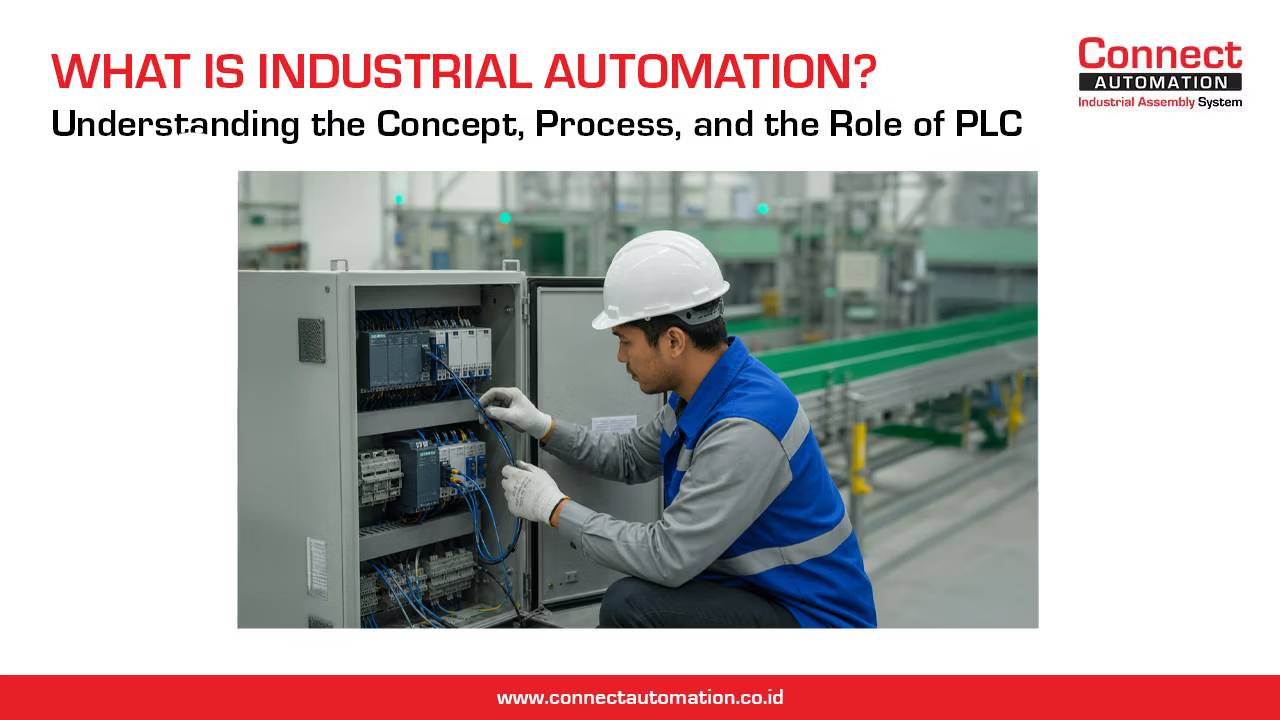
What Is Industrial Automation? Understanding the Concept, Process, and the Role of PLC
Introduction
In today’s industrial landscape, automation is increasingly seen as a key solution for improving efficiency, productivity, and consistency in production processes. Many companies are adopting automation as part of their strategy to stay competitive in a rapidly evolving market.
However, automation is often misunderstood as a quick fix for operational problems. In reality, without the right foundation, implementing automation can actually amplify existing inefficiencies instead of solving them.
This article will provide a comprehensive overview of industrial automation, how it works, and the important role of control systems such as PLC in supporting modern production processes.
What Is Industrial Automation
Industrial automation refers to the use of control systems and technology to operate production processes with minimal human intervention. Its primary goal is to improve efficiency, reduce human error, and ensure consistent output.
Rather than simply replacing manual work, automation is about creating a structured and integrated system where every stage, from input to processing and output, runs in a coordinated and controlled manner.
In general, an automation system is a combination of technology, control devices, sensors, and software used to run production processes automatically with minimal human intervention. In modern industries, an automation system is an important part of improving production efficiency, maintaining consistent product quality, and helping companies achieve faster and more stable operations. Therefore, an automation system is considered one of the main foundations in the implementation of smart manufacturing and industrial automation.
Automation Is Not the Starting Point
One of the most common mistakes in implementing automation is assuming that technology alone can solve production issues. In practice, automation only accelerates what already exists within a process.
If the existing process is unstable or inefficient, automation will simply make those problems occur faster and on a larger scale.
As discussed in earlier perspectives on process improvement, a stable and well-structured process must come first. Automation should be seen as the next step—not the starting point—in building an efficient production system.
Key Components of an Automation System
An industrial automation system typically consists of several key components that work together:
- Sensors : Sensors detect conditions such as position, temperature, or the presence of objects within a system.
- Actuators : Actuators perform physical actions, such as moving motors, opening valves, or activating mechanical components.
- Control System : The control system processes data from sensors and determines the appropriate actions to be executed.
- PLC (Programmable Logic Controller) : A PLC is the core controller in many automation systems. It functions as the “brain” that executes logic based on input data and predefined programming.
A deeper understanding of PLC is usually covered separately due to its critical role in industrial automation systems.
The Role of PLC in Automation Systems
Within an automation system, the PLC acts as the main controller that ensures all processes run according to the designed logic.
It receives input signals from sensors, processes them based on programmed instructions, and sends commands to actuators to perform specific actions.
By using PLCs, production systems can operate automatically, consistently, and with a higher level of control. Additionally, PLCs provide flexibility, allowing system adjustments without requiring major mechanical changes.
Examples of Automation in Industrial Applications
Industrial automation is widely applied across various systems, one of the most common being conveyor systems used in production environments.
In conveyor systems, automation enables:
- Controlled and automated material flow
- Synchronization between different production stages
- Reduced reliance on manual labor
- Improved efficiency and consistency
Beyond conveyors, automation is also commonly used in:
- Packaging lines
- Assembly lines
- Repetitive production processes
The Relationship Between Process, Automation, and Control Systems
To fully understand industrial automation, it is important to recognize the relationship between three key elements:
- Process as the foundation
- Automation as the efficiency enabler
- PLC and control systems as the execution engine
Without a stable and well-defined process, automation cannot deliver optimal results. On the other hand, when the process is properly structured, automation becomes a powerful tool to enhance overall production performance.
Conclusion
Industrial automation is not just about implementing technology—it is a systematic approach to improving efficiency and consistency in production processes.
However, the success of automation depends heavily on the readiness of the underlying process. With a solid foundation and the support of control systems like PLC, automation can deliver significant improvements in industrial operations.
Understanding this concept is an essential first step before moving toward more advanced automation implementations.
Connect Automation specializes in providing automation solutions, including conveyor systems, to improve efficiency across various industries. The company delivers cutting-edge technology to help organizations automate tasks and optimize workflows. Connect Automation helps businesses reduce manual efforts, boost productivity, and achieve better outcomes. With a customer-focused approach, the company designs tailored solutions to ensure smooth and effective automation transitions for long-term success.
Kawasan Industri Jababeka Tahap 1, Jl. Jababeka II D Blok C14L Cikarang, Indonesia (17530)
(021) 893 5060 Google Maps
Rungkut Industri III, No. 37, Rungkut Menanggal, Kec. Gn. Anyar Surabaya, Indonesia (60293)
(031) 9985 8624 Google Maps