REQUEST A FREE ESTIMATE!
Industrial Workstations as Part of Integrated Production System
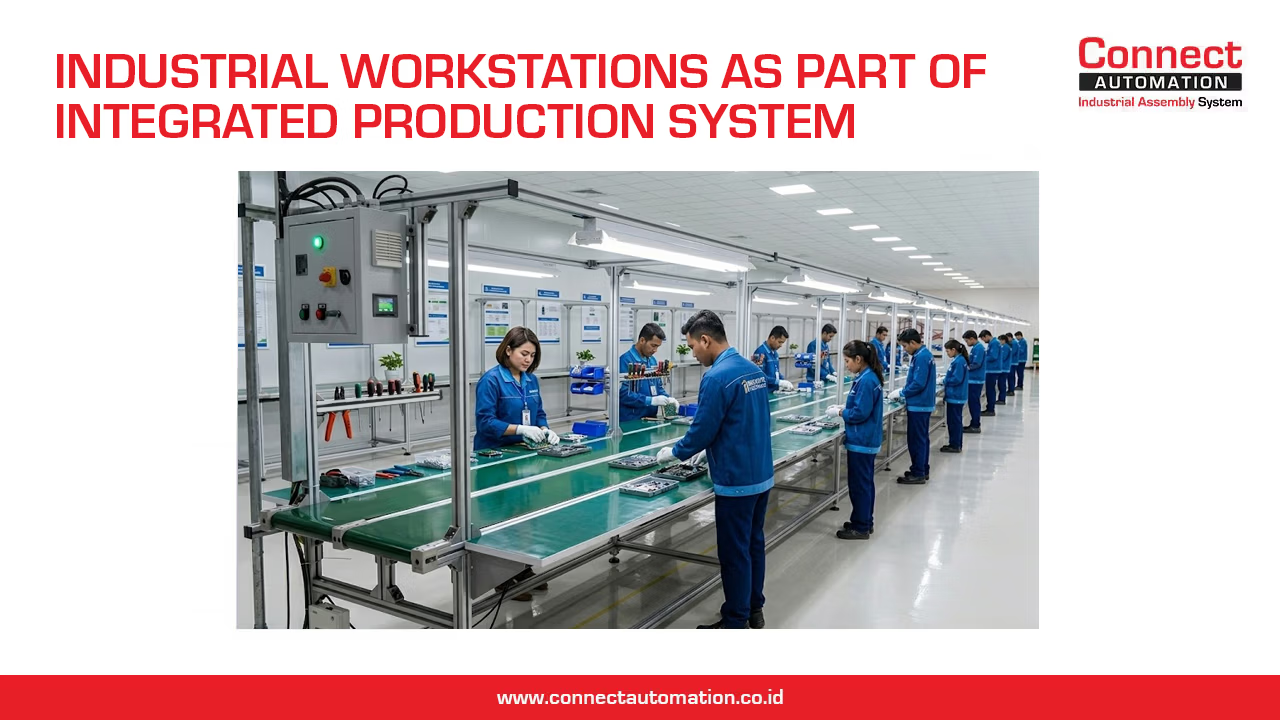
In modern manufacturing systems, production processes no longer operate separately between one stage and another. Every activity, from material preparation to final product packaging, must be connected within one efficient workflow. This is where the role of industrial workstations as part of an integrated production system becomes highly important.
A workstation is not only a place where operators work, but also a critical point within the overall material flow and production process.
What Is an Integrated Production System
An integrated production system is an approach where all production elements are interconnected and operate as a unified system. These elements include:
- Workstations
- Material handling systems
- Storage and warehousing
- Production process flow
The main objectives of this system are to create:
- Smooth workflow
- Minimal waiting time
- High operational efficiency
With an integrated system, every process can run synchronously without significant disruptions.
The Role of Workstations in Production Systems
Within a production system, a workstation functions as:
- The main point of operator activity
- The location where work processes or product transformation occur
- A connection point between production stages
Each workstation must be designed to align with the processes before and after it. Otherwise, the workstation can become a bottleneck that disrupts the entire production flow.
Workstation Integration with Conveyor Systems
One of the most common methods used to connect workstations is through conveyor systems. Conveyors help move materials or products from one point to another consistently and efficiently. The benefits of this integration include:
- Reducing manual lifting processes by operators
- Accelerating transfer between processes
- Maintaining stable production flow
This system is widely used in:
- Assembly lines
- Packaging lines
- Mass production with repetitive workflows
However, conveyors are not the only solution within integrated production systems.
Integration with Storage and Material Handling Systems
In addition to conveyors, workstations are also connected with storage and material handling systems. This integration ensures that materials are always available at the work area without disrupting the production flow. Examples of integration include:
- Using flow racks with FIFO systems
- Direct material supply to workstations
- Structured material supply management
With this approach, companies can avoid:
- Material shortages in work areas
- Unnecessary inventory accumulation
- Disruptions in production processes
End-to-End Production Flow
Workstations are part of the overall production flow, starting from:
- Material preparation
- Production or assembly processes
- Inspection and quality control
- Packing and shipping
To ensure optimal system performance, workstation design should follow these principles:
- One-way flow
- Minimal back-and-forth movement
- Avoiding crossing movement
This approach strongly aligns with lean manufacturing principles, which emphasize efficiency and waste reduction.
The Role of Modular Systems in Workstation Integration
In modern production systems, modular workstations are becoming increasingly popular. These systems typically use structures such as aluminium profiles or tube systems that can be easily customized. Advantages of modular workstations:
- Easy to modify according to production needs
- Flexible for layout development
- Supports production capacity expansion
- Simplifies integration with other systems
Modular workstations are ideal solutions for dynamic and continuously evolving production environments.
Integration with Non-Powered Systems (Karakuri)
In addition to machine-based systems such as conveyors, workstation integration can also be achieved using non-powered approaches such as karakuri systems. Karakuri utilizes simple mechanical principles such as:
- Gravity
- Levers
- Mechanical movement without electricity
The advantages of this system include:
- Reduced energy consumption
- Lower operational costs
- Support for lean manufacturing concepts
Karakuri is often used to support efficient material flow between workstations without dependence on electrical systems.
Benefits of Integrated Workstation Systems
Implementing workstations within integrated production systems provides various benefits, including:
- Smoother and more structured workflow
- Increased productivity
- Reduced risk of operational errors
- Easier process control
- Better scalability for future development
With an integrated system, companies can achieve higher overall efficiency.
Common Mistakes in Workstation Integration
Some common mistakes in workstation implementation include:
- Designing workstations separately without considering production flow
- Ignoring material flow
- Layouts that are difficult to expand
- Lack of system flexibility
These mistakes can lead to inefficiencies and hinder production growth.
Conclusion
Industrial workstations are not merely work areas, but essential parts of integrated production systems. By connecting workstations through the right workflow—whether using conveyors, modular systems, or karakuri approaches—companies can create production processes that are more efficient, stable, and ready for future growth.
This integrated approach has become a key factor in meeting the increasingly complex and dynamic demands of modern industries.
Connect Automation specializes in providing automation solutions, including conveyor systems, to improve efficiency across various industries. The company delivers cutting-edge technology to help organizations automate tasks and optimize workflows. Connect Automation helps businesses reduce manual efforts, boost productivity, and achieve better outcomes. With a customer-focused approach, the company designs tailored solutions to ensure smooth and effective automation transitions for long-term success.
Kawasan Industri Jababeka Tahap 1, Jl. Jababeka II D Blok C14L Cikarang, Indonesia (17530)
(021) 893 5060 Google Maps
Rungkut Industri III, No. 37, Rungkut Menanggal, Kec. Gn. Anyar Surabaya, Indonesia (60293)
(031) 9985 8624 Google Maps