REQUEST A FREE ESTIMATE!
The Role of Jakarta Conveyor Suppliers in Production Efficiency
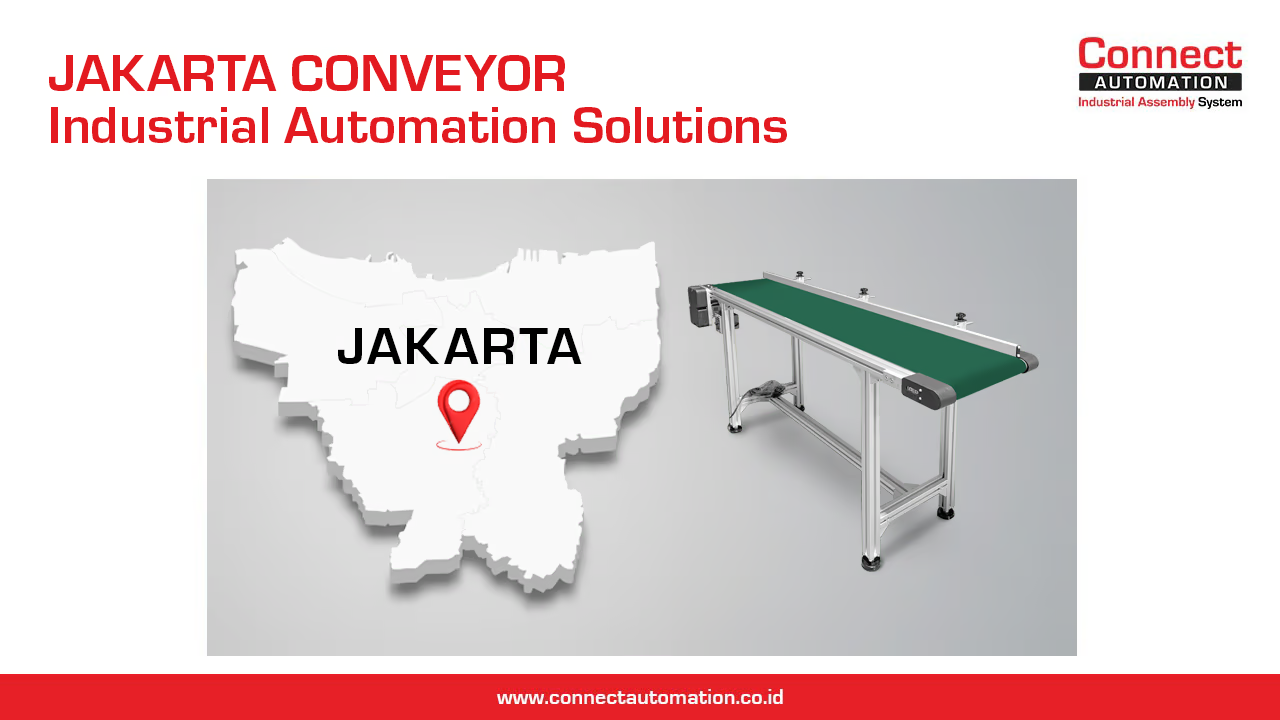
Conveyor Jakarta: Industrial Automation Solutions for Production Efficiency
As Indonesia’s primary business and industrial hub, Jakarta continues to experience rapid growth across manufacturing, logistics, food processing, pharmaceutical, and warehousing sectors. In this competitive environment, companies are required to operate faster, more precisely, and more efficiently. This is where conveyor Jakarta solutions play a crucial role in supporting modern production systems. A well-designed conveyor system enables continuous and automated material movement, helping companies maintain stable workflows and improve operational performance.
The Role of a Conveyor Supplier in Jakarta for Production Efficiency
The role of a conveyor supplier in Jakarta goes beyond simply providing conveyor systems. It also includes planning, design, and the implementation of solutions tailored to specific industrial needs. An experienced supplier will help analyze the production flow, determine the most suitable type of conveyor, and ensure that the system is properly integrated with other production processes. With the right approach, conveyor systems not only improve operational speed but also create a more efficient, consistent, and downtime-minimized production system.
What Is a Conveyor System and Why Is It Important?
A conveyor is a mechanical system designed to transfer materials or products from one point to another automatically. Conveyor systems can be customized for horizontal, inclined, or even vertical movement depending on production requirements. In industrial operations, conveyors provide several key advantages:
- Reducing material handling time
- Minimizing manual labor dependency
- Lowering the risk of product damage
- Improving workplace safety
- Maintaining consistent production flow
For companies aiming to increase output without expanding factory space, implementing a conveyor system is often a strategic solution.
Why Industries in Jakarta Require Conveyor Systems
Industrial growth in Jakarta creates increasing pressure to optimize operational efficiency. Rising labor costs, limited production space, and higher output targets push companies to adopt more integrated material handling systems. The demand for conveyor Jakarta solutions is driven not only by the need to move products, but also to:
- Eliminate bottlenecks in production lines
- Improve plant layout efficiency
- Increase throughput without significantly adding manpower
- Support semi-automatic or fully automated systems
When properly engineered, conveyor systems can be integrated with filling machines, packing systems, sorting lines, and other production equipment to create a seamless workflow.
In addition to selecting the right type of conveyor, using a standard conveyor system can be an effective way to accelerate material handling implementation. For common applications, standard conveyors can help companies achieve daily production targets with a more cost-efficient investment and shorter installation time compared to fully customized systems.
Common Types of Conveyor Systems Used in Industry
Different industries require different conveyor configurations. Below are several commonly used systems:
- Belt Conveyor. Utilizes PVC or PU belts to transport products horizontally or at an incline. Widely used in food processing, packaging, and distribution industries.
- Roller Conveyor. Uses rotating rollers to move cartons, boxes, or pallets. Frequently applied in warehouse operations and loading areas.
- Modular Conveyor Built with interlocking plastic modules, offering flexibility and easy cleaning. Ideal for food and beverage applications due to hygienic design.
- Table Top Chain Conveyor Uses flat top chains to transport bottles, cans, or small packaged products with high stability. Common in pharmaceutical and beverage industries.
- Incline Conveyor. Designed to transfer products between different height levels, often equipped with anti-slip belts to ensure product stability during elevation.
Conveyor Integration in Modern Production Systems
In practice, modern conveyor systems do not operate in isolation but are part of a larger automation system. Conveyor systems can be integrated with various machines such as filling, capping, labeling, and automated packaging systems. This integration allows production flow to run more smoothly, reduces manual intervention, and improves output consistency. Therefore, the role of a conveyor supplier becomes crucial in ensuring that the system is designed to work seamlessly and meet industrial requirements.
Recommendations for Conveyor Systems Across Various Industries in Jakarta
Each industry has different material handling requirements, so the selection of conveyor systems must be adjusted based on product characteristics, production capacity, and operational environment. As a conveyor supplier in Jakarta, it is important to understand the specific needs of each industry to ensure that the designed system delivers optimal efficiency, reliability, and productivity.
1. Food and Beverage Industry
The food and beverage industry requires conveyor systems that can maintain consistent product flow while supporting high hygiene standards. For applications such as product transfer, filling, labeling, and packaging, commonly used conveyor types include Table Top Chain Conveyor and Modular Conveyor. These systems are designed for easy cleaning and can be adapted to various production line layouts.
In addition, conveyor material selection is also an important factor. For areas that are in direct contact with products or require high hygiene standards, food-grade materials and stainless steel construction are commonly preferred.
2. Logistics and Warehousing Industry
The growth of logistics and distribution sectors in Jakarta has increased the demand for material handling systems capable of managing high-volume product movement. Conveyors play an important role in accelerating sorting processes, carton transfer, product accumulation, and internal warehouse distribution.
For this application, Roller Conveyor is one of the most commonly used solutions due to its ability to handle various carton sizes and finished goods efficiently. In more automated facilities, conveyor systems can also be integrated with barcode scanners, sorting systems, and warehouse management systems to improve accuracy and operational productivity.
In addition to improving material flow efficiency, belt conveyors help reduce manual handling, streamline product movement, and support higher productivity across both manufacturing and logistics operations. Selecting the right conveyor system should be based on factors such as product characteristics, production capacity, and facility layout to ensure optimal performance. To learn more about the advantages of belt conveyors across various industrial applications, read our article on The Benefits of Using Conveyor Belts in Manufacturing & Logistics.
3. Pharmaceutical and Cosmetics Industry
The pharmaceutical and cosmetics industry has strict requirements regarding cleanliness, process consistency, and product quality. Conveyors are used to support various production stages such as filling, inspection, labeling, packaging, and product transfer between processes.
Modular Conveyor and Table Top Chain Conveyor are often preferred because they provide stable product movement and are easy to clean according to controlled production environment standards. In addition, stainless steel frames are widely used to support hygiene standards and resistance to routine sanitation processes.
4. FMCG (Fast Moving Consumer Goods) Industry
The FMCG industry is one of the largest sectors in Jakarta and surrounding areas, covering essential consumer products such as food and beverages, personal care, household goods, and daily necessities. This industry is characterized by high production volume and fast, consistent distribution cycles.
In its operations, FMCG requires conveyor systems capable of supporting high-speed production while maintaining stable material flow. Hygiene is also a critical factor, especially for products intended for direct consumer use.
Common conveyor types used in FMCG include Modular Conveyor, food-grade Belt Conveyor, and Table Top Chain Conveyor. These systems are widely used in packaging, sorting, and distribution processes to ensure operational efficiency is maintained.
5. Manufacturing and Assembly Industry
In the manufacturing sector, conveyors are used to connect various production stages so that material flow can run more efficiently. Conveyor systems help reduce manual handling, increase operator productivity, and maintain consistent production flow.
Belt Conveyors are commonly used to transport components, semi-finished products, and lightweight materials continuously. Meanwhile, Roller Conveyors are widely applied for moving cartons, pallets, and finished goods between workstations or production areas. The selection of conveyor type depends heavily on product size, load weight, and specific process requirements in each factory.
Choosing the Right Conveyor Supplier in Jakarta
When selecting a conveyor Jakarta provider, it is important to evaluate more than just pricing. A reliable supplier should be capable of delivering customized engineering solutions based on actual operational requirements. Key considerations include:
- Standard design capability according to plant layout
- Appropriate frame material selection (mild steel, stainless steel, aluminum profile)
- Suitable belt or chain specification for the industry
- Professional installation and system testing
- After-sales support and maintenance services
A professional conveyor supplier in Jakarta typically conducts site surveys and technical assessments before finalizing the system design. This ensures that the installed system aligns with production targets and long-term operational needs.
Conveyor Investment for Long-Term Efficiency
Implementing conveyor Jakarta systems is not merely about moving products — it is about improving production stability and efficiency. With proper engineering and installation, companies can:
- Increase production capacity
- Reduce operational errors
- Lower long-term operational costs
- Enhance workplace safety
In today’s competitive industrial landscape, efficiency is a key driver of sustainability and growth. A well-designed conveyor system can become a fundamental component of a company’s automation strategy. If your business is considering implementing a conveyor system, choosing a solution that aligns with your production goals and operational requirements is essential for achieving long-term performance improvements.
Connect Automation specializes in providing automation solutions, including conveyor systems, to improve efficiency across various industries. The company delivers cutting-edge technology to help organizations automate tasks and optimize workflows. Connect Automation helps businesses reduce manual efforts, boost productivity, and achieve better outcomes. With a customer-focused approach, the company designs tailored solutions to ensure smooth and effective automation transitions for long-term success.
Kawasan Industri Jababeka Tahap 1, Jl. Jababeka II D Blok C14L Cikarang, Indonesia (17530)
(021) 893 5060 Google Maps
Rungkut Industri III, No. 37, Rungkut Menanggal, Kec. Gn. Anyar Surabaya, Indonesia (60293)
(031) 9985 8624 Google Maps