
REQUEST A FREE ESTIMATE!
The Benefits of Using Conveyor Belts in Manufacturing & Logistics
What Is a Conveyor Belt and How Does It Work?
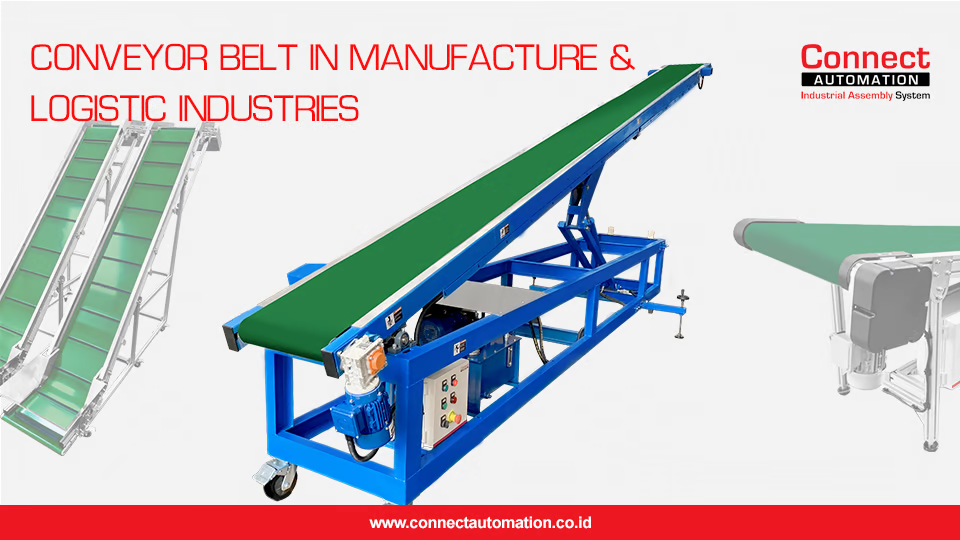
Conveyor belts are the unsung heroes of the industrial world. For decades, they have been used to move goods automatically—without human assistance. Whether it’s a belt conveyor system or a conveyor transport line, these automated material handling systems are essential components of any warehouse or factory.
Conveyor belts have become a vital part of modern industry and will continue to be indispensable in the future. They offer an efficient and cost-effective way to move goods from one point to another with minimal human effort.
Whether used as part of a belt conveyor or other material handling systems, this technology serves as the backbone of many factories and logistics centers. With the help of conveyor belts, the movement of goods becomes faster, more consistent, and less labor-intensive.
Types of Conveyors Used in Manufacturing and Logistics
Each industry has unique needs, which is why conveyor systems come in several types that can be customized to specific operations, such as:
- Belt Conveyor: Uses a moving belt to transport smaller products or bulk materials.
- Roller Conveyor: Ideal for moving boxes, cartons, or flat-based goods. Suitable for handling heavier loads.
- Modular Conveyor: Made of flexible plastic modules that are easy to clean and can be shaped according to the production layout.
- Chain Conveyor: Suitable for heavy goods or items requiring additional support.
With such a wide range of options, companies can choose the most suitable conveyor system for their production process and logistics flow.
Advantages of Using Conveyor Belts
Using conveyor belts offers a variety of strategic benefits for manufacturing and logistics operations:
- Production Efficiency: Enables continuous material movement without delays, speeding up production processes.
- Operational Cost Savings: Reduces reliance on manual labor, cutting overall production costs.
- Safety and Ergonomics: Minimizes the risk of injury from lifting or moving heavy loads manually.
- Product Quality Assurance: Stable movement helps reduce the risk of product damage during transport.
These advantages make conveyor belts valuable assets that enhance a company’s competitiveness in an increasingly demanding market.
Applications of Belt Conveyors in Manufacturing Processes
In the manufacturing industry, belt conveyors are used to connect different stages of production in an efficient and continuous workflow. This system helps create a more stable, faster, and error-minimized production process. Key applications include:
- Assembly Line Belt conveyors are used to move components from one workstation to another in sequence, making the assembly process more structured and efficient.
- Packaging Process Finished products can be directly transferred to the packaging area, speeding up the packing process and reducing waiting time.
- Inspection and Quality Control (QC) Belt conveyors support product inspection processes, either visually or through automated sensors, ensuring consistent product quality.
- Material Handling Used to transport raw materials and finished goods between processes without repetitive manual handling.
The Role of Belt Conveyors in Logistics and Warehousing Operations
In logistics and warehousing, belt conveyors play a crucial role in improving distribution speed and overall operational efficiency. Key roles include:
- Automated Sorting Belt conveyors work with sensor systems to sort items based on destination, size, or category.
- Loading and Unloading Simplifies the process of moving goods to and from vehicles, saving time and labor.
- Internal Warehouse Distribution Enables fast movement of goods between storage, picking, and shipping areas without bottlenecks.
- Integration with Automation Systems Belt conveyors can be integrated with warehouse management systems (WMS) to improve accuracy and efficiency.
Examples of Belt Conveyor Applications Across Industries
Belt conveyors are widely used across various industries due to their flexibility and efficiency, especially in sectors that require fast, consistent, and hygienic production processes. Some common applications include:
- Food and Beverage Industry Used for production, cooling, and packaging processes with high hygiene standards.
- Pharmaceutical and Cosmetic Industry Supports production and packaging processes that require precision and cleanliness.
- Electronics Industry (Assembly Line) Used in assembling electronic components that require accuracy and a stable workflow.
- Plastic and Injection Molding Industry Belt conveyors are used to transfer products such as plastic bottles or components from molding machines to the next process efficiently.
Why Investing in High-Quality Conveyors Pays Off
Choosing the right and high-quality conveyor system is a strategic move to improve productivity and lower long-term operational costs. With faster and more efficient material transfer, companies can meet market demand more effectively without significantly increasing labor.
Additionally, high-quality equipment tends to be more durable and requires less maintenance, delivering optimal return on investment for your business.
In addition to build quality, the use of standardized conveyor systems also plays a crucial role in improving long-term efficiency. At Connect Automation, we apply a standard conveyor concept such as CV40 and CV80, which are designed using readily available components. This makes the system more cost-efficient, easier to maintain, and faster when it comes to repair or component replacement.
These systems typically utilize aluminum profile frames, offering flexibility for adding accessories as well as simplifying installation and future modifications. The combination of standardization and modular design makes these conveyors a practical solution for companies seeking reliable performance without excessive investment. To better understand the differences between these standard conveyor frames, you can read our article on CV40 and CV80 Belt Conveyor Understanding the Standard Difference.
Conclusion
In an era where speed and precision are key, conveyor belts play a crucial role in improving efficiency, safety, and profitability in both manufacturing and logistics sectors. By choosing the right and reliable system, companies can optimize operations, minimize costs, and strengthen their long-term competitiveness.
Connect Automation specializes in providing automation solutions, including conveyor systems, to improve efficiency across various industries. The company delivers cutting-edge technology to help organizations automate tasks and optimize workflows. Connect Automation helps businesses reduce manual efforts, boost productivity, and achieve better outcomes. With a customer-focused approach, the company designs tailored solutions to ensure smooth and effective automation transitions for long-term success.
Kawasan Industri Jababeka Tahap 1, Jl. Jababeka II D Blok C14L Cikarang, Indonesia (17530)
(021) 893 5060 Google Maps
Rungkut Industri III, No. 37, Rungkut Menanggal, Kec. Gn. Anyar Surabaya, Indonesia (60293)
(031) 9985 8624 Google Maps