REQUEST A FREE ESTIMATE!
Table Top Chain Conveyor Systems for Packaged Beverage Lines
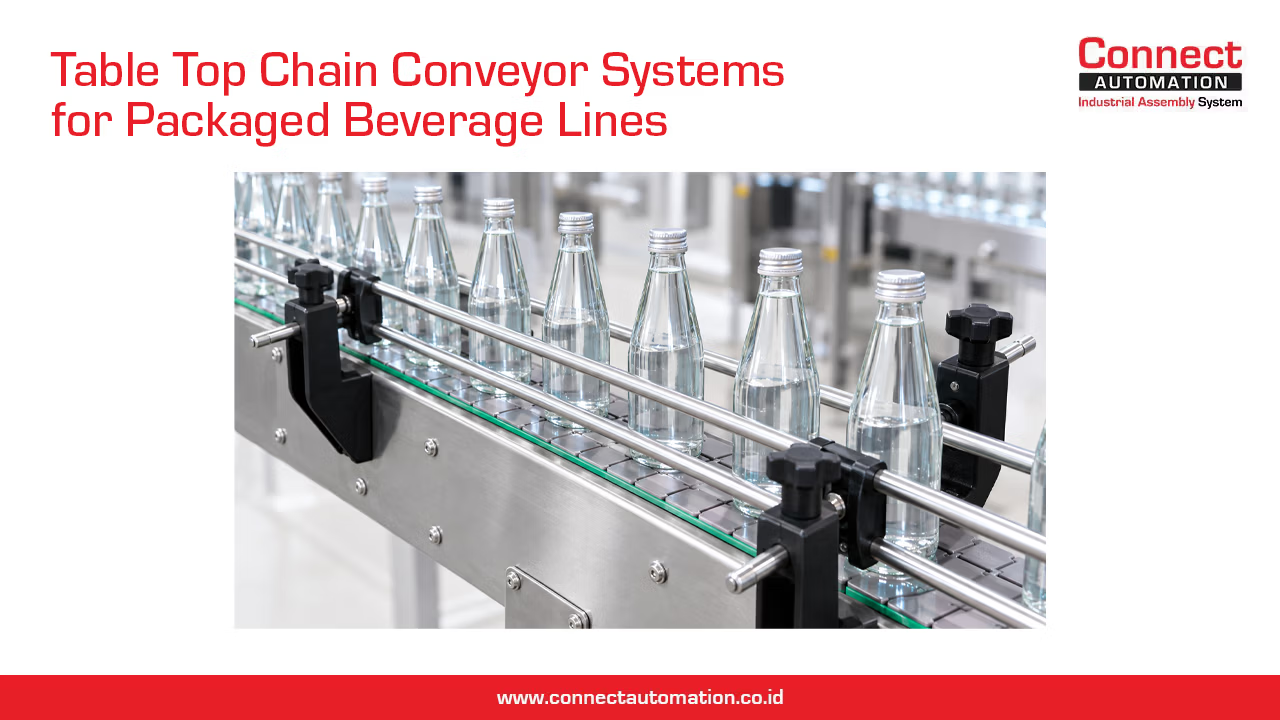
The packaged beverage industry involves a series of production processes that run continuously and sequentially. From filling and capping to labeling, inspection, and packing, each stage needs to be properly connected so products can move smoothly from one process to the next.
In production lines like these, conveyors play an important role in continuously transporting products. One of the commonly used solutions is the Table Top Chain Conveyor, particularly for handling beverages in bottles, cans, cups, and other types of packaging.
Its application is not limited to bottled water. Table Top Chain Conveyors can also be used in production lines for soft drinks, packaged tea, coffee, isotonic drinks, energy drinks, juices, dairy beverages, and other packaged beverages.
What Is a Table Top Chain Conveyor?
A Table Top Chain Conveyor is a conveyor system that uses a chain with a flat top surface to transport products from one point to another. Unlike a belt conveyor, which uses a continuous belt surface, a table top chain consists of interconnected chain links that move along the conveyor path. This design makes it suitable for production lines that require continuous product transportation at high volumes.
In the beverage industry, Table Top Chain Conveyors are commonly used to transport products after filling and move them toward subsequent processes such as capping, labeling, inspection, coding, and packaging.
Because the conveyor can be configured according to production requirements, it can become an integral part of the overall material handling system within a beverage production facility.
Applications of Table Top Chain Conveyors in Beverage Production Lines
In packaged beverage production, conveyors do not operate independently. A Table Top Chain Conveyor can connect different machines and processes, allowing products to move automatically throughout the production line.
A typical production flow may include:
Filling → Capping → Labeling → Inspection → Coding → Packing
At each stage, the conveyor transports products toward the next process while maintaining a continuous and organized product flow.
1. Filling
After the filling process, products need to be transferred to the next stage. A Table Top Chain Conveyor can transport products from the filling machine toward the capping machine or another subsequent process.
The conveyor requirements around the filling area can vary depending on the type of beverage, packaging size, production capacity, and machine configuration.
For more information about conveyor applications around filling processes, related filling conveyor solutions can be explored separately.
2. Capping
Once the beverage has been filled, the containers can be transferred to the capping process. The conveyor helps keep products moving along the designated path as they enter the capping machine.
3. Labeling
After capping, products can continue toward the labeling machine. At this stage, product stability and positioning can become important factors in maintaining a consistent labeling process.
4. Inspection and Coding
Following labeling, products may pass through inspection or coding equipment. The conveyor provides the connection between these different systems, allowing products to continue moving along the production line.
5. Packing
At the end of the line, products can be transported toward packing or packaging equipment before moving to storage or distribution.
This means that a Table Top Chain Conveyor is not simply a product transportation system. It can also serve as an important connection between different processes within an integrated beverage production line.
Types of Beverages That Can Use Table Top Chain Conveyors
One of the advantages of Table Top Chain Conveyors is their flexibility in handling different types of packaged beverages. Examples include:
- Bottled water
- Soft drinks
- Packaged tea
- Packaged coffee
- Isotonic drinks
- Energy drinks
- Juice and fruit beverages
- Milk and dairy beverages
- Other flavored beverages
Each beverage may have different product characteristics and packaging requirements. Therefore, the conveyor design needs to be considered according to the product and the overall production line. For products such as milk and dairy beverages, for example, hygiene requirements and conveyor materials may receive greater attention when selecting the appropriate conveyor system.
Table Top Chain Conveyors for Different Types of Packaging
In addition to the type of beverage, the packaging itself is another important consideration. Packaged beverage production lines may handle different types of containers, including:
- PET bottles
- Glass bottles
- Cans
- Cups
- Bottles with different shapes and sizes
Different packaging dimensions, shapes, and weights can require different conveyor configurations. For example, a tall and narrow bottle will have different stability characteristics compared with a shorter and wider container. Conveyor width, side guides, speed, and overall layout may therefore need to be adjusted according to the product being handled.
Accumulation in Beverage Conveyor Systems
In a beverage production line where several machines are connected, the processing speed of each machine may not always be the same. A machine may temporarily stop, operate at a different speed, or produce output at a rate that differs from the following process. Without proper handling, these differences can affect the product flow throughout the production line.
This is where accumulation conveyor systems can play an important role. Accumulation allows a certain number of products to temporarily remain in a designated conveyor area before continuing to the next process. This helps manage differences in product flow between machines and can contribute to a more stable production line.
For a more detailed discussion of accumulation systems, refer to the related article on Accumulator Conveyor.
Conveyor Materials for the Beverage Industry
The material used for the conveyor should also be selected according to the production environment and application requirements. Table Top Chain Conveyors can use materials such as plastic chains or stainless steel chains. For the conveyor frame, stainless steel is commonly considered for applications where hygiene, durability, and resistance to the production environment are important.
Material selection is not only about mechanical strength. Factors such as cleaning requirements, the type of product being handled, production conditions, and applicable hygiene standards should also be considered. For a more detailed discussion of stainless steel conveyor construction, refer to the related article on Stainless Steel Conveyor Frames.
Table Top Chain Conveyors for High-Speed Production Lines
Packaged beverage production is generally carried out at high volumes and requires a consistent product flow. For this reason, the conveyor needs to be designed to support the requirements of the entire production line.
A Table Top Chain Conveyor can connect multiple machines, from filling and capping to labeling and packaging. Conveyor speed, spacing between processes, conveyor configuration, and product characteristics all need to be considered to ensure smooth product transportation.
When multiple machines are connected, the conveyor must also work as part of an integrated system. This means conveyor design should not focus on one section of the line alone, but should consider the overall production flow.
Factors to Consider When Selecting a Table Top Chain Conveyor
Before selecting a Table Top Chain Conveyor for a packaged beverage production line, several factors should be considered.
- Beverage Type : Product characteristics can influence conveyor requirements. Carbonated beverages, tea, coffee, juice, dairy beverages, and other products may have different production processes and packaging characteristics.
- Packaging Type and Size : PET bottles, glass bottles, cans, and cups can require different handling considerations. The shape and dimensions of the packaging should also be considered to ensure stable product movement.
- Production Speed : Production capacity determines the required conveyor speed and configuration. The conveyor should be designed according to the output of the machines connected throughout the production line.
- Production Line Layout : Machine positioning, distances between processes, available floor space, and the overall production flow can influence the conveyor's design and configuration.
- Accumulation Requirements : When different machines operate at different speeds or capacities, accumulation requirements should be considered from the beginning of the conveyor design process.
- Materials and Production Environment : The choice of plastic or stainless steel chain and the frame material should be based on the production environment, cleaning requirements, hygiene considerations, and operating conditions.
- Integration with Production Equipment : The conveyor should be able to integrate with the equipment used throughout the production line, including filling machines, capping machines, labeling machines, inspection systems, and packaging equipment.
Table Top Chain Conveyors as Part of a Beverage Production Line
In the packaged beverage industry, a conveyor is part of a larger production system where multiple processes and machines work together. Therefore, selecting a conveyor should involve more than simply choosing a conveyor type. Product characteristics, packaging, production capacity, layout, accumulation requirements, materials, and connected equipment should all be considered as part of the overall system.
A Table Top Chain Conveyor can provide an effective solution for continuously transporting various packaged beverages throughout a production line. With a design tailored to the application, it can help connect processes ranging from filling, capping, labeling, and inspection to final packaging within an integrated production system.
For beverage manufacturers planning a new production line or upgrading an existing one, understanding the product characteristics and overall production flow is an important step toward selecting the right conveyor system.
Connect Automation specializes in providing automation solutions, including conveyor systems, to improve efficiency across various industries. The company delivers cutting-edge technology to help organizations automate tasks and optimize workflows. Connect Automation helps businesses reduce manual efforts, boost productivity, and achieve better outcomes. With a customer-focused approach, the company designs tailored solutions to ensure smooth and effective automation transitions for long-term success.
Kawasan Industri Jababeka Tahap 1, Jl. Jababeka II D Blok C14L Cikarang, Indonesia (17530)
(021) 893 5060 Google Maps
Rungkut Industri III, No. 37, Rungkut Menanggal, Kec. Gn. Anyar Surabaya, Indonesia (60293)
(031) 9985 8624 Google Maps