
REQUEST A FREE ESTIMATE!
Platform Stairs for Accessing Hoppers Tanks and Conveyors
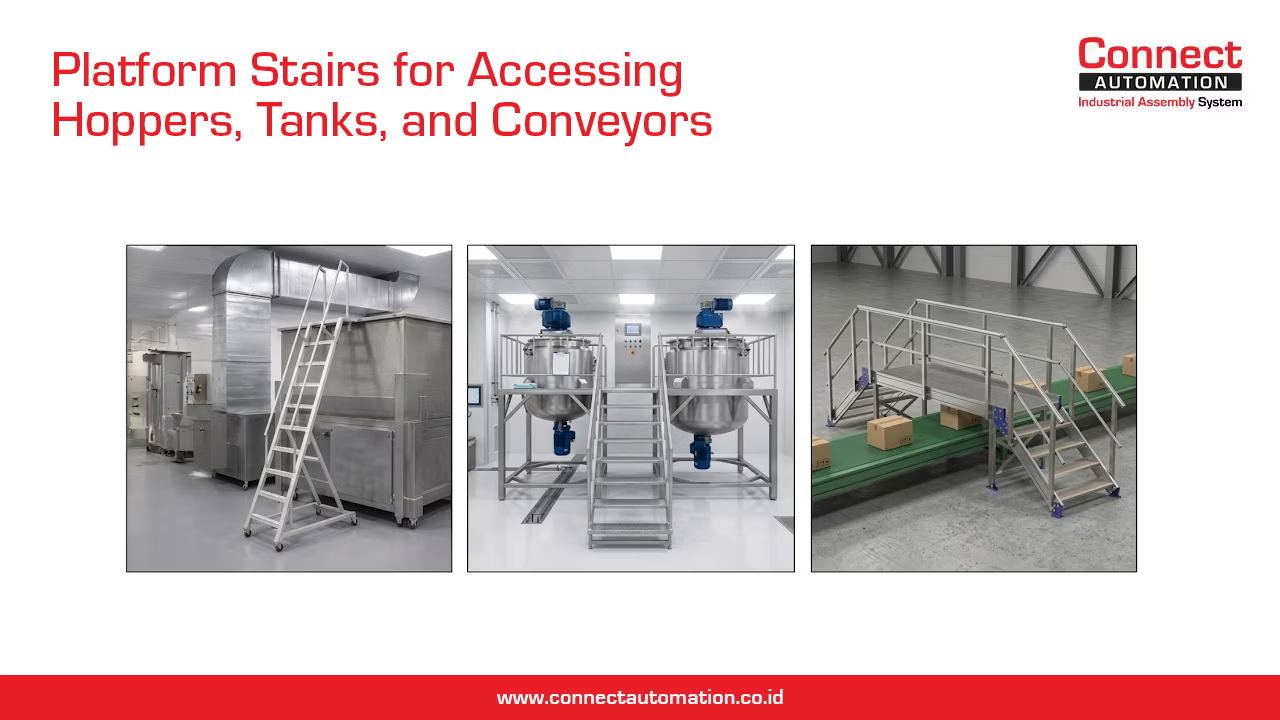
In modern industrial facilities, safe access to production equipment is essential for maintaining operational efficiency and workplace safety. Many pieces of equipment, such as hoppers, tanks, and conveyors, are installed at elevated positions, requiring operators and maintenance personnel to safely access them for daily operations and routine servicing.
Using a conventional ladder often provides limited stability and insufficient working space. As a result, many manufacturers choose platform stairs as a safer, more practical, and more efficient solution for inspection, operation, cleaning, and maintenance activities.
So, why are platform stairs an important addition to industrial equipment such as hoppers, tanks, and conveyors? Let's take a closer look.
What Are Industrial Platform Stairs?
Platform stairs are access structures consisting of stairways, landing platforms, and safety features such as handrails and guardrails. They are designed to provide safe and convenient access to elevated work areas within industrial facilities.
Unlike portable ladders, platform stairs are typically installed as permanent or semi-permanent structures, offering a stable working platform for operators and maintenance technicians. Industrial platform stairs are commonly used for activities such as:
- Equipment inspection
- Machine operation
- Material loading
- Cleaning production equipment
- Preventive maintenance and repairs
A properly designed platform stair system not only improves working comfort but also helps reduce the risk of workplace accidents.
Why Do Hoppers, Tanks, and Conveyors Require Platform Stairs?
In many manufacturing facilities, hoppers, tanks, and conveyors are installed above floor level to optimize production flow, improve space utilization, or integrate with other processing equipment.
Because these systems are elevated, operators and technicians need reliable access for routine operational and maintenance tasks. Platform stairs provide several important benefits:
- Safe access to elevated equipment
- A stable working area compared to portable ladders
- Easier inspection of equipment conditions
- Improved efficiency during maintenance
- Reduced risk of falls and workplace injuries
For these reasons, platform stairs have become an essential part of modern industrial facility design.
Platform Stairs and Safety in Areas with Elevation Differences
In the context of hoppers, tanks, and conveyors, working at height does not always mean that the work is performed on a very high structure. Differences in elevation between the production floor and inspection points, hopper filling areas, the top of tanks, or conveyors installed at different levels can already create a fall risk if access and walking surfaces are not properly designed.
Therefore, safety aspects should be considered from the access design stage. Platform stairs provide a more stable access route and working area compared with relying on portable ladders for tasks that are performed regularly. Handrails on stairs help operators when moving between different elevations, while guardrails on landing platforms help provide protection along exposed edges of the working area.
In facilities with multiple work areas at different elevations, platform stairs can also be part of a stair system for industrial production and warehouse areas. With this approach, operator access is not designed as a separate element, but as part of the facility layout, taking into account movement paths, maintenance activities, and workplace safety.
Platform Stairs for Hopper Access
Hoppers serve as temporary storage units that feed raw materials into production equipment. In many applications, hoppers are installed at higher elevations to allow gravity feeding or direct material transfer into downstream processes.
This elevated position requires safe access for operators performing daily production tasks. Common activities around hoppers include:
- Loading raw materials
- Checking material levels
- Cleaning residual material buildup
- Removing blockages inside the hopper
- Performing routine inspections and maintenance
With a dedicated platform stair system, operators have a secure working area that allows these tasks to be performed more safely and efficiently than with portable ladders.
Platform Stairs for Tank Access
Storage tanks and process tanks are widely used across industries such as food and beverage, plastics manufacturing, and general manufacturing.
Because many important components are located on top of the tank, safe access is necessary for inspection and maintenance. Platform stairs make it easier for operators and maintenance personnel to perform tasks such as:
- Inspecting tank conditions
- Checking level sensors
- Inspecting valves and piping
- Opening and closing manholes
- Cleaning the top surface of the tank
- Performing routine maintenance on installed equipment
In addition to improving accessibility, platform stairs help create a safer working environment for elevated maintenance activities.
Platform Stairs for Conveyor Access
Conveyors are among the most commonly used material handling systems in industrial facilities. Depending on the production layout, conveyors are often installed at elevated heights or on multiple levels.
Tiered configurations can also be found when material handling systems move products between different floor levels or process areas. In applications that use vertical conveyors for material transfer between levels, operator access should be considered separately from the product transfer path. Platform stairs can be used to reach inspection points, sensors, drive units, or maintenance areas located at specific elevations without using the conveyor structure itself as an access route.
As a result, safe access becomes essential for routine inspection and maintenance. Platform stairs provide convenient access for maintenance personnel to perform tasks such as:
- Inspecting conveyor belts or wire mesh belts
- Adjusting belt tracking
- Checking rollers and pulleys
- Inspecting motors and gearboxes
- Cleaning conveyor components
- Inspecting sensors and supporting equipment
For more complex conveyor layouts, stairs and landing platforms should be planned together with the conveyor position, operator pathways, and maintenance points. An approach that focuses on integrating stair systems with conveyors and work platforms helps ensure that access does not obstruct material flow or create difficult working paths for operators during inspection and maintenance.
Because platforms are often used for inspection and maintenance at elevated levels, access planning should also be aligned with basic safety rules for industrial conveyor systems — including maintaining safe distances from moving components and providing work paths that do not use the conveyor structure as a walking or access surface.
Improved accessibility allows maintenance work to be completed more efficiently while minimizing production downtime.
Essential Components of Industrial Platform Stairs
To provide safe and reliable access, industrial platform stairs typically include several key components.
- Stairway : The stairway provides access from ground level to elevated work areas with a comfortable and safe climbing angle.
- Landing Platform : The landing platform offers a stable standing area where operators can safely perform inspections, maintenance, or operational tasks.
- Handrails and Guardrails : Handrails provide support while ascending or descending the stairs, while guardrails help prevent falls when working on elevated platforms.
- Toe Boards : Toe boards are installed along the platform edges to prevent tools, equipment, or small objects from falling to lower levels.
- Structural Support : The entire system is supported by a structural frame designed to meet the required load capacity and operating conditions.
Common Materials Used for Platform Stairs
The material selection for platform stairs depends on the operating environment and production requirements. Commonly used materials include:
- Aluminum profiles
- Stainless steel
- Mild steel with powder coating finish
Each material offers different advantages in terms of weight, corrosion resistance, durability, and maintenance requirements. To learn more about the benefits of aluminum structures, read our article Why Are Aluminum Profiles Ideal for Industrial Platform Stairs?
Important Design Considerations for Platform Stairs
Every production facility has unique operational requirements. Therefore, platform stairs should be designed according to the specific application. Important design considerations include:
- Required access height
- Working space for operators
- Load capacity
- Position relative to hoppers, tanks, and conveyors
- Maintenance accessibility
- Operator movement during inspections
- Integration with the overall production layout
Proper planning not only improves worker safety but also maximizes the efficient use of available factory space.
Conclusion
Platform stairs provide a safe and practical access solution for industrial equipment installed above floor level. Whether used for hoppers, tanks, or conveyors, they allow operators and maintenance personnel to perform inspections, operation, cleaning, and maintenance tasks more safely and efficiently.
Beyond improving workplace safety, platform stairs help simplify equipment maintenance, reduce downtime, and support smoother production operations.
To achieve the best results, platform stairs should be designed according to the specific application, considering equipment location, load requirements, material selection, and operator accessibility. With the right design, platform stairs become a long-term investment that enhances both productivity and safety in industrial environments.
Connect Automation specializes in providing automation solutions, including conveyor systems, to improve efficiency across various industries. The company delivers cutting-edge technology to help organizations automate tasks and optimize workflows. Connect Automation helps businesses reduce manual efforts, boost productivity, and achieve better outcomes. With a customer-focused approach, the company designs tailored solutions to ensure smooth and effective automation transitions for long-term success.
Kawasan Industri Jababeka Tahap 1, Jl. Jababeka II D Blok C14L Cikarang, Indonesia (17530)
(021) 893 5060 Google Maps
Rungkut Industri III, No. 37, Rungkut Menanggal, Kec. Gn. Anyar Surabaya, Indonesia (60293)
(031) 9985 8624 Google Maps