
REQUEST A FREE ESTIMATE!
Conveyor Fabrication for Industry Types Materials and Vendors
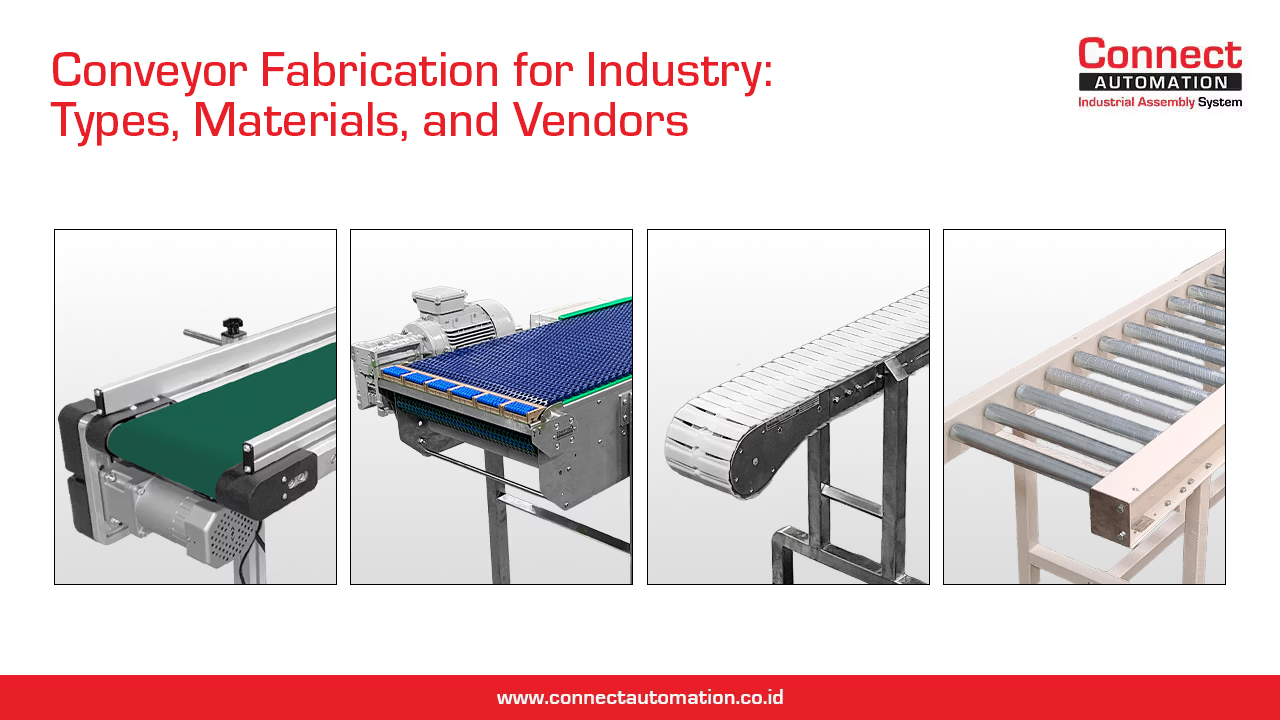
Conveyors play an important role in material handling systems by helping move products or materials in an organized manner from one process to another. However, not every production line has the same requirements. Differences in product characteristics, production capacity, factory layout, operating environment, and integration with other equipment can all affect the conveyor specifications required.
For some applications, a standard conveyor may be sufficient. However, when the dimensions, configuration, materials, or conveyor system need to be adapted to specific production conditions, conveyor fabrication can provide a more suitable solution.
Conveyor fabrication involves more than simply manufacturing a conveyor frame. It can include design, material selection, component manufacturing, assembly, testing, and customization according to production requirements. For this reason, choosing the right fabrication vendor requires consideration of both engineering capabilities and experience in handling different industrial applications.
What Is Conveyor Fabrication?
Conveyor fabrication is the process of manufacturing and assembling a conveyor system based on specific application requirements and specifications. The process can include manufacturing the frame, installing belts or chains, installing rollers, motors, and supporting components, as well as assembly and testing.
Unlike standard conveyors, which generally have predetermined specifications and configurations, fabricated conveyors can be customized to suit specific production conditions. Adjustments may include conveyor dimensions, frame materials, belt type, drive system, height, length, width, and conveyor path configuration.
As a result, conveyor fabrication is often used when a production line has specific requirements or when a conveyor needs to be integrated with existing equipment and production systems.
Types of Conveyors That Can Be Fabricated
The type of conveyor used for fabrication should be selected based on product characteristics, production capacity, conveying distance, and the processes involved. Some commonly used conveyor types include:
1. Belt Conveyor
A belt conveyor uses a continuous belt to transport products or materials. This type of conveyor can be used for a wide range of applications and can be configured according to the required length, width, speed, and product characteristics.
Belt conveyors are one of the most commonly used conveyor types in material handling systems. In addition to moving products from one point to another, they can support production flow, transfer products between processes, and move products to the next stage of production. Learn more about belt conveyor definitions, functions, and how they work in material handling systems.
The belt material can also be selected according to the application, such as PVC belts for general applications or PU belts for certain food-grade applications.
2. Modular Conveyor
A modular conveyor uses a belt made from interconnected plastic modules. This system provides flexibility in configuration and simplifies maintenance because damaged belt sections can be replaced individually.
In addition to configuration flexibility and easier maintenance, modular conveyors offer several advantages for different production requirements. Features such as easy belt segment replacement, layout flexibility, and adaptability to production line requirements are important considerations when selecting this type of conveyor. Learn more about the benefits and advantages of using modular conveyors for industrial applications.
Modular conveyors are widely used in production lines that require flexible configurations and relatively easy maintenance.
3. Table Top Chain Conveyor
A table top chain conveyor uses a chain with a flat conveying surface to transport products. This type of conveyor is commonly used for packaged products that require stable and consistent movement.
Table top chain conveyors are widely used in production lines that handle packaged products, particularly when products require stable and controlled movement between processes. They can be applied across various industries, including food & beverage, FMCG, pharmaceutical, and packaging, with configurations adapted to product characteristics and production line layouts. Learn more about table top chain conveyors and their various industrial applications.
The configuration can be adapted to the production layout, including straight conveying paths and applications that require changes in direction.
4. Roller Conveyor
A roller conveyor uses a series of rollers to transport products or materials. This type can be used for various material handling applications, either with gravity or powered roller systems.
Roller conveyors are available in several configurations to meet different material handling requirements. Gravity roller conveyors can move products using gravity or manual pushing, while powered roller conveyors use a drive system to control product movement. Learn more about roller conveyors and the different types available for material handling systems.
The selection should consider the weight, dimensions, and characteristics of the products being transported.
Materials Used in Conveyor Fabrication
The frame material is an important consideration in conveyor fabrication. Material selection is not only related to structural strength but also to the operating environment, hygiene requirements, maintenance, and budget.
- Stainless Steel : Stainless steel is commonly used for conveyors operating in environments with high hygiene requirements or conditions where corrosion resistance is important. Stainless steel 304 is widely used in food and beverage, pharmaceutical, cosmetic, and applications requiring regular washdown. For certain environments with higher exposure to corrosive substances, a suitable stainless steel specification may be considered.
- Aluminium Profile : Aluminium profile is lightweight, modular, and relatively easy to assemble or modify. This material is commonly used for conveyors that require flexible configurations. Aluminium profile systems also allow structural changes or adjustments to be made more easily when production requirements change.
- Carbon Steel or Mild Steel : Carbon steel or mild steel can be used for industrial applications that do not require the corrosion resistance of stainless steel. These materials can be combined with suitable surface finishes, such as powder coating, to provide additional surface protection. When using carbon steel, the operating environment should be considered, particularly where moisture or substances that may accelerate corrosion are present.
Ultimately, conveyor materials should be selected based on the application rather than material cost alone. Operating conditions, product characteristics, cleaning requirements, and expected service life should all be considered.
Conveyor Fabrication for Different Industries
Conveyor requirements can vary depending on product characteristics, production processes, and operating environments. Therefore, a conveyor system designed for one industry may not necessarily be suitable for another.
- Food & Beverage : The food and beverage industry requires particular attention to hygiene, materials, and ease of cleaning. Conveyors may use stainless steel frames and components suitable for food-grade applications. In addition to material selection, conveyor design should provide appropriate access for cleaning and accommodate washdown requirements in production areas.
- Pharmaceutical : In pharmaceutical applications, hygiene and contamination control are important considerations. Conveyor materials and design should be selected according to the production process and requirements of the operating environment.
- FMCG and Packaging : In FMCG and packaging industries, conveyors are commonly used to move products between production, filling, packaging, inspection, and other processes. Conveying speed, product flow stability, and integration with other equipment are important factors to consider.
- Cosmetic : The cosmetic industry handles products in various shapes and sizes, including bottles, tubes, jars, and other packaging formats. Conveyors need to be adapted to product dimensions and characteristics to ensure stable product movement.
- Electronics : In electronics manufacturing, conveyors can be used to handle relatively lightweight products or components with specific configuration requirements. Conveyor dimensions, speed, and handling methods should be matched to the production process.
Understanding the requirements of each industry allows the appropriate conveyor type, material, and configuration to be selected for the application.
Why Can a Standard Conveyor Be the Better Choice?
Not every production requirement needs a conveyor with specially manufactured components. For many applications, using a conveyor system with standardized specifications and components can provide advantages in terms of reliability, maintenance, and ease of procurement.
Standard conveyor systems generally use configurations and components that have already been applied across various applications. Because these systems have gone through development and repeated use, they can provide greater consistency and reliability than specially manufactured components created for a specific requirement.
However, a standard conveyor does not mean that it cannot be adapted to site conditions. Certain aspects, such as conveyor length, width, height, configuration, and the position of specific components, can be adjusted as long as they remain within the established specifications and configuration options. This approach allows the conveyor to accommodate production line requirements without modifying the main components that have already been proven in use.
The use of specially manufactured components should also be carefully considered. Components developed for a specific application may require additional trials, testing, and validation before they can be used consistently in a production line. This can increase development time and costs, as well as create additional maintenance considerations in the future.
Therefore, when selecting a conveyor, more customization does not necessarily mean a better solution. In many cases, using a proven standard system and making adjustments only where necessary can be a safer and more efficient approach.
By understanding the difference between configurable elements and components that are better kept as standard, companies can obtain a conveyor that fits their site requirements without compromising reliability and ease of maintenance.
What Is Included in the Conveyor Fabrication Process?
Conveyor fabrication involves more than manufacturing and assembling components. To ensure that the conveyor performs according to production requirements, the process should begin with a clear understanding of the application.
In general, the process may include:
Requirement → Design → Material Selection → Fabrication → Assembly → Testing → Installation
1. Understanding Production Requirements
The initial stage involves understanding the products being transported, production capacity, product weight, required speed, and operating environment.
2. Determining Conveyor Specifications
Once the requirements are understood, conveyor specifications can be determined, including length, width, height, speed, load capacity, belt or chain type, and drive system.
3. Creating the Design and Layout
The conveyor design and layout help ensure that the conveyor position and material flow are appropriate for the production line. Proper planning also helps determine how the conveyor will connect with other machines or equipment.
4. Selecting Materials
The frame, belt, roller, chain, and other components are selected according to the application and operating environment.
5. Fabrication and Assembly
The conveyor components are then manufactured according to the design and assembled into a complete conveyor system ready for testing.
6. Testing
Testing is carried out to ensure that the conveyor operates according to the specified requirements and intended application.
7. Installation and Integration
For certain applications, the conveyor needs to be positioned and integrated with the existing production line or equipment.
Turnkey Conveyor Fabrication for Industrial Applications
For certain projects, companies may require more than the fabrication of a single conveyor unit. A turnkey conveyor solution can cover several stages, including design, fabrication, assembly, installation, and integration with an existing system, depending on the agreed project scope.
Working with a single vendor for multiple stages can simplify project coordination. Design and fabrication can also be planned in a more integrated manner, helping reduce potential discrepancies between the design and actual site conditions.
Before selecting a turnkey conveyor vendor, however, it is important to clearly understand the scope of work being offered, including whether the vendor handles design, fabrication, installation, integration, testing, and commissioning.
How to Choose a Conveyor Fabrication Vendor
Choosing a conveyor fabrication vendor should not be based on the quoted price alone. The vendor's ability to understand production requirements and deliver a conveyor that is suitable for the application should also be considered.
Some factors to evaluate include:
1. Engineering Experience and Capabilities
The vendor should be able to understand the application requirements and translate them into an appropriate conveyor design.
2. Types of Conveyors Available
Make sure the vendor has experience with the required conveyor types, including belt conveyors, modular conveyors, table top chain conveyors, roller conveyors, and other systems.
3. Configuration Flexibility
If a production line has specific dimensional or configuration requirements, it is important to choose a vendor that can adapt the conveyor specifications to the application. Flexibility in dimensions, configuration, materials, and components can help ensure that the conveyor is suitable for the requirements of the production line.
4. Available Materials
The vendor should be able to provide materials suitable for the operating environment, such as aluminium profile, carbon steel, and stainless steel.
5. Experience in Relevant Industries
Experience in the same or similar industries can help a vendor understand specific application requirements, particularly in industries with specialized needs such as food, beverage, pharmaceutical, and cosmetic manufacturing.
6. Integration Capabilities
If the conveyor needs to connect with existing machines or conveyors, the vendor's ability to understand the production flow and handle system integration becomes important.
In addition to fabrication and workshop assembly, conveyors may also require onsite assembly at the customer's facility, particularly when the system has a specific size, configuration, or layout that requires installation directly in the production area. This process can include positioning the conveyor, connecting individual sections, adjusting its alignment, and conducting initial checks to ensure that the system can be properly integrated with the existing production line.
7. Quality Control and Testing
Quality control and testing help ensure that the conveyor operates according to the agreed specifications before being introduced into the production line.
8. After-Sales Support
Post-installation support should also be considered, including maintenance, spare parts, troubleshooting, and future modification requirements.
Support after the conveyor has been fabricated and installed is also important for keeping the system operating properly. After-sales support may include conveyor inspection, maintenance, adjustment, troubleshooting, and technical assistance when there are changes or new requirements in the production line. With ongoing support, the condition of the conveyor can be monitored and maintenance needs can be addressed according to actual operating conditions and usage in the field.
Questions to Prepare Before Ordering a Conveyor
Before contacting a conveyor fabrication vendor, it is useful to prepare basic information about the production requirements. This can make the consultation and design process more efficient.
Some questions to prepare include:
- What products will be transported?
- What are the product weight and dimensions?
- What is the required production capacity per hour?
- What conveyor speed is required?
- What conveyor length and width are needed?
- Does the conveyor require stainless steel or another specific material?
- Is a food-grade belt required?
- What is the existing production line layout?
- Does the conveyor need to connect with existing machinery?
- Is a standard or custom conveyor required?
- Are installation and integration services required?
The more complete the information provided at the beginning, the easier it will be for the vendor to determine the appropriate conveyor type, specifications, materials, and configuration.
Conclusion
Conveyor fabrication allows a conveyor system to be customized according to production requirements, including its dimensions, materials, conveyor type, configuration, and integration with an existing production line. However, not every application requires a custom conveyor. A standard conveyor can remain an effective option when its specifications already meet the production requirements.
Therefore, conveyor selection should begin by understanding the application requirements and then determining the appropriate conveyor type, materials, design, and configuration. When choosing a fabrication vendor, factors such as engineering capabilities, fabrication experience, customization, quality control, integration, and after-sales support should also be considered.
With the right planning and fabrication process, a conveyor is not simply a product transportation tool, but an integrated part of the production system that can support a more efficient and stable material flow.
Connect Automation specializes in providing automation solutions, including conveyor systems, to improve efficiency across various industries. The company delivers cutting-edge technology to help organizations automate tasks and optimize workflows. Connect Automation helps businesses reduce manual efforts, boost productivity, and achieve better outcomes. With a customer-focused approach, the company designs tailored solutions to ensure smooth and effective automation transitions for long-term success.
Kawasan Industri Jababeka Tahap 1, Jl. Jababeka II D Blok C14L Cikarang, Indonesia (17530)
(021) 893 5060 Google Maps
Rungkut Industri III, No. 37, Rungkut Menanggal, Kec. Gn. Anyar Surabaya, Indonesia (60293)
(031) 9985 8624 Google Maps