
REQUEST A FREE ESTIMATE!
What Is a Safety Fence Functions and Benefits in Industrial Areas
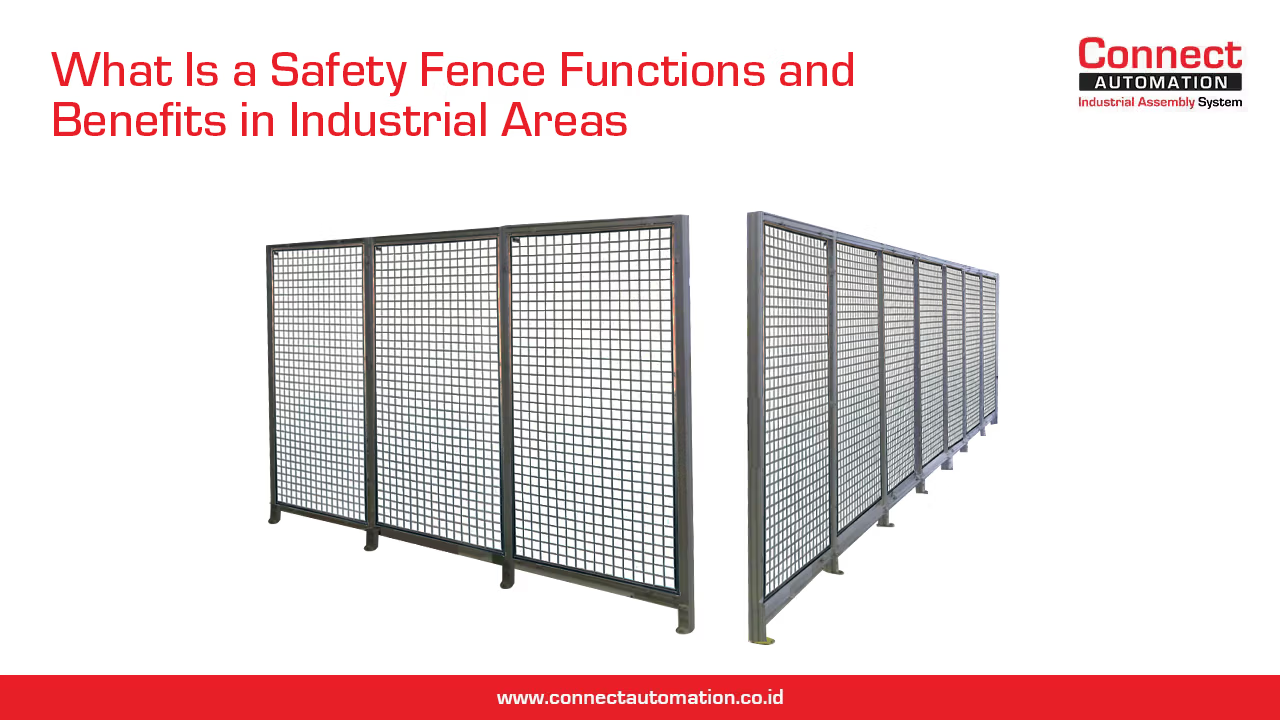
Modern manufacturing environments increasingly rely on automated machinery, industrial robots, and material handling systems to improve production efficiency. While these technologies offer significant advantages, they can also create hazardous areas when their operating zones are freely accessible to operators or other personnel.
One of the solutions commonly used to control access to these areas is a safety fence. Unlike machine guarding that is installed directly around a specific machine, a safety fence acts as a physical boundary around a larger working area, restricting access to hazardous zones while allowing the production process to continue.
As part of a safety guarding system, safety fencing helps create a safer, more controlled, and better-organized industrial environment.
What Is a Safety Fence?
A safety fence is a physical barrier installed around a working area or hazardous zone to prevent unauthorized or accidental access while machinery or automated systems are operating.
In industrial applications, safety fences are often referred to as perimeter guarding because they are designed to protect an entire operational area rather than a single machine. The enclosed area may contain multiple machines, industrial robots, conveyors, or automated systems working together as part of one production process.
A typical safety fence consists of wire mesh panels mounted on structural posts and is equipped with one or more safety gates to provide controlled access for operators and maintenance personnel.
The design can be customized according to the production layout, required access points, machine operating range, and safety requirements.
What Are the Functions of a Safety Fence?
A safety fence does more than simply act as a physical barrier. It plays several important roles in controlling access and improving safety in industrial environments.
1. Restricting Access to Hazardous Areas
The primary function of a safety fence is to prevent operators and other personnel from entering hazardous areas while machinery is operating.
By clearly separating the working zone from the surrounding area, the risk of accidental entry into an operating machine area can be significantly reduced.
2. Protecting Operators from Automated Systems
Industrial robots, automated conveyors, and high-speed machinery may continue operating without direct operator interaction. A safety fence creates a physical separation between personnel and these moving systems.
3. Controlling Movement Within the Production Area
Safety fences can also help control the movement of operators, technicians, and material handling equipment around production equipment. This makes the boundary between accessible and restricted areas more clearly defined.
4. Supporting an Integrated Safety System
Safety fences are often combined with safety gates, interlock switches, emergency stop devices, and other safety components. Together, these elements can form a more comprehensive safety guarding system.
In the implementation of occupational safety in production areas, safety guarding not only serves as a physical barrier but also helps reduce the risk of operators coming into contact with machine components or potentially hazardous areas. Combining safety fences with other safety devices can help create a more controlled work environment and support the consistent implementation of safety procedures. Learn more about the role of safety guarding in supporting occupational safety in production areas.
When Is a Safety Fence Needed in a Production Area?
Not every machine requires a safety fence. However, perimeter guarding becomes particularly useful when the hazard extends beyond a single machine or when several pieces of equipment operate within the same area.
1. When Machines Have a Large Operating Area
Some production machines have long or open operating zones that cannot be effectively protected using a machine enclosure alone.
For example, a plastic sheet extrusion line may include a section where plastic sheets are continuously stretched or guided through multiple rollers. These rollers can create moving parts and pinch points along a relatively long production area.
In such applications, a safety fence can be installed around the perimeter of the hazardous zone to restrict access while the production line is operating.
2. When Multiple Machines Operate Within One Area
Automated production lines often consist of several machines working together. Instead of installing separate guarding around every individual machine, a safety fence can be installed around the overall working area.
This approach can provide a clearer and more practical separation between the production zone and the surrounding workplace.
3. Around Industrial Robot Cells
Industrial robots have a wide range of movement and can operate at high speeds. A robot cell is therefore commonly surrounded by safety fencing to prevent personnel from entering the robot's operating zone while it is active.
4. Around Automated Material Handling Systems
Conveyors, transfer systems, lift conveyors, and other automated material handling equipment can extend across large areas of a production facility.
Safety fencing can be used to separate these operating zones from pedestrian areas and prevent personnel from entering the system while it is running.
5. When Access to an Area Needs to Be Restricted
Some production areas should only be accessed by authorized operators or maintenance personnel, particularly while equipment is operating.
In these situations, safety fencing provides a clearly defined physical boundary and helps control who can enter the restricted area.
Safety fences are one of the components of safety guarding that can be applied across various industrial environments with different characteristics and risk levels. They are commonly used in manufacturing, automotive, food and beverage, pharmaceutical, packaging, and other production facilities that use automated machines, robots, and material handling systems. The type and configuration of safety guarding should be selected based on the production process, areas that need to be protected, and operator access requirements. Learn more about the use of safety guarding in various modern industries.
Common Safety Fence Components
Although the design varies according to the application, a typical industrial safety fence consists of several key components.
- Fence Panels : Wire mesh panels are commonly used because they provide a physical barrier while maintaining good visibility. They also allow airflow around machinery and make it easier for operators to observe the production process from outside the restricted area.
- Support Posts : Support posts hold the fence panels in position and provide the structural framework for the entire perimeter guarding system.
- Safety Gates : Safety gates provide controlled access for operators and maintenance personnel when inspection, setup, cleaning, or servicing is required.
- Safety Interlocks : For higher-risk applications, safety gates can be equipped with safety interlock switches. When the gate is opened, the interlock can send a signal to the machine control system to stop the relevant equipment.
- Base Plates and Anchor Bolts : Base plates and anchor bolts secure the safety fence to the floor and help maintain the stability of the structure during normal operation.
What Are the Benefits of Using a Safety Fence?
In addition to improving workplace safety, safety fencing can provide several operational benefits.
- Clearly Defined Working Areas : Safety fences create a clear physical boundary between restricted production zones and areas accessible to personnel. This makes the layout of the production environment easier to understand.
- Reduced Risk of Human Error : By physically restricting access, safety fencing can reduce the possibility of someone accidentally entering a hazardous area while machinery is operating.
- Better Access Control : Controlled entry points make it easier to manage who is allowed to enter a particular production area, especially when maintenance or troubleshooting is required.
- Easier Maintenance Planning : With clearly defined access points, maintenance personnel can enter the restricted area through designated gates rather than removing or dismantling sections of the fence.
- Modular and Expandable Design : Many industrial safety fences use modular components, allowing the system to be extended, relocated, or modified when the production layout changes. This can be particularly useful for manufacturing facilities that expect future expansion or changes to their production lines.
Does a Safety Fence Need a Safety Gate and Interlock?
Not every safety fence necessarily requires the same type of access control. The requirements depend on the risk assessment, machine configuration, and frequency of access to the restricted area.
If operators or maintenance personnel need to enter the area regularly for setup, inspection, or maintenance, a dedicated safety gate provides a practical access point.
For higher-risk applications, the safety gate can be integrated with a safety interlock. When the gate is opened, the interlock communicates with the machine control system so that the relevant machinery can stop before personnel enter the hazardous area.
The appropriate safety solution should therefore be determined based on the actual hazards and operating conditions rather than simply applying the same configuration to every safety fence.
Safety Fence vs. Machine Enclosure: What Is the Difference?
Safety fences and machine enclosures are both forms of physical safety guarding, but they serve different purposes.
A machine enclosure is generally designed to protect a specific machine or production process by placing the protective structure relatively close to the source of the hazard. It may use wire mesh, polycarbonate, or other protective panels depending on the application.
A safety fence, on the other hand, is designed to secure a larger working area or hazardous zone. The enclosed area may contain multiple machines, robots, conveyors, or automated systems.
For example, an automated palletizing cell may contain a robot, conveyor, pallet dispenser, and other equipment operating within the same zone. Instead of guarding each machine separately, a safety fence can be installed around the entire cell to control access to the area.
Therefore, machine enclosure and safety fence are not necessarily competing solutions. In some manufacturing facilities, they may be used together depending on the hazards and layout of the production system.
Conclusion
A safety fence is an important form of perimeter safety guarding used to restrict access to hazardous working areas in industrial environments. Unlike a machine enclosure, which focuses on protecting a specific machine, a safety fence is designed to secure an entire operational zone that may contain multiple machines or automated systems.
From industrial robot cells and automated production lines to conveyor systems, material handling equipment, and long processes such as plastic sheet extrusion, safety fencing can provide a practical way to separate personnel from hazardous operating areas.
When properly designed and integrated with safety gates, interlocks, and other safety devices, a safety fence can help improve access control, reduce the risk of accidental entry, support maintenance activities, and create a safer and more organized production environment.
Connect Automation specializes in providing automation solutions, including conveyor systems, to improve efficiency across various industries. The company delivers cutting-edge technology to help organizations automate tasks and optimize workflows. Connect Automation helps businesses reduce manual efforts, boost productivity, and achieve better outcomes. With a customer-focused approach, the company designs tailored solutions to ensure smooth and effective automation transitions for long-term success.
Kawasan Industri Jababeka Tahap 1, Jl. Jababeka II D Blok C14L Cikarang, Indonesia (17530)
(021) 893 5060 Google Maps
Rungkut Industri III, No. 37, Rungkut Menanggal, Kec. Gn. Anyar Surabaya, Indonesia (60293)
(031) 9985 8624 Google Maps