
REQUEST A FREE ESTIMATE!
The Role of Sensors and Interlocks in Safety Guarding Systems
Safety Guarding Alone Is Not Always Enough
Safety guarding plays a crucial role in protecting operators from machine-related risks in production areas. However, in real-world applications, relying solely on physical guarding is often not sufficient to ensure optimal safety.
Risks can still occur, especially when:
- Guards are opened while machines are still running
- Operators enter hazardous areas without system control
- There is no mechanism to verify safe conditions before machine operation
This is where sensors and interlock systems become essential—transforming safety guarding from a passive barrier into an active and responsive safety system.
What Are Safety Guarding Accessories?
Safety guarding accessories are additional components designed to enhance the functionality and effectiveness of guarding systems. These components work by:
- Detecting specific conditions
- Controlling machine operations
- Managing interaction between humans and machines
With these additions, safety guarding becomes more than just a physical barrier—it becomes part of an integrated safety control system.
Interlock Systems: The Core of Modern Safety Guarding
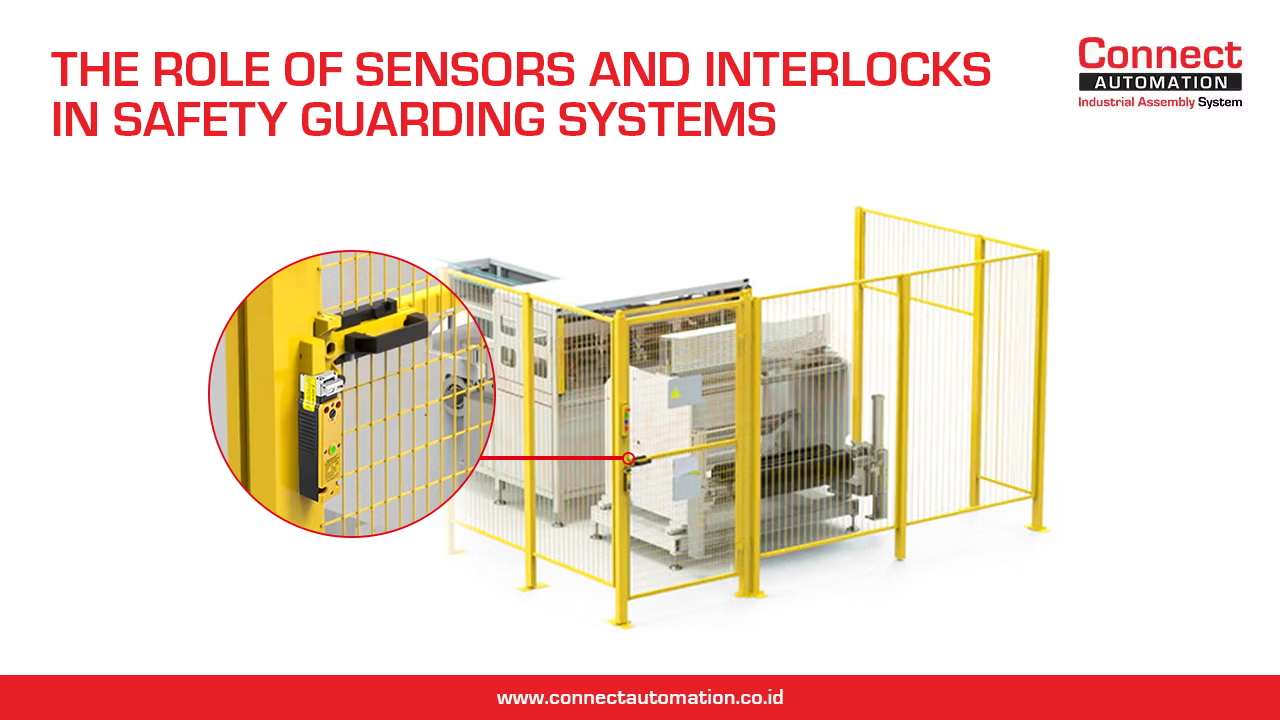
Interlock systems are one of the most critical components in modern safety guarding.
Main Functions:
- Automatically stop machines when a guard is opened
- Prevent machines from operating under unsafe conditions
Role in the System:
Interlocks ensure that operators cannot access hazardous areas while machines are running. At the same time, machines are only allowed to operate when all safety conditions are met.
Typical Applications:
- Access doors in machine enclosures
- Conveyor guarding systems
- Robot cell access points
By implementing interlocks, the risk of accidents caused by uncontrolled access can be significantly reduced.
Sensors in Safety Guarding Systems
In addition to interlocks, sensors play a key role in supporting safety systems.
Sensor Functions:
- Detect guard or door positions
- Monitor operator presence in specific areas
- Verify system conditions before machine operation
Common Types of Sensors:
- Proximity sensors
- Door sensors
- Safety light curtains (for open access areas)
Sensors act as the “eyes” of the system, providing the data needed for automated safety decisions.
Additional Supporting Components
To create a more complete safety system, other components are often integrated, such as:
- Emergency Stop (E-Stop) : Allows immediate machine shutdown in emergency situations
- Safety Relay : Ensures safety logic is executed correctly within the system
- Control Panel Integration : Connects all safety components into a centralized control system
These elements work together to ensure that the safety system is not only reactive but also structured and reliable.
How the Integrated System Works
In an integrated setup, all components function together as a unified system:
- Guard closed → machine operation is permitted
- Guard opened → interlock stops the machine
- Sensors detect conditions → system determines whether it is safe to operate
This approach ensures that safety is not dependent on a single component, but on a coordinated system of protection.
Implementation in Production Areas
Sensors and interlock systems can be applied across various production environments, including:
- Conveyor systems
- Automated and semi-automated machines
- Robot cells
- Loading and unloading areas
In environments with high activity and limited space, these systems help maintain safety without disrupting operational efficiency.
Benefits of an Integrated Safety Guarding System
Combining safety guarding with sensors and interlock systems provides several advantages:
- Improved workplace safety
- Reduced risk of human error
- Stronger support for Occupational Safety (K3) compliance
- Enhanced production stability and continuity
- Better control over operational processes
Conclusion
In modern industrial environments, safety guarding alone is no longer sufficient. Achieving optimal safety requires integration with sensors, interlock systems, and other control components.
Through this approach, safety guarding evolves from a simple physical barrier into an active safety system capable of preventing risks more effectively.
A well-designed safety system not only protects operators but also ensures stable and sustainable production operations.
Connect Automation specializes in providing automation solutions, including conveyor systems, to improve efficiency across various industries. The company delivers cutting-edge technology to help organizations automate tasks and optimize workflows. Connect Automation helps businesses reduce manual efforts, boost productivity, and achieve better outcomes. With a customer-focused approach, the company designs tailored solutions to ensure smooth and effective automation transitions for long-term success.
Kawasan Industri Jababeka Tahap 1, Jl. Jababeka II D Blok C14L Cikarang, Indonesia (17530)
(021) 893 5060 Google Maps
Rungkut Industri III, No. 37, Rungkut Menanggal, Kec. Gn. Anyar Surabaya, Indonesia (60293)
(031) 9985 8624 Google Maps