
REQUEST A FREE ESTIMATE!
Types of Workstations in Modern Industrial Systems
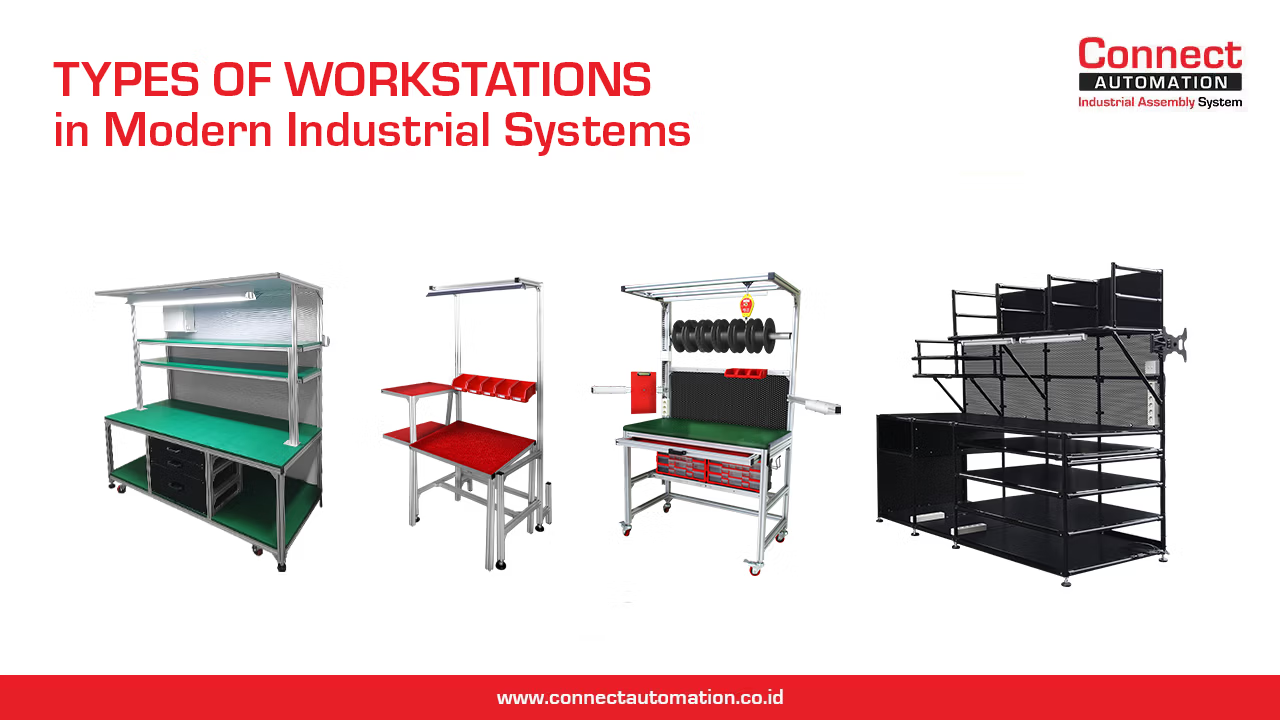
In modern manufacturing and production environments, a workstation is more than just a work table. It is a critical component of the production system, designed to support operators in an efficient, ergonomic, and standardized manner. Each process in a factory has unique requirements, which means different types of workstations are needed to optimize workflow.
Understanding the types of workstations in the industrial world can help companies choose the right solution to increase productivity, reduce waste, and support the implementation of lean manufacturing principles.
1. Assembly Workstation
Assembly workstations are among the most common types of industrial workstations. They are designed for assembling components into final products or sub-assemblies. Typical features include:
- Tool racks and hangers
- Jigs and fixtures for precision
- Task-specific lighting
- Ergonomic accessories for operator comfort
The primary goal of assembly workstations is to ensure consistent, fast, and error-free operations.
2. Packing Workstation
Packing workstations are used for preparing products for shipment. They are widely employed in industries such as food and beverage, consumer goods, and industrial spare parts. Common activities at packing workstations include:
- Sealing and wrapping
- Product labeling
- Carton stacking
- Shipping preparation
Packing workstations are often integrated with conveyors or roller tables to streamline the packing process and reduce bottlenecks.
3. Inspection and Quality Control Workstation
Inspection or quality control (QC) workstations are used to check product quality before the next production stage or shipment. They typically include:
- Task lighting for visual inspection
- Measuring tools and gauges
- Standardized documentation or digital monitors
- Organized, contamination-free work areas
These workstations are crucial for maintaining product quality and ensuring traceability throughout the production process.
4. Testing Workstation
Testing workstations are used to verify product functionality, especially in electronics, automotive, or precision manufacturing. Common features include:
- Power supplies and sensor systems
- Data logging capabilities
- Safety enclosures for operator protection
- Standardized testing procedures
The main goal is to ensure products meet reliability and compliance standards before reaching customers.
5. Maintenance and Repair Workstation
Maintenance workstations provide a dedicated area for machine maintenance, component repair, or technical tasks in industrial environments. They often include:
- Tool cabinets and spare part storage
- Heavy-duty workbenches for large components
- Flexible workshop layout
Maintenance workstations support smooth production by minimizing equipment downtime.
6. Material Preparation Workstation
Material preparation workstations handle the preparation of materials before they enter the main production process. Typical tasks include:
- Sorting materials
- Kitting components
- Light cutting or pre-assembly
By organizing material flow, these workstations prevent bottlenecks in assembly lines and ensure smooth operations.
7. Modular Workstation
Modular workstations are increasingly popular in modern industrial setups due to their flexibility. They are built using modular systems such as aluminium profiles or tube systems, making them easy to modify or expand. Key advantages include:
- Layouts can be reconfigured as production needs change
- Accessories such as shelves, lighting, and panels can be added easily
- Ideal for scalable production and lean manufacturing
- Long-term cost efficiency
Modular workstations also serve as a foundation for karakuri systems or non-powered production solutions.
8. Ergonomic Workstation
Ergonomic workstations are designed to enhance operator comfort and safety. Ergonomics play a crucial role in productivity and long-term workplace health. Common features include:
- Adjustable height work surfaces
- Optimal reach zones for tools and materials
- Minimization of operator body rotation
- Reduction of motion waste in lean manufacturing
These workstations help create a safer and more efficient working environment.
9. Automated and Semi-Automated Workstation
Some workstations integrate basic automation to increase productivity and reduce human error. Examples include:
- Pick-to-light systems
- Sensor-based quality checks
- Assisted assembly tools
These workstations support smart manufacturing principles without requiring full automation.
Workstations as Part of Lean Manufacturing
Choosing the right type of workstation is closely linked to lean manufacturing practices. Workstations support lean principles, including:
- Standardized work procedures
- 5S and visual management
- Motion efficiency
- Continuous improvement (Kaizen)
A well-designed workstation helps companies reduce waste, increase productivity, and create a more stable production system.
Conclusion
There are various types of workstations in the industrial world, ranging from assembly and packing stations to modular and ergonomic designs. No single workstation fits all production needs. The selection should be based on work processes, production flow, and efficiency goals. The right workstation not only supports operator activity but also forms an essential part of modern production systems and sustainable lean manufacturing practices.
Connect Automation specializes in providing automation solutions, including conveyor systems, to improve efficiency across various industries. The company delivers cutting-edge technology to help organizations automate tasks and optimize workflows. Connect Automation helps businesses reduce manual efforts, boost productivity, and achieve better outcomes. With a customer-focused approach, the company designs tailored solutions to ensure smooth and effective automation transitions for long-term success.
Kawasan Industri Jababeka Tahap 1, Jl. Jababeka II D Blok C14L Cikarang, Indonesia (17530)
(021) 893 5060 Google Maps
Rungkut Industri III, No. 37, Rungkut Menanggal, Kec. Gn. Anyar Surabaya, Indonesia (60293)
(031) 9985 8624 Google Maps