REQUEST A FREE ESTIMATE!
Stair System for the Food & Pharmaceutical Industry
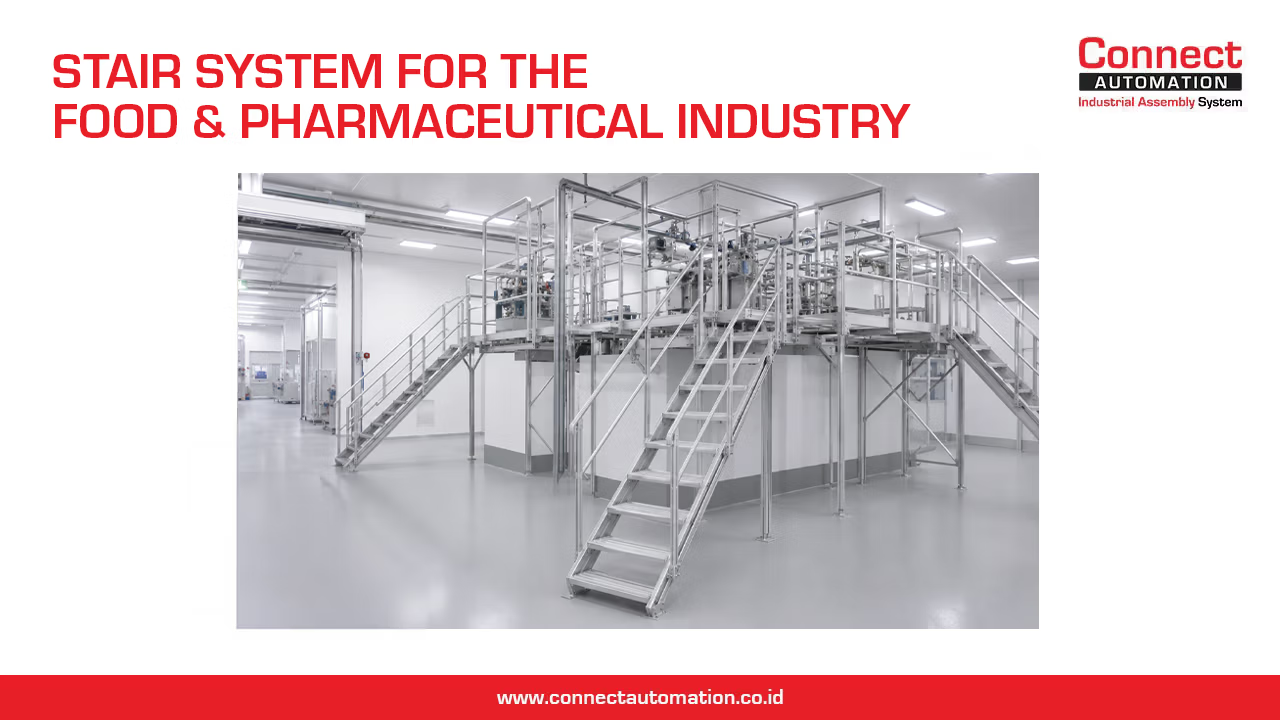
The food and pharmaceutical industries operate under significantly stricter standards than general manufacturing sectors. Beyond production efficiency, facilities must prioritize hygiene, product safety, and regulatory compliance. In such environments, every structural component, including the stair system, must be designed with precision and purpose.
In food and pharmaceutical facilities, a stair system is not merely an access structure between levels. It is part of an integrated production system that must support sanitation procedures, operator safety, and seamless integration with conveyors and work platforms.
Unique Characteristics of Food & Pharmaceutical Facilities
Food and pharmaceutical production environments typically include:
- Multi-level processing areas (mixing, filling, packaging)
- Food-grade conveyor systems
- Controlled clean zones
- Routine washdown and sanitation procedures
- Strict quality audits and compliance inspections
In these conditions, conventional industrial staircases are often inadequate. Materials prone to corrosion, enclosed structures that trap debris, or designs that are difficult to clean can create serious contamination risks.
Access Challenges in Hygienic Production Areas
Operators and maintenance technicians frequently require access to:
- Processing conveyors
- Sealing and Filling machines
- Quality inspection platforms
- Elevated tanks or hoppers
However, this access must not interfere with product flow or compromise hygiene standards. Common challenges include:
- Water accumulation during washdown
- Residue buildup from powders or liquids
- Slippery surfaces
- Hard-to-clean joints or enclosed sections
For this reason, stair systems must be designed as part of a hygienic production environment, not as an afterthought.
Material Selection for Hygienic Applications
Material choice is critical in sensitive industries such as food and pharmaceuticals.
Stainless Steel
Stainless steel is widely used because it offers:
- Excellent corrosion resistance
- Compatibility with cleaning chemicals
- Smooth, cleanable surfaces
- Durability in wet or washdown environments
It is particularly suitable for pharmaceutical facilities and food processing areas involving moisture or aggressive cleaning agents.
Aluminum Profile Systems
Aluminum profile structures are increasingly popular due to:
- Lightweight yet strong construction
- Modular configuration flexibility
- Corrosion resistance
- Easy integration with modular conveyor systems
The modular approach allows easier layout adjustments and future system expansion, which is highly beneficial in dynamic production environments.
Hygienic Design Considerations
Beyond material selection, structural design plays a crucial role in maintaining cleanliness. A stair system for food and pharmaceutical facilities should include:
- Open-frame construction for easy cleaning
- Minimal crevices or hidden cavities
- Smooth welds and accessible joints
- Food-grade anti-slip treads
- Proper drainage to prevent standing water
These design principles reduce contamination risks and simplify daily sanitation procedures.
Integration with Conveyors and Work Platforms
In modern facilities, stair systems must integrate seamlessly with:
- Food-grade conveyor lines
- Inspection platforms
- Filling and packaging machinery
- Quality control stations
Proper integration ensures:
- Clear separation between product flow and personnel movement
- Safe and direct access for maintenance
- Reduced downtime during inspection or servicing
When designed as part of a complete system, stair access enhances both operational efficiency and plant organization.
Supporting Regulatory Compliance
Food and pharmaceutical facilities commonly operate under international and national regulatory frameworks such as:
- World Health Organization (WHO) guidelines
- FDA regulations
- BPOM requirements
- Good Manufacturing Practice (GMP)
- Hazard Analysis Critical Control Point (HACCP)
Although stair systems are not directly involved in product formulation, improper design can become a non-conformity finding during audits. Hygienic, well-integrated access systems support overall compliance and facility credibility.
Operator Safety in Sensitive Environments
Production areas may involve:
- Liquid spills
- Powder dispersion
- Steam or heat exposure
- Frequent washdown procedures
Therefore, stair systems must provide:
- Anti-slip treads
- Ergonomic handrails
- Compliant guardrails
- Structural stability for heavy-duty use
Protecting operators is equally important as protecting product integrity.
Strategic Value in Facility Planning
One common mistake in industrial projects is treating stair systems as secondary additions late in the design process. This often results in compromised layouts or inefficient retrofits. When stair systems are incorporated early in the engineering phase, facilities benefit from:
- Optimized vertical access
- Better coordination with conveyors and platforms
- Improved long-term operational reliability
- Reduced need for costly modifications
In food and pharmaceutical industries, where compliance and cleanliness are paramount, integrated planning delivers measurable long-term value.
Conclusion
A stair system for the food and pharmaceutical industry is more than a structural necessity. It is a critical component of a hygienic, compliant, and efficient production environment.
By selecting appropriate materials, applying hygienic design principles, and integrating the system with conveyors and work platforms, manufacturers can enhance:
- Product safety
- Operator protection
- Regulatory compliance
- Operational performance
When designed as part of a comprehensive system rather than as a standalone structure, stair systems become a strategic investment in sustainable industrial operations.
Connect Automation specializes in providing automation solutions, including conveyor systems, to improve efficiency across various industries. The company delivers cutting-edge technology to help organizations automate tasks and optimize workflows. Connect Automation helps businesses reduce manual efforts, boost productivity, and achieve better outcomes. With a customer-focused approach, the company designs tailored solutions to ensure smooth and effective automation transitions for long-term success.
Kawasan Industri Jababeka Tahap 1, Jl. Jababeka II D Blok C14L Cikarang, Indonesia (17530)
(021) 893 5060 Google Maps
Rungkut Industri III, No. 37, Rungkut Menanggal, Kec. Gn. Anyar Surabaya, Indonesia (60293)
(031) 9985 8624 Google Maps