
REQUEST A FREE ESTIMATE!
Belt Conveyor for Food Contact Safe and Hygienic Food Processing
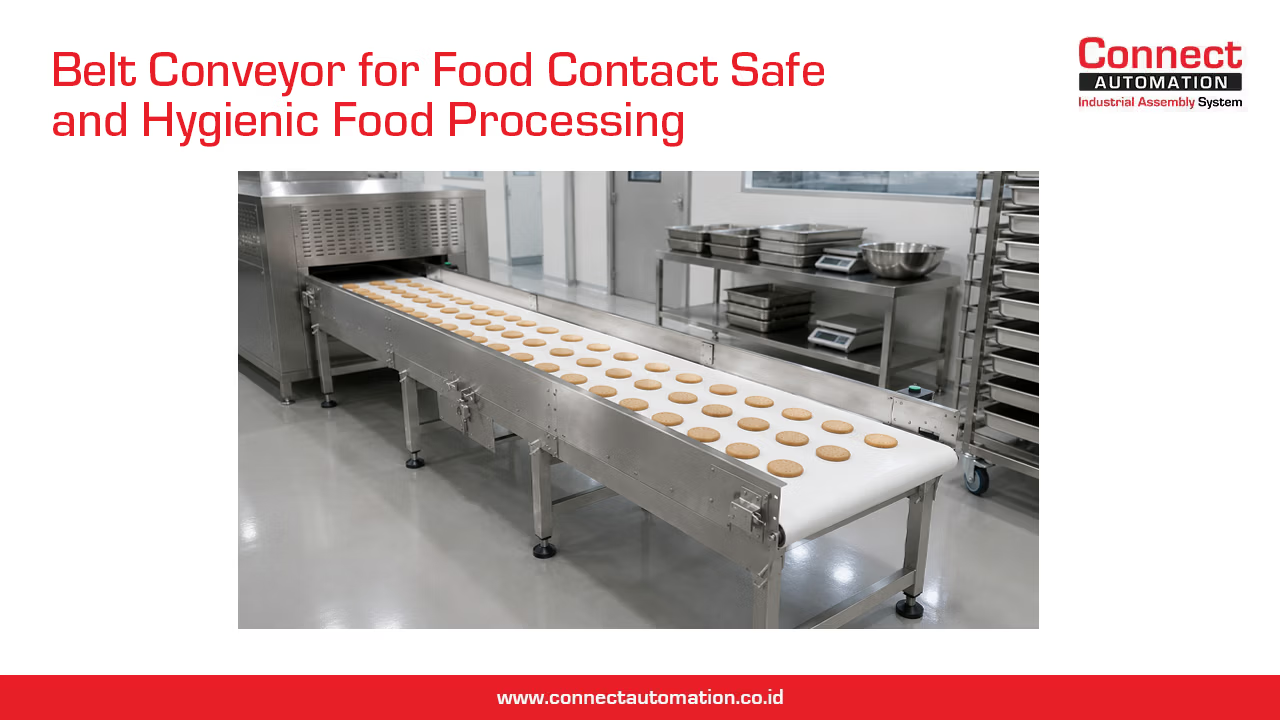
In the food and beverage industry, not every conveyor system is suitable for handling products that come into direct contact with food. In food contact applications, selecting the right belt material is critical because it directly affects food safety, production hygiene, and compliance with industry standards.
For this reason, belt conveyors used in food contact areas typically utilize food-grade belts specifically designed for food processing environments.
What Are Food Contact Products?
Food contact products refer to food items that come into direct contact with the conveyor belt surface during production. Common examples include:
- Bread and bakery products
- Biscuits and snacks
- Candy and confectionery products
- Certain frozen food products
- Semi-processed food ingredients
- Food products before packaging
In these applications, the conveyor belt is not only responsible for product transfer but also plays an important role in supporting food safety throughout the production process.
Are Belt Conveyors Suitable for Food Contact Applications?
Yes, belt conveyors can be used for food contact applications, provided that the belt material is specifically designed for food-grade use.
In practice, polyurethane (PU) food-grade belts are among the most commonly used options due to their suitability for modern food processing environments.
However, the selection of a conveyor system should also consider factors such as product characteristics, production conditions, cleaning methods, and the hygiene standards implemented within the facility.
In addition to selecting a food-grade conveyor belt, the conveyor frame material also plays a crucial role in maintaining hygiene and ensuring long-term durability. For most food processing applications, SUS304 stainless steel is the preferred material due to its excellent corrosion resistance and ease of cleaning. However, in environments with high humidity, frequent exposure to cleaning chemicals, or higher salt content, SUS316 stainless steel is often recommended because it provides superior corrosion resistance. To better understand the advantages, limitations, and recommended applications of each material, read our comprehensive guide on the differences between SUS304 and SUS316 stainless steel for conveyor applications.
Why Are PU Belts Commonly Used in Food Contact Applications?
1. PU Blue Belts
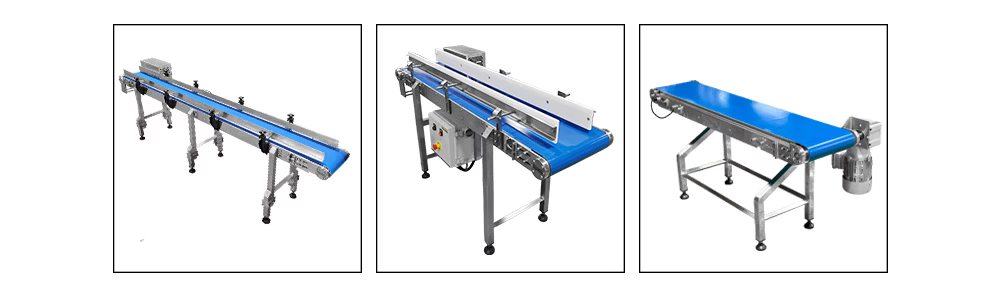
PU blue belts are widely used in food contact applications.
In addition to meeting food-grade requirements, the blue color provides significant advantages from a food safety and visual inspection perspective.
Because blue is rarely found naturally in food products, foreign objects or belt fragments that may accidentally enter the production line are easier to detect during visual inspections.
This helps support contamination control programs and HACCP implementation within food manufacturing facilities.
2. PU White Belts
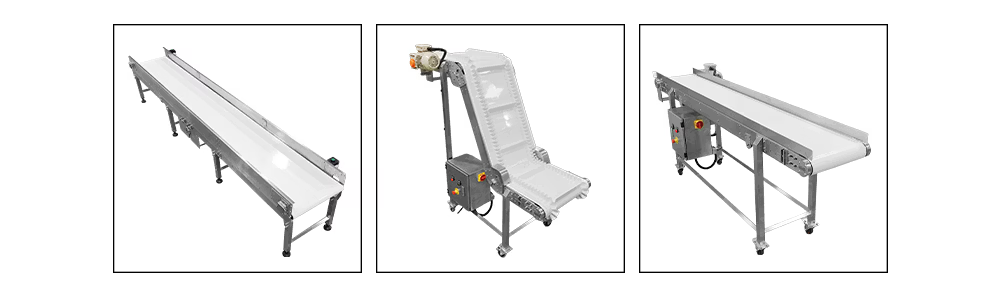
PU white belts are also commonly used in various food processing operations.
These belts provide a food-grade surface suitable for direct product contact while supporting hygienic production requirements.
The choice between blue and white PU belts typically depends on operational requirements, company standards, and food safety policies implemented within the facility.
The Importance of Belt Color in HACCP Programs
Within HACCP systems, contamination prevention is a key objective. For this reason, belt color is more than just a visual preference—it can contribute to food safety management. PU blue belts are often selected because they help:
- Improve foreign object visibility
- Facilitate detection of belt fragments in the event of belt damage
- Support visual inspection procedures
- Reduce the risk of product contamination
These advantages are among the reasons why many modern food manufacturing facilities prefer blue belts in food contact areas.
What About Green PVC Belt?
Green PVC belts are among the most widely used conveyor belts across various industries due to their cost-effectiveness, versatility, and suitability for a wide range of material handling applications. However, in the food industry, they are typically used for secondary packaging processes, such as conveying cartons, boxes, shrink-wrapped products, or other packaged goods. This is because PVC belt material has different characteristics from food-grade PU belts, making proper belt selection essential based on the production area and application requirements.
Choosing between a PVC belt and a PU belt depends not only on the belt material itself but also on whether the conveyor is intended for direct food contact, secondary packaging, or the specific requirements of the industry. Read our guide to choosing PVC vs. PU belt conveyors by industry to better understand the differences in material properties, applications, and recommended uses across various manufacturing sectors.
Applications of Belt Conveyors for Food Contact Products
Food-grade belt conveyors are commonly used in a variety of food processing operations, including:
- Bakery Industry : For transferring dough, bread, biscuits, and other bakery products throughout the production process.
- Snack and Confectionery Industry : For handling products such as chips, wafers, chocolates, and candies before packaging.
- Dry and Semi-Dry Products : Suitable for products that require stable product transfer while maintaining hygienic production conditions.
- Certain Frozen Food Applications : Food-grade belt conveyors can also be used for handling frozen food products before they enter the packaging stage.
When Is a Modular Belt Conveyor a Better Choice?
Although belt conveyors are widely used in food contact applications, there are situations where a modular belt conveyor may be a more suitable solution. Examples include:
- Intensive washdown environments
- High-moisture production areas
- Meat processing operations
- Poultry processing facilities
- Seafood processing applications
- Production lines requiring frequent sanitation
In these environments, modular belt conveyors often provide advantages in cleaning efficiency and maintenance accessibility.
Hygiene Standards to Consider
In addition to selecting the right conveyor system, food manufacturers should also consider several important hygiene factors, including:
- Food-grade materials
- Cross-contamination prevention
- Hygienic equipment design
- HACCP implementation
- GMP and other food safety standards
Applying these principles helps ensure safe, consistent, and reliable food production processes.
Conclusion
Belt conveyors can be an effective solution for food contact applications when equipped with appropriate food-grade belt materials. In many food manufacturing facilities, PU blue belts are widely used because they support food safety by improving the visibility of foreign objects and potential contamination.
However, conveyor selection should always be based on product characteristics, production conditions, and sanitation requirements. For applications involving intensive washdown procedures or frequent cleaning cycles, modular belt conveyors may offer a more suitable alternative.
Connect Automation specializes in providing automation solutions, including conveyor systems, to improve efficiency across various industries. The company delivers cutting-edge technology to help organizations automate tasks and optimize workflows. Connect Automation helps businesses reduce manual efforts, boost productivity, and achieve better outcomes. With a customer-focused approach, the company designs tailored solutions to ensure smooth and effective automation transitions for long-term success.
Kawasan Industri Jababeka Tahap 1, Jl. Jababeka II D Blok C14L Cikarang, Indonesia (17530)
(021) 893 5060 Google Maps
Rungkut Industri III, No. 37, Rungkut Menanggal, Kec. Gn. Anyar Surabaya, Indonesia (60293)
(031) 9985 8624 Google Maps