REQUEST A FREE ESTIMATE!
Signs Your Conveyor Needs Upgrade to Maintain Stable Production
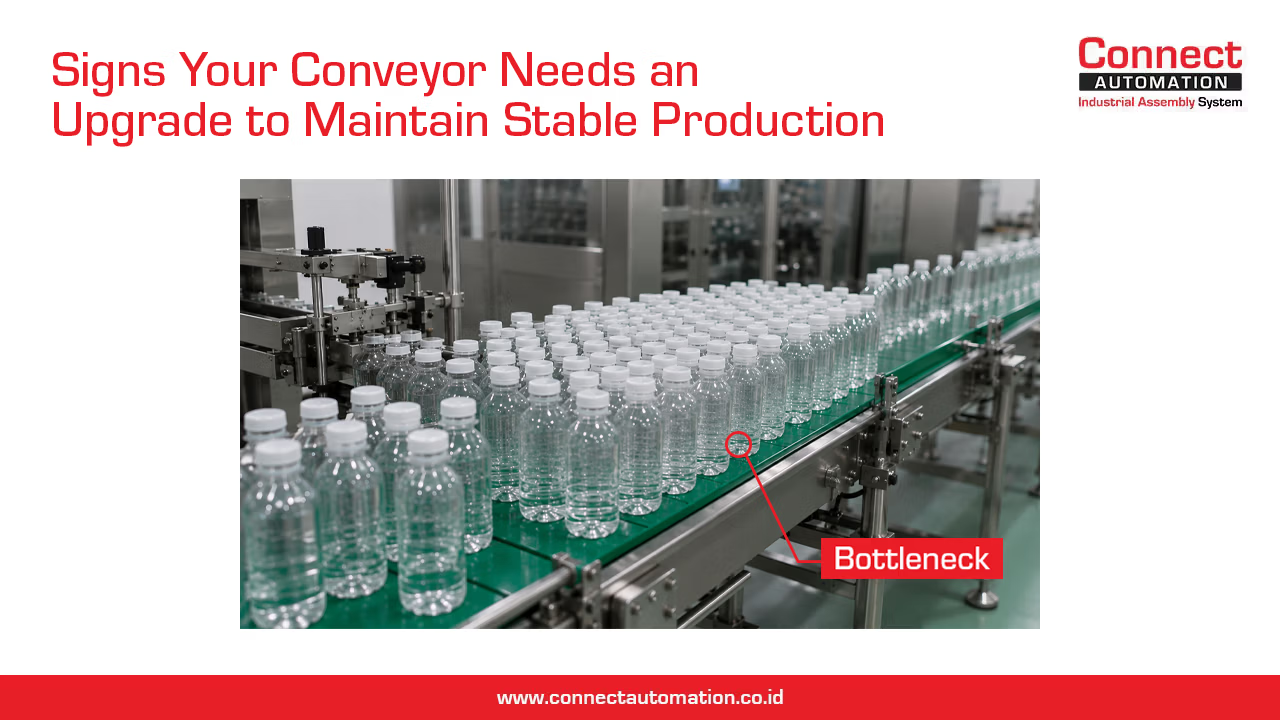
Conveyor systems are designed to support material handling processes so they can run more consistently, quickly, and efficiently. However, as production capacity increases, layouts change, or output targets grow, a conveyor system that once performed well can start becoming an operational bottleneck.
In many cases, the issue is not because the conveyor is damaged. Often, the system is still operating normally but is no longer able to keep up with current production demands. This condition is one of the main signs that a conveyor system may need to be upgraded or expanded.
Understanding these warning signs is important to help companies avoid bottlenecks, downtime, product accumulation, and reduced production efficiency.
What Is a Bottleneck in a Conveyor System?
A bottleneck is a condition where one process point has a lower capacity than the others, slowing down the overall production flow. In conveyor systems, bottlenecks commonly occur when:
- Product flow becomes too dense
- Conveyor speeds are unbalanced
- Transfer areas are too narrow
- Conveyor capacity is no longer sufficient
- Manual processes become a limiting factor
As a result, products begin accumulating in one area while other processes are forced to wait.
Signs Your Conveyor System Needs an Upgrade
1. Products Frequently Accumulate at One Point
Product accumulation is one of the most common signs of an unbalanced production flow. This usually occurs in:
- Transfer areas
- Sorting areas
- Machine infeed or outfeed sections
- Packing areas
If this condition happens continuously, it means the conveyor capacity is no longer aligned with the current production flow.
In some industrial applications, this issue can also be addressed by adding a buffer area to temporarily reduce product congestion. One commonly used solution is a rotary table in transfer or packing areas to help maintain a more stable product flow.
2. Operators Start Assisting Product Movement Manually
When operators need to:
- Push products manually
- Move items by hand
- Manage product queues
- Reposition products manually
it may indicate that the conveyor system is no longer operating optimally. A conveyor system should reduce manual handling, not create additional work for operators.
3. Production Targets Become Difficult to Achieve
Increased production demand is often not followed by improvements in material handling capacity. As a result:
- Production machines are ready to operate faster
- But product flow becomes restricted at the conveyor
- Daily output begins to stagnate
If machines are still capable of operating efficiently but material movement becomes the main limitation, then a conveyor upgrade should be considered.
4. The Conveyor Is Frequently Overloaded
Conveyors that are continuously forced to operate beyond their capacity usually show signs such as:
- Motors overheating
- Belt slippage
- Faster chain wear
- Heavier roller rotation
- More frequent overload trips
This condition not only accelerates component wear but also increases the risk of production downtime.
5. The Production Layout Has Changed
Changes in factory layout often make existing conveyor lines less efficient. Examples include:
- Longer material transfer distances
- More operator crossing points
- Indirect material flow paths
- Limited workspace areas
In these situations, adding new conveyors or redesigning the conveyor system is often more effective than maintaining the old layout.
6. Conveyor Downtime Is Becoming More Frequent
An increase in conveyor interruptions may indicate that the system no longer matches operational requirements. Some common signs include:
- Sudden conveyor stoppages
- Faster component wear
- More frequent maintenance
- Higher spare part consumption
If maintenance costs continue increasing, upgrading the system may become a more efficient long-term solution.
7. New Production Machines Have Been Added
Adding new production machines without adjusting the conveyor system can create an imbalance in material flow. As a result:
- New machine output becomes less optimal
- Products accumulate before or after the machine
- Operators need to assist with additional handling
That is why every machine expansion should ideally be followed by a complete evaluation of conveyor capacity.
When Should You Add a Conveyor Instead of Only Upgrading It?
In some situations, adding a new conveyor is more effective than simply increasing the specifications of the existing system. This is commonly done when:
- A new production line is added
- Material flow needs to be separated
- Production capacity increases significantly
- Additional buffer areas are required
- Certain processes require automation
Adding conveyors can also help create a more stable workflow and reduce bottlenecks between processes.
Before adding a new conveyor or creating a new production line, it is important to plan the conveyor design and layout first. Proper planning helps determine the conveyor position, material flow direction, conveyor length, and connection between different processes, allowing the available production space to be used more efficiently.
With a well-planned conveyor design and layout, adding a new production line is not simply about increasing capacity, but also about creating a more efficient material flow that integrates properly with the existing system. Learn more about why belt conveyor design and layout is important for production before designing or expanding your conveyor line.
Conveyor Solutions Must Match the Production Flow
Upgrading a conveyor system is not only about installing a larger motor or increasing conveyor speed. More importantly, it requires understanding:
- Production capacity
- Product characteristics
- Material flow
- Bottleneck points
- Process integration
Since every industry has different requirements, the ideal conveyor solution usually requires direct evaluation of the production conditions on site.
Conclusion
Bottlenecks in conveyor systems can significantly reduce production efficiency if left unresolved for too long. Signs such as product accumulation, overload conditions, increased manual handling, and more frequent downtime indicate that the conveyor system may need to be upgraded or expanded.
With the right evaluation process, companies can improve production flow, reduce downtime, and prepare a more reliable material handling system for future production growth.
Connect Automation specializes in providing automation solutions, including conveyor systems, to improve efficiency across various industries. The company delivers cutting-edge technology to help organizations automate tasks and optimize workflows. Connect Automation helps businesses reduce manual efforts, boost productivity, and achieve better outcomes. With a customer-focused approach, the company designs tailored solutions to ensure smooth and effective automation transitions for long-term success.
Kawasan Industri Jababeka Tahap 1, Jl. Jababeka II D Blok C14L Cikarang, Indonesia (17530)
(021) 893 5060 Google Maps
Rungkut Industri III, No. 37, Rungkut Menanggal, Kec. Gn. Anyar Surabaya, Indonesia (60293)
(031) 9985 8624 Google Maps