REQUEST A FREE ESTIMATE!
Modular Conveyor for Various Plastic-Based Products
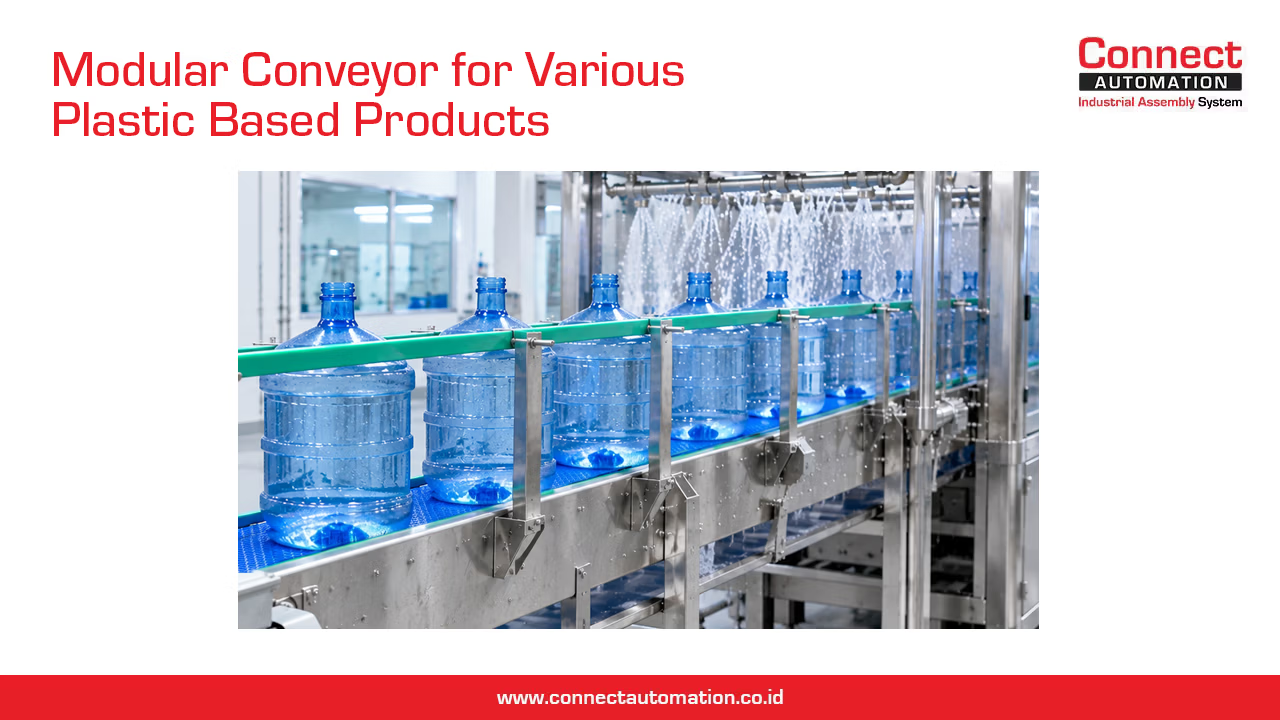
Plastic-based products are used across a wide range of industries and come in many different shapes and sizes. From bottles, containers, and jars to cups, trays, and crates, each product has its own handling requirements.
These differences mean that conveyor selection cannot be based solely on the fact that a product is made of plastic. A bottle, tray, and plastic crate may require different conveyor configurations depending on their shape, weight, production process, and operating environment.
A modular conveyor can be used for various product handling applications. However, modular belts are also available with different surface designs, and selecting the right type is an important part of conveyor design.
This article explores how modular conveyors can be used for various plastic-based products and how flat top and open modular belts can be selected according to different application requirements.
Not All Plastic Products Require the Same Conveyor
Plastic-based products can have very different handling characteristics. Some products have a flat and stable base, while others are tall, wide, lightweight, or flexible. The production environment can also vary. Some products are transferred in dry conditions, while others may go through washing processes or be handled in wet production environments.
Several factors should therefore be considered when selecting a conveyor, including:
- Product shape and dimensions
- Product weight
- Product stability during conveying
- Product condition
- Production environment
- Cleaning requirements
- Presence of water or other liquids
- Drainage requirements
- Production capacity
- Processes before and after the conveyor
A modular conveyor can be one suitable option for product handling, but the conveyor type should always be matched to the actual application.
For products such as injection-molded plastic components or irregularly shaped parts, a belt conveyor may be more suitable, particularly for transfer, inspection, or packing applications.
Types of Modular Belts for Plastic Products
One of the factors to consider when using a modular conveyor is the design of the belt surface. In general, modular belts can have either a more closed surface or a more open structure. Each type has different functions and applications.
1. Flat Top Modular Belt
A flat top modular belt has a more closed surface and provides a larger support area for products. This type of belt can be used for product transfer applications that require a relatively flat and stable surface.
Some products that can be handled using a flat top modular belt include:
- Plastic bottles
- Containers
- Jars
- Cups
- Rigid packaging
- Plastic products with a stable base
A flat top belt can provide a more continuous transfer surface, particularly for products with a small bottom surface or those that require more even support during movement.
2. Open Modular Belt
An open modular belt has a more open surface structure with gaps between the belt sections. This design allows water or liquids to pass through the belt, making it suitable for applications that require drainage.
An open modular belt can be used in conditions such as:
- Wet production environments
- Washing processes
- Cleaning processes
- Products after washing
- Applications that require drainage
Examples of plastic products or containers that may be handled in these applications include:
- Plastic crates
- Plastic trays
- Reusable containers
- Plastic products after the washing process
The choice between a flat top and open modular belt should be based on the application requirements. Products made from the same type of plastic may require different belt types depending on the production process and operating environment.
Flat Top Modular Belt for Product Transfer
A flat top modular belt has a relatively continuous and closed conveying surface, providing a broad support area for the product. This type of belt can be considered for product transfer applications where a stable conveying surface is important.
Examples of products that may be conveyed using a flat top modular belt include:
- Plastic bottles
- Containers
- Jars
- Cups
- Rigid plastic packaging
- Plastic products with stable bases
The more continuous belt surface can provide consistent support as products move between different production processes.
For example:
Production → Modular Conveyor → Next Process
or:
Filling → Modular Conveyor → Capping → Labeling
The conveyor configuration should still be adapted to the actual product characteristics and production requirements.
Open Modular Belt for Applications Requiring Drainage
An open modular belt has a more open surface structure with spaces between the belt modules. This design allows water or other liquids to pass through the belt, making it suitable for applications where drainage is an important consideration.
Open modular belts can be considered for applications involving:
- Wet production environments
- Washing processes
- Cleaning processes
- Products after washing
- Applications requiring drainage
Examples of plastic-based products or containers that may be handled in these conditions include:
- Plastic crates
- Plastic trays
- Reusable containers
- Plastic products after washing
The choice between a flat top and open modular belt should depend on the actual production conditions. Two products made from the same plastic material may require different belt configurations when their processes and operating environments are different.
Modular Conveyors for Plastic Bottles and Containers
Plastic bottles and containers are commonly found across various production lines. They may be used for:
- Beverages
- Household products
- Cosmetics
- Personal care products
- Pharmaceutical products
- Cleaning products
In these production lines, modular conveyors can be used to transfer products between different machines and processes.
For example:
Filling → Modular Conveyor → Capping → Modular Conveyor → Labeling → Inspection
Several factors should be considered when conveying bottles and containers, including product stability, product spacing, conveyor speed, and side guide requirements.
Maintaining Product Stability
Product shape and dimensions influence how a product behaves while moving along the conveyor. A tall bottle with a relatively small diameter, for example, may require a different conveyor configuration from a short and wide container.
Product stability should therefore be considered to ensure smooth transfer to the next production stage.
Managing Product Spacing
Some production machines require a specific distance between products. Capping, labeling, inspection, and other processes may have different spacing requirements.
The conveyor can be designed to support the required product flow and spacing between processes.
Using Side Guides
Side guides can help maintain product positioning as bottles or containers move along the conveyor.
The position and dimensions of the guides should be adapted to the product shape and size so that they support stable product movement without interfering with the transfer process.
Modular Conveyors for Plastic Trays and Crates
In addition to bottles and containers, modular conveyors can also be used to transfer plastic trays and crates. These products can have different characteristics compared with bottles. They may be wider, have a larger base, and in some applications may be designed for repeated use.
Examples of applications include:
- Food handling
- Product handling
- Reusable packaging
- Production processes
- Washing processes
Plastic trays and crates may be conveyed in dry conditions or through processes involving water. This difference can influence the type of modular belt selected.
For Dry Product Transfer
For dry transfer applications, a belt with a more continuous surface can be considered depending on the product and process requirements.
The conveyor can transfer trays or crates from one production stage to another while providing stable product support.
For Washing and Wet Environments
For applications involving washing or wet production environments, an open modular belt can be considered because its open structure allows water or liquid to pass through the belt surface.
A typical process could be:
Washing → Open Modular Conveyor → Drainage → Next Process
This configuration allows products or reusable containers to continue moving while water can pass through the conveyor belt.
How to Select the Right Modular Belt
The modular belt should be selected based on the application rather than the product material alone.
1. A Flat Top Modular Belt Can Be Considered When:
- The product requires a stable conveying surface
- The product has a relatively small base
- The product requires broad support during transfer
- The transfer process takes place in relatively dry conditions
- Drainage is not a primary requirement
2. An Open Modular Belt Can Be Considered When:
- Water or liquid is present in the process
- Products go through a washing process
- The conveyor operates in a wet environment
- Drainage is required
- Cleaning is an important part of the process
The final belt selection should still be based on the actual conditions and requirements of the production line.
3. Designing the Conveyor Around Product Shape
Selecting the belt type is only one part of the conveyor design. The conveyor itself also needs to accommodate the shape and characteristics of the product.
Plastic-based products can be:
- Round
- Square
- Tall
- Short
- Wide
- Lightweight
- Rigid
Each characteristic can influence the conveyor configuration.
4. Conveyor Width
Conveyor width is not determined solely by the size of a single product. In some production lines, multiple products can be conveyed simultaneously using multiple lanes. Conveyor width can therefore be determined based on:
- Product dimensions
- Number of lanes
- Production capacity
- Product spacing
5. Product Stability
Products should remain stable during transfer.
Tall, lightweight products or products with a small base may require additional consideration when designing the conveyor and guide system.
6. Side Guides
Side guides can help keep products within their intended conveying path.
Their side guide position and dimensions should be selected according to the product characteristics.
7. Conveyor Speed
Conveyor speed should correspond with the production capacity and the machines connected to the conveyor.
The speed needs to support consistent product flow between the preceding and following processes.
8. Cleaning and Maintenance
Cleaning requirements vary between production environments. Some applications may only require routine cleaning to remove dust or product residue, while others may involve water and more frequent cleaning.
A modular conveyor can be designed with these requirements in mind. Considerations may include:
- Cleaning frequency
- Type of residue
- Presence of water or liquids
- Access for maintenance
- Belt condition
- Conveyor component condition
For applications involving water or wet environments, drainage can also become an important part of the conveyor design.
An open modular belt can be considered for certain applications because its open structure allows water or liquid to pass through the belt.
Frame Material and Production Environment
In addition to the belt, the conveyor frame should also be selected according to the production environment. Factors to consider include:
- Dry or wet environment
- Cleaning frequency
- Potential exposure to liquids
- Production area conditions
For applications requiring regular cleaning or operation in wetter environments, stainless steel can be considered as one frame material option. Other frame materials may also be suitable depending on the application and operating conditions.
Material selection should be considered as part of the overall conveyor design rather than being based solely on the type of plastic product being conveyed.
Integrating the Conveyor with the Production Process
A modular conveyor can be used as part of a product handling system that connects multiple production processes.
For bottles and containers, an example could be:
Filling → Modular Conveyor → Capping → Modular Conveyor → Labeling → Inspection
For trays or crates that go through washing:
Washing → Open Modular Conveyor → Drainage → Next Process
Other applications may use the conveyor simply as a connection between production stages:
Production → Modular Conveyor → Next Process
For effective integration, several factors should be considered:
- Machine height
- Inlet and outlet positions
- Product flow
- Production capacity
- Conveyor speed
- Product dimensions
- Available space
- Side guides
- Sensors or additional equipment
With proper planning, the modular conveyor can be configured around the production layout and process requirements.
When Is a Modular Conveyor a Suitable Choice?
A modular conveyor can be considered for applications requiring:
- Continuous product transfer
- A stable conveying surface
- Flexible production line configurations
- Multiple lanes
- Integration with production machines
- Regular cleaning
- Operation in wet environments
- Drainage for specific applications
The modular belt type should then be selected according to the product characteristics and production environment. A flat top modular belt can be used for various product transfer applications, while an open modular belt can be considered for processes involving water, washing, or drainage.
When Is a Belt Conveyor More Suitable?
A modular conveyor is one of several conveyor options available for plastic-based products. For certain products, a belt conveyor may be more suitable, such as:
- Plastic components
- Injection-molded products
- Irregularly shaped products
- Products transferred to inspection
- Products transferred to packing
The choice between a modular conveyor and a belt conveyor should be based on product characteristics, production processes, operating conditions, and handling requirements. Selecting the appropriate conveyor type helps create a product handling system that fits the requirements of the production line.
What to Prepare Before Selecting a Modular Conveyor
Before determining the modular conveyor specifications, prepare the following information:
- Product type : Identify the plastic-based product to be conveyed.
- Product shape and dimensions : This information helps determine the belt type, conveyor width, and guide configuration.
- Product weight : Product weight should be considered when determining conveyor requirements.
- Product condition : Determine whether the product is conveyed in dry conditions, wet conditions, or after a washing process.
- Drainage requirements : Determine whether water or other liquids need to pass through the belt.
- Modular belt : type Consider whether a flat top or open modular belt is more appropriate for the application.
- Production capacity : The required product throughput helps determine conveyor speed and overall configuration.
- Number of lanes : Determine whether products will move in a single lane or multiple lanes.
- Product spacing : The required spacing should correspond with the following production process.
- Side guide requirements : Determine whether guides are needed to maintain product positioning.
- Cleaning requirements : Cleaning methods and frequency should be considered during conveyor design.
- Production environment : Dry or wet conditions can influence belt selection and frame material.
- Layout and machine integration : Machine positions and available space influence the conveyor length, direction, and configuration.
Conclusion
Plastic-based products come in many different shapes and are handled in a wide range of production environments. Therefore, conveyor selection should consider more than simply the material of the product.
Modular conveyors can be used for various products such as bottles, containers, jars, cups, trays, and crates. However, the modular belt type should be selected according to the application requirements.
A flat top modular belt can be considered for product transfer applications requiring a more continuous and stable conveying surface. It can be used for various rigid products such as bottles, containers, jars, and cups.
Meanwhile, an open modular belt can be considered for applications involving washing, wet environments, or drainage requirements, such as certain plastic trays, crates, and reusable containers.
By selecting the appropriate modular belt type and conveyor configuration, product handling systems can be designed around the characteristics of the product, production process, and operating environment.
Connect Automation specializes in providing automation solutions, including conveyor systems, to improve efficiency across various industries. The company delivers cutting-edge technology to help organizations automate tasks and optimize workflows. Connect Automation helps businesses reduce manual efforts, boost productivity, and achieve better outcomes. With a customer-focused approach, the company designs tailored solutions to ensure smooth and effective automation transitions for long-term success.
Kawasan Industri Jababeka Tahap 1, Jl. Jababeka II D Blok C14L Cikarang, Indonesia (17530)
(021) 893 5060 Google Maps
Rungkut Industri III, No. 37, Rungkut Menanggal, Kec. Gn. Anyar Surabaya, Indonesia (60293)
(031) 9985 8624 Google Maps