REQUEST A FREE ESTIMATE!
Local vs Imported Conveyors Which is More Profitable
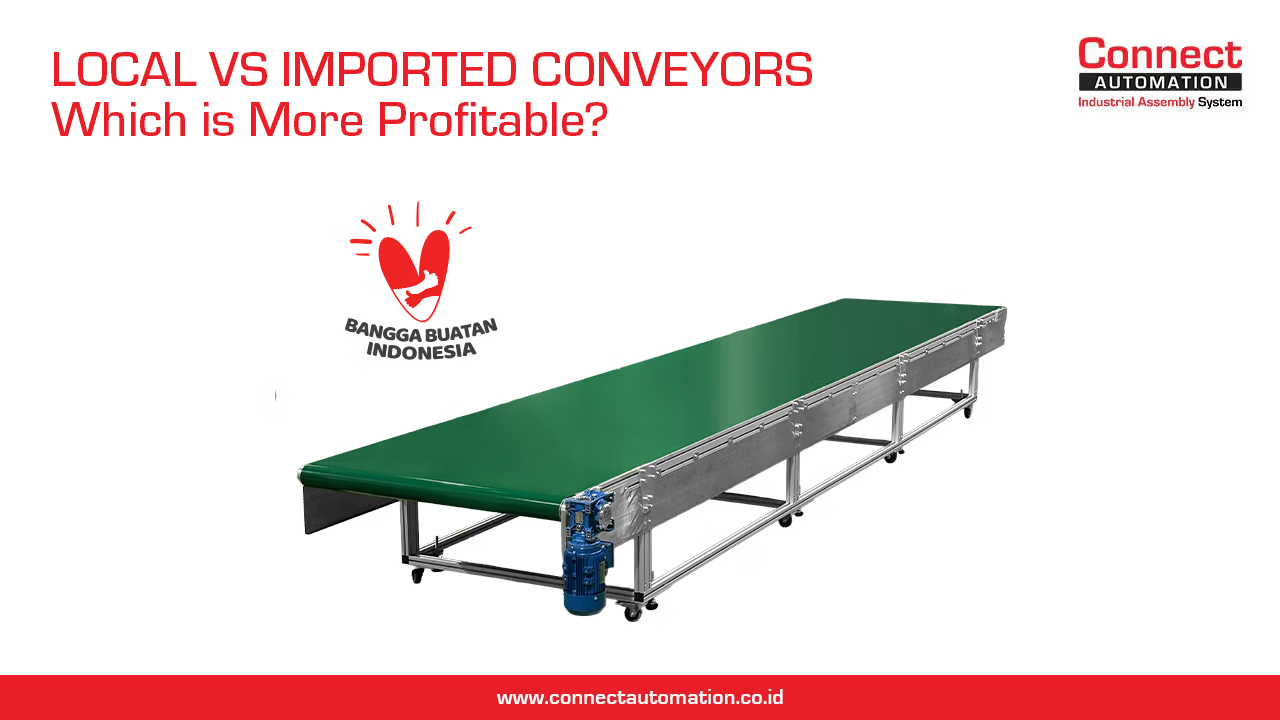
In modern manufacturing in Indonesia, many factories initially relied on imported conveyors due to brand reputation and advanced technology specifications. However, as production demands increase and operational efficiency becomes more critical, local conveyor systems are becoming an increasingly attractive alternative. This article explores the benefits of choosing local conveyors compared to imported systems, without reducing the role of the workforce and while maintaining high quality standards.
CHALLENGES WITH IMPORTED SYSTEMS
Imported conveyor systems often offer high quality and advanced technology. However, some practical challenges may arise:
- Long lead times: Ordering and shipping from overseas can take several weeks or even months.
- Additional costs: Import duties, freight, and taxes increase the total investment.
- Limited availability of spare parts: Parts must be ordered from abroad, delaying repairs if issues occur.
- Dependency on foreign technicians: Installation, troubleshooting, and maintenance sometimes require external experts, adding time and cost.
- Adaptation to local conditions: Systems designed for foreign standards may not be optimal for Indonesian factory conditions, such as environmental differences, power supply, or factory layout.
ADVANTAGES OF LOCAL SOLUTIONS
Local conveyor systems in Indonesia provide several benefits that enhance the value of investment for factories:
- Quick maintenance response: Local technicians can handle installation, repairs, and modifications without waiting for overseas shipments or experts.
- Fast spare parts availability: Parts are provided locally, minimizing production downtime.
- Easier design modification: Systems can be customized to specific factory needs, such as conveyor size, capacity, or integration with other machinery.
- More cost-effective: Competitive pricing for equivalent specifications and elimination of import-related costs.
- Compliance with local regulations: Local systems more easily meet Indonesia’s local content requirements (TKDN) and government regulations.
REAL COMPARISON
Here is a comparison table between imported and local conveyor systems:

TIPS FOR CHOOSING A LOCAL CONVEYOR
To ensure you select a high-quality local conveyor system, consider the following tips:
- Choose an experienced supplier: Ensure the provider, such as Connect Automation, has a proven track record of conveyor installations across various industries.
- Check material and design quality: Materials should meet industrial standards, and the system design should be practical and efficient.
- Verify after-sales service: Ensure spare parts, maintenance, and technicians are available locally for quick response.
- Evaluate system flexibility: The system should be adjustable for different production capacities or integration with other machinery.
- Consider ROI and total cost: Calculate investment cost, operational expenses, and potential savings compared to imported systems.
Types of Conveyors to Consider for Industrial Applications
In addition to considering whether to choose a locally manufactured or imported conveyor, the type of conveyor should also be matched to the specific production requirements. Each conveyor type has different characteristics, operating principles, and advantages. The following are some of the most commonly used conveyor types for various industrial applications:
1. Conveyor Belt
A conveyor belt uses a continuous belt as the medium for transporting materials or products from one point to another. This type of conveyor offers considerable flexibility and can be used for a wide range of applications, from handling lightweight products to supporting material transfer within production lines. The belt material and conveyor design can be selected based on the characteristics of the product and operating conditions. Learn more about conveyor belt systems and their applications in various industries.
2. Modular Conveyor
A modular conveyor uses a belt consisting of interconnected plastic modules assembled into a continuous surface. One of its main advantages is ease of maintenance, as damaged belt sections can be replaced individually without replacing the entire belt. Modular conveyors also offer flexibility in configuration and can be adapted to different production line requirements. For more information, see our article on the advantages and benefits of using modular conveyors.
3. Table Top Chain Conveyor
A table top chain conveyor uses a chain with a flat conveying surface to transport products along the production line. This type of conveyor is suitable for applications that require stable and consistent product movement, particularly where products need to follow an organized conveying path. Table top chain conveyors can also be configured to suit different production layouts, including straight paths and applications that require changes in direction. Learn more about table top chain conveyors, including their characteristics and industrial applications.
4. Roller Conveyor
A roller conveyor uses a series of rollers to transport materials or products. This type of conveyor is commonly used for material handling applications, particularly for products with surfaces or shapes that allow them to move effectively across rollers. Roller conveyors are available in different configurations, including gravity roller conveyors and powered roller conveyors, allowing them to be adapted to specific material handling requirements. Learn more about roller conveyors and their applications in industrial material handling systems.
Understanding the characteristics of each conveyor type can help businesses make a more informed decision when choosing between locally manufactured and imported equipment. In addition to price and country of origin, factors such as the type of material being transported, load capacity, production layout, maintenance requirements, and conveyor specifications should also be considered to ensure the selected system meets the actual needs of the application.
CONCLUSION
Choosing a local conveyor system does not mean compromising on quality. With proper engineering design, high-quality materials, and fast after-sales support, local systems like those offered by Connect Automation can provide significant value to factories in Indonesia. Benefits include reduced downtime, flexible design, lower total costs, and rapid technical support.
This approach also respects the role of the workforce, as operators are still needed for supervision, control, and process optimization. Local conveyor systems do not replace humans but support them, ensuring safer, more efficient, and sustainable factory operations.
Connect Automation specializes in providing automation solutions, including conveyor systems, to improve efficiency across various industries. The company delivers cutting-edge technology to help organizations automate tasks and optimize workflows. Connect Automation helps businesses reduce manual efforts, boost productivity, and achieve better outcomes. With a customer-focused approach, the company designs tailored solutions to ensure smooth and effective automation transitions for long-term success.
Kawasan Industri Jababeka Tahap 1, Jl. Jababeka II D Blok C14L Cikarang, Indonesia (17530)
(021) 893 5060 Google Maps
Rungkut Industri III, No. 37, Rungkut Menanggal, Kec. Gn. Anyar Surabaya, Indonesia (60293)
(031) 9985 8624 Google Maps