
REQUEST A FREE ESTIMATE!
Industrial Packing Table for Efficient and Ergonomic Production
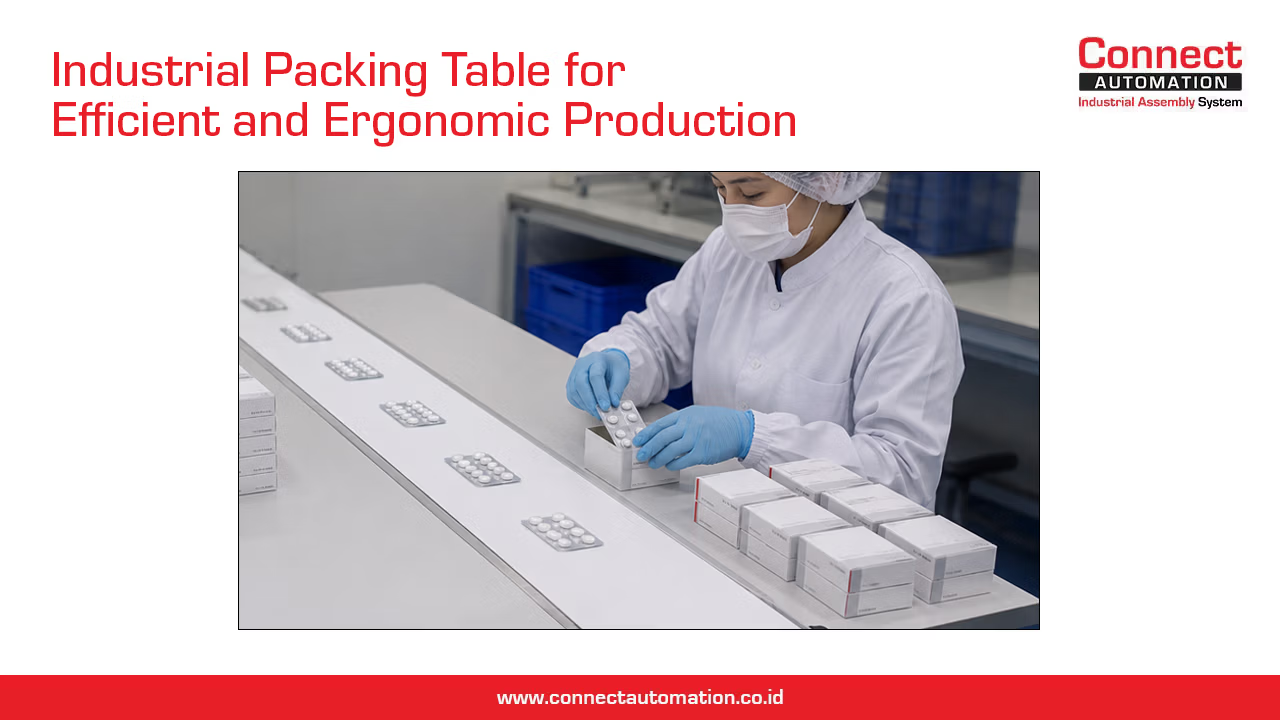
Packaging is an important stage in the manufacturing process. After products are manufactured or have passed the quality inspection process, they need to be packed properly, efficiently, and according to required standards before being delivered to customers or entering the distribution process.
To support this activity, manufacturers need a working area that is specifically designed according to the requirements of the packaging process. One of the solutions commonly used in industrial environments is an industrial packing table.
An industrial packing table is not simply a table for placing products. It is a dedicated working area designed to improve packaging efficiency, reduce unnecessary operator movement, maintain consistent packing results, and provide a more ergonomic working environment.
In manufacturing environments, an industrial packing table is also commonly referred to as a packing workstation, which is a workstation designed based on the packaging workflow and production requirements.
What Is an Industrial Packing Table?
An industrial packing table is a dedicated work table used to support product packaging activities in a production area.
Unlike a standard work table, an industrial packing table is designed by considering several important factors, including:
- Product flow.
- Packaging material placement.
- Operator tools and equipment.
- Working comfort.
- Packing process efficiency.
- Integration with other production systems.
In practice, an industrial packing table can be used for various activities such as product packing, labeling, packaging inspection, product arrangement, and preparation before shipping.
The design can range from a simple manual packing table to an advanced workstation integrated with conveyors and semi-automatic equipment.
Functions of an Industrial Packing Table in Production Processes
1. Supporting a More Organized Packaging Process
One of the main functions of an industrial packing table is to create a more organized working area. During packaging activities, operators usually require various materials and tools, such as:
- Packaging materials.
- Cartons or boxes.
- Wrapping materials.
- Tape.
- Label.
- Barcode scanner.
- Supporting tools.
With a properly designed packing table, these items can be placed in suitable positions where operators can easily access them.
This helps reduce wasted time caused by searching for materials or moving unnecessarily during the packaging process.
2. Improving Operator Work Efficiency
A properly designed industrial packing table can help operators work faster and more efficiently.
The placement of products, packaging materials, and tools within the operator's working range can reduce unnecessary movements, such as reaching too far or repeatedly changing positions.
In lean manufacturing principles, reducing non-value-added movements can help improve overall productivity.
3. Maintaining Consistent Packing Processes
For industries with high production volumes, maintaining consistent packaging quality is an important factor. An industrial packing table helps create a more standardized working method, such as:
- Products are positioned consistently during packing.
- Packaging steps follow a defined sequence.
- Packaging materials are stored in fixed locations.
- Operators follow the same working procedure.
As a result, packaging output can remain consistent even when different operators perform the process.
4. Supporting Operator Ergonomics
Packaging activities are often repetitive and performed for long periods. Without proper workstation design, operators may experience fatigue caused by uncomfortable working positions. Industrial packing tables can be designed based on ergonomic requirements, such as:
- Appropriate working height.
- Proper material positioning.
- Comfortable operator reach distance.
- Efficient working movement.
An ergonomic design helps operators work more comfortably while reducing fatigue caused by repetitive tasks.
Common Components of an Industrial Packing Table
Each packing table can have different configurations depending on production requirements. However, several components are commonly used in industrial applications.
1. Work Surface
The work surface is the main area where products are placed and packed.
The table size should be adjusted according to product characteristics. Small products require different layouts compared to large or irregularly shaped products.
The surface material can also be selected based on application requirements, such as durability, cleanliness, and product handling characteristics.
2. Aluminium Profile Frame
Aluminium profiles are widely used as the main structure for industrial packing tables because of their modular characteristics. With aluminium profile construction, companies can easily modify or expand the workstation by adding:
- Material racks.
- Tool holders.
- Lighting brackets.
- Monitor holders.
- Additional equipment supports.
This modular capability makes the packing table more flexible when production requirements change.
3. Tool Holder and Equipment Storage
Common packing tools such as:
- Cutter.
- Scissors.
- Tape dispensers.
- Marker.
- Barcode scanners.
Dapat ditempatkan menggunakan tool holder atau sistem penyimpanan khusus. Can be organized using tool holders or dedicated storage systems. This keeps the working area cleaner and allows operators to access tools more quickly.
4. Packing Area Lighting
Lighting is an important part of an industrial packing table, especially when the process requires detailed checking. Examples include:
- Verifying correct label placement.
- Checking packaging condition.
- Confirming product information.
Work lights can be added to improve operator visibility during the packing process.
Types of Industrial Packing Tables
1. Manual Packing Table
A manual packing table is the simplest type, where all packaging activities are performed directly by operators. This type is suitable for:
- Products with high variation.
- Small to medium production volumes.
- Products requiring special handling.
Examples include:
- Small components.
- Spare part.
- Retail products.
2. Packing Table with Conveyor Integration
Meja packing dapat dikombinasikan dengan sistem conveyor untuk menciptakan aliran produk yang lebih efisien.
Industrial packing tables can be integrated with conveyor systems to create a more efficient product flow. In this system, products move through conveyors to the packing area, where operators perform the packaging process at a dedicated workstation. Example flow:
Conveyor → Packing Table → Labeling → Product Output
Benefits include:
- Reduced manual product handling.
- Faster material flow.
- Improved production efficiency.
3. Modular Packing Table
A modular packing table uses a flexible design concept that allows easy modification and expansion.
This type is suitable for companies that frequently change production layouts or require flexible workstations.
With modular construction, additional components can be added without replacing the entire workstation.
4. Semi-Automated Packing Table
Some industrial packing tables can be combined with semi-automatic equipment, such as:
- Barcode scanners.
- Label printers.
- Digital weighing systems.
- Material dispensing systems.
The goal is to improve packing speed and reduce human errors.
Industries Using Industrial Packing Tables
Industrial packing tables are used across various manufacturing sectors.
- FMCG Industry Used for consumer product packaging processes that require high-speed and high-volume production.
- Electronics Industry Used for handling products or components that require organized and controlled packaging processes.
- Plastic Industry Used for injection molding products or plastic components before distribution.
- Automotive Industry Used for packing spare parts or automotive components before delivery or further processing.
- Food and Beverage Industry Used mainly for secondary packaging processes such as carton packing, labeling, and distribution preparation.
Factors to Consider When Designing an Industrial Packing Table
1. Product Size and Characteristics
Product dimensions determine the required work surface size and packing table configuration.
Small products require different layouts compared to large or irregular products.
2. Packaging Method
The workstation design should match the packaging method:
- Manual packing.
- Semi-automatic packing.
- Conveyor-integrated packing.
3. Number of Operators
The packing table layout should consider whether it is used by One operator and Multiple operators in a production line.
4. Material Flow
The packing table position should support smooth material flow, from product arrival, packaging process, until product output.
5. Operator Ergonomics
The table height, material position, and working area should be designed to allow comfortable operation.
6. Future Expansion
A modular system such as aluminium profile provides additional flexibility because the workstation can be modified when production requirements increase.
Industrial Packing Table vs Standard Work Table
Although they may look similar, industrial packing tables have different purposes compared to standard work tables.
1. Standard work table:
- Only provides a working surface.
- Not designed based on production workflow.
- Limited storage and tool organization.
2. Industrial packing table:
- Designed according to packaging processes.
- Provides material storage areas.
- Supports operator ergonomics.
- Can be expanded based on production needs.
- Can be integrated with conveyors and production systems.
Therefore, an industrial packing table is not only a workplace facility but also a part of the production system that helps improve operational efficiency.
Integration of Industrial Packing Tables with Conveyor Systems
In modern manufacturing, packing tables are often combined with conveyor systems to create a more integrated production process.
Example flow:
Production → Conveyor → Inspection → Packing Table → Output Conveyor
This integration provides several benefits:
- Products can move automatically between processes.
- Operators can focus on packaging activities.
- Manual handling can be reduced.
- Production flow becomes smoother.
For companies looking to improve production efficiency, combining conveyor systems with industrial packing tables can become an effective solution.
Conclusion
An industrial packing table is a dedicated working area designed to support packaging activities in manufacturing environments.
Unlike a standard table, an industrial packing table considers productivity, ergonomics, material organization, and integration with production systems.
With the right design, an industrial packing table can help operators work faster, reduce unnecessary movements, maintain consistent packaging processes, and improve production efficiency.
The use of modular systems such as aluminium profiles also provides greater flexibility, allowing the packing table to be adjusted and expanded according to changing industrial requirements.
Connect Automation specializes in providing automation solutions, including conveyor systems, to improve efficiency across various industries. The company delivers cutting-edge technology to help organizations automate tasks and optimize workflows. Connect Automation helps businesses reduce manual efforts, boost productivity, and achieve better outcomes. With a customer-focused approach, the company designs tailored solutions to ensure smooth and effective automation transitions for long-term success.
Kawasan Industri Jababeka Tahap 1, Jl. Jababeka II D Blok C14L Cikarang, Indonesia (17530)
(021) 893 5060 Google Maps
Rungkut Industri III, No. 37, Rungkut Menanggal, Kec. Gn. Anyar Surabaya, Indonesia (60293)
(031) 9985 8624 Google Maps