REQUEST A FREE ESTIMATE!
Conveyor Vs Manual Handling: Cost, Efficiency, And Safety
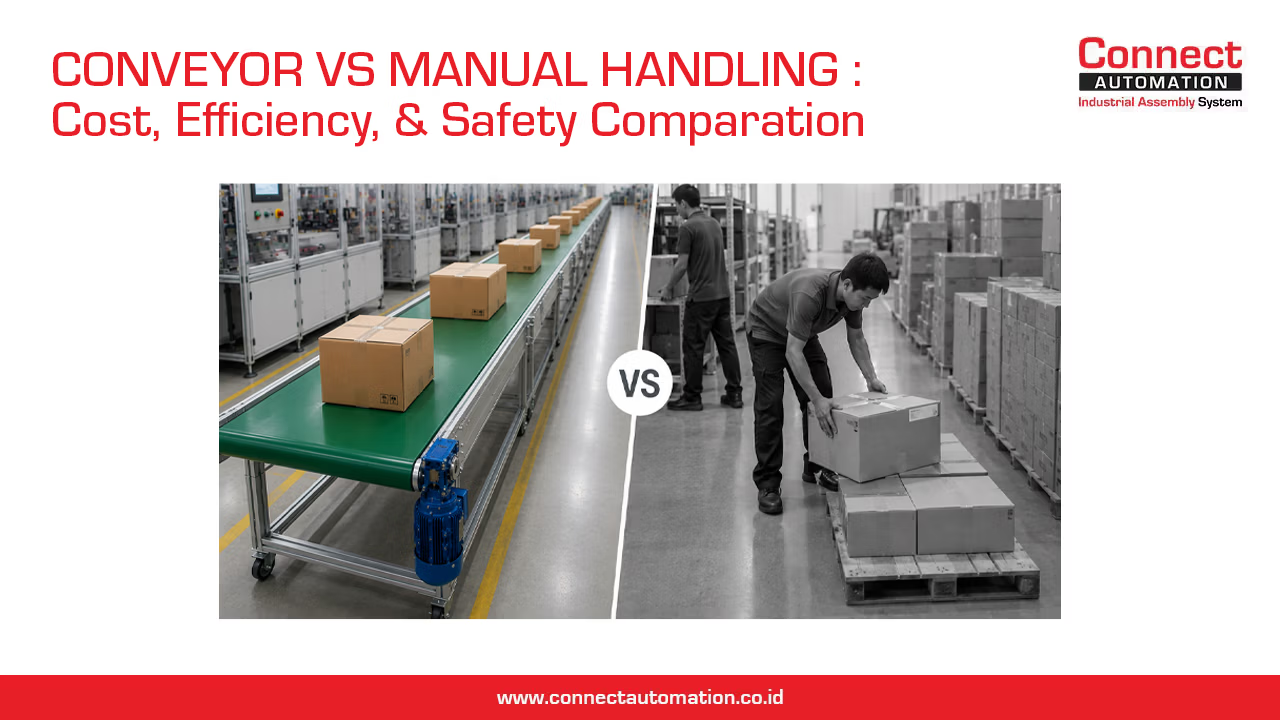
In modern industry, production line efficiency and worker safety are top priorities. One key consideration for production managers is how to move products or materials effectively from one point to another. Two common approaches are using conveyor systems or relying on manual handling by workers. This article explores the cost, benefits, and risks of both methods, focusing on how conveyors can support production operations while maintaining the important role of humans.
Manual Handling: Challenges And Risks
Manual handling involves transporting, placing, and adjusting products by workers. While humans have high flexibility and adaptability, this approach has several challenges:
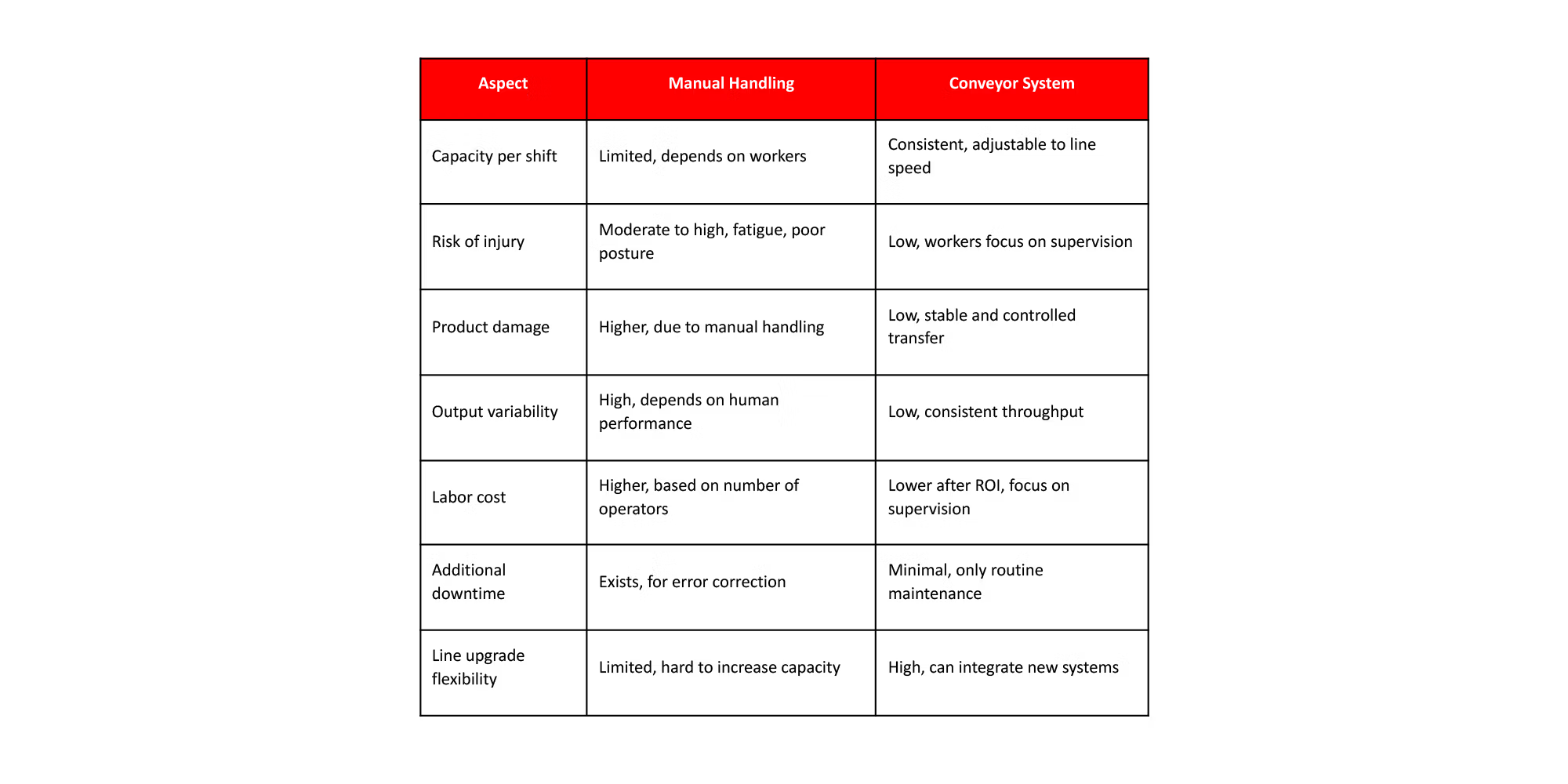
- Risk of injury and fatigue: Repeated manual lifting can cause physical strain, poor posture, and fatigue, affecting productivity.
- Performance variability: Speed, accuracy, and consistency depend on experience, focus, and physical condition.
- Product damage: Manual handling increases the risk of errors and product damage.
- Capacity limitations: Each worker has limited capacity per shift, restricting overall line throughput.
- Additional downtime: Manual adjustments and error corrections take extra time, impacting overall efficiency.
Conveyor Systems: Benefits And Costs
Conveyor systems provide a mechanical solution to move products or materials automatically between workstations. Although they require initial investment, they offer significant long-term benefits:
- Throughput efficiency: Conveyors provide consistent and stable product flow, increasing output per hour or shift.
- Reduced risk of injury: By minimizing manual handling, the risk of worker injury and fatigue is decreased.
- Minimized product damage: Products are transferred in a controlled and stable manner, reducing losses.
- Integration flexibility: Conveyors can be combined with additional systems like sensors, inspections, or automation for better line control.
- Long-term ROI: Initial investment can be offset by labor savings, reduced damage, and improved efficiency.
Performance And Cost Comparison
Here is a comparison table between manual handling and conveyor use to provide a clearer perspective:
Supporting Workers And Safety
Using conveyors does not replace humans. Instead, these systems support workers by taking over high-risk physical tasks, allowing operators to focus on supervision, control, and more complex process handling. Work environments become safer and more efficient while still preserving the critical role of humans on the production line.
Illustrative Case
For example, a packaging line produces 1,000 units per shift. With manual handling, five operators are needed to move each unit, creating risk and requiring extra time for corrections. With a conveyor, product flow is stable, three operators are sufficient for supervision, product damage is reduced, and throughput increases by 20%. ROI for conveyor investment can be achieved within a few months depending on production volume.
Additional Benefits
Beyond efficiency and safety, conveyor systems also help companies:
- Obtain more accurate production data through sensors and monitoring
- Simplify operator training due to standardized processes
- Provide a stronger foundation for future automation integration
Conclusion
Conveyor systems offer numerous advantages over manual handling, especially in efficiency, consistency, risk reduction, and time savings. This approach does not replace workers but supports them with a safe, stable, and reliable system. While the initial investment may be higher, the long-term benefits in efficiency and safety make conveyors a wise choice for modern production lines.
With proper integration strategies, companies can achieve efficient, safe, and sustainable production lines while continuing to value the indispensable role of workers.
Connect Automation specializes in providing automation solutions, including conveyor systems, to improve efficiency across various industries. The company delivers cutting-edge technology to help organizations automate tasks and optimize workflows. Connect Automation helps businesses reduce manual efforts, boost productivity, and achieve better outcomes. With a customer-focused approach, the company designs tailored solutions to ensure smooth and effective automation transitions for long-term success.
Kawasan Industri Jababeka Tahap 1, Jl. Jababeka II D Blok C14L Cikarang, Indonesia (17530)
(021) 893 5060 Google Maps
Rungkut Industri III, No. 37, Rungkut Menanggal, Kec. Gn. Anyar Surabaya, Indonesia (60293)
(031) 9985 8624 Google Maps