REQUEST A FREE ESTIMATE!
Flat Roller Conveyor A Cost-Effective Material Handling Solution
In industrial operations, improving efficiency is essential to increase productivity and maintain competitiveness. However, not all companies are ready to invest in complex and expensive automated systems. In many cases, a simpler and more practical approach is needed to improve material flow without significantly increasing costs.
One such solution is the flat roller conveyor, a manual conveyor system that helps streamline material handling processes without requiring electricity or motorized components.
What Is a Flat Roller Conveyor?
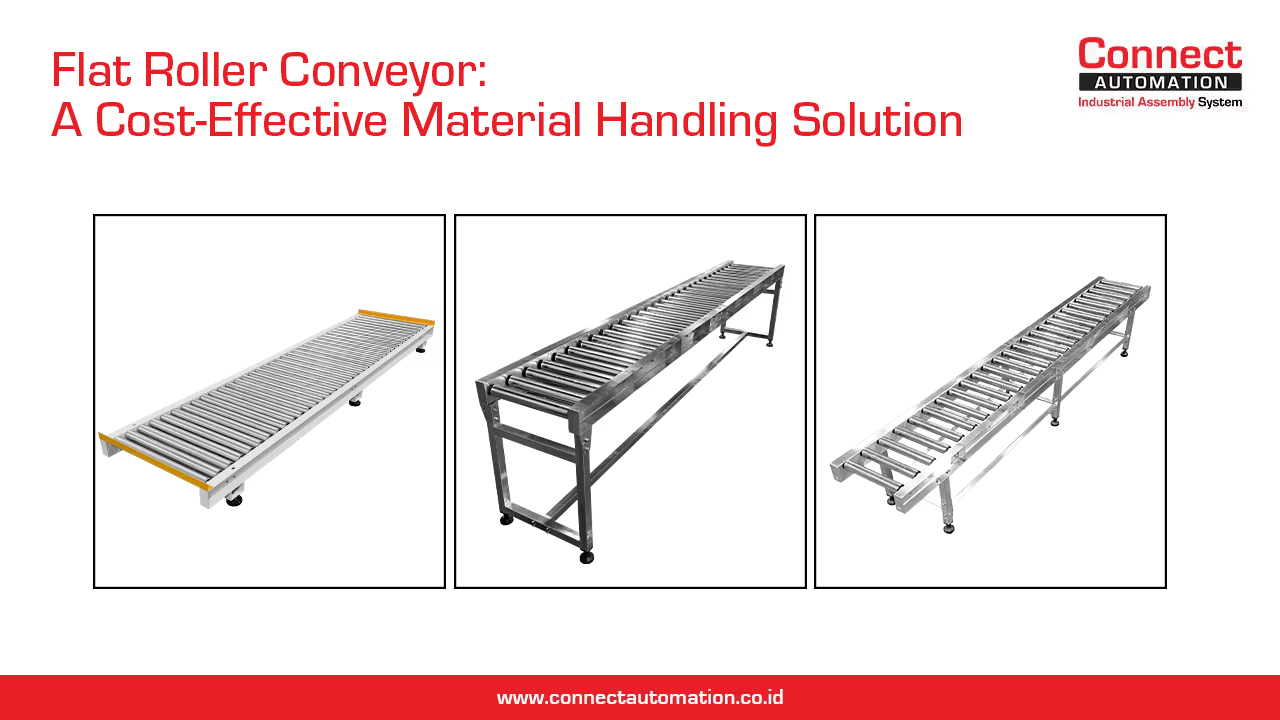
A flat roller conveyor is a type of conveyor system consisting of a series of free-spinning rollers without any motorized drive. Items are moved manually by operators, either by pushing or pulling them along the conveyor.
This system is typically used in work areas with short transfer distances and semi-manual processes. Despite its simplicity, a flat roller conveyor can significantly improve workflow efficiency compared to handling materials entirely by hand.
How Does a Flat Roller Conveyor Work?
The working principle of a flat roller conveyor is straightforward. Items are placed on top of the rollers, and operators move them along the conveyor line manually.
The free rotation of the rollers reduces friction, making it easier to move goods with less effort. This system can also be integrated with workstations or tables to create a more organized and efficient workflow.
Why Is It a Cost-Effective Solution?
One of the main advantages of a flat roller conveyor is its ability to improve efficiency with minimal investment. This is achieved through several key factors:
- No motor or electricity required
- Lower initial investment cost
- Simple and fast installation
- Minimal maintenance requirements
- Long service life
These characteristics make flat roller conveyors an ideal choice for businesses looking to optimize operations without significantly increasing capital or operational expenses.
Key Advantages of Flat Roller Conveyors
In addition to cost efficiency, flat roller conveyors offer several practical benefits:
- Reduces manual lifting effort
- Speeds up material transfer between processes
- Flexible and adaptable to various layouts
- Easy to relocate or modify
- Suitable for a wide range of industries
When used appropriately, this system can help create a more efficient and ergonomic working environment.
Limitations to Consider
While offering many benefits, flat roller conveyors also have certain limitations:
- Movement depends on manual labor
- Not suitable for high-volume operations
- Less effective for long-distance material transfer
However, these limitations simply highlight that flat roller conveyors are best suited for specific use cases rather than all types of operations.
Industrial Applications
Flat roller conveyors are widely used across various industries, particularly in small to medium-scale operations. Common applications include:
- Packing and packaging areas
- Production workstations
- Simple assembly lines
- Inspection areas
- Small to medium-sized warehouses
Their flexibility makes them easy to integrate into different operational setups.
When Should You Use a Flat Roller Conveyor?
A flat roller conveyor is a suitable solution in the following situations:
- Semi-manual production processes
- Limited investment budget
- No requirement for automation
- Frequently changing layouts
- Moderate material handling volume
In these scenarios, the system provides an effective balance between efficiency and cost.
Comparison with Other Roller Conveyor Types
In material handling systems, several types of roller conveyors are commonly used:
- Flat roller conveyor → manual movement
- Gravity roller conveyor → uses slope for movement
- Power roller conveyor → uses motorized drive
Each type serves different operational needs, so the right choice depends on the specific application and workflow requirements.
Conclusion
A flat roller conveyor is a simple yet effective solution for improving material handling efficiency at a low cost. It is particularly suitable for semi-manual processes that require flexibility without the complexity of automated systems.
As a starting point, this system can also serve as a foundation before transitioning to more advanced solutions such as gravity or powered conveyors.
Connect Automation specializes in providing automation solutions, including conveyor systems, to improve efficiency across various industries. The company delivers cutting-edge technology to help organizations automate tasks and optimize workflows. Connect Automation helps businesses reduce manual efforts, boost productivity, and achieve better outcomes. With a customer-focused approach, the company designs tailored solutions to ensure smooth and effective automation transitions for long-term success.
Kawasan Industri Jababeka Tahap 1, Jl. Jababeka II D Blok C14L Cikarang, Indonesia (17530)
(021) 893 5060 Google Maps
Rungkut Industri III, No. 37, Rungkut Menanggal, Kec. Gn. Anyar Surabaya, Indonesia (60293)
(031) 9985 8624 Google Maps