REQUEST A FREE ESTIMATE!
Roller Conveyor for Improving End of Packaging Line Efficiency
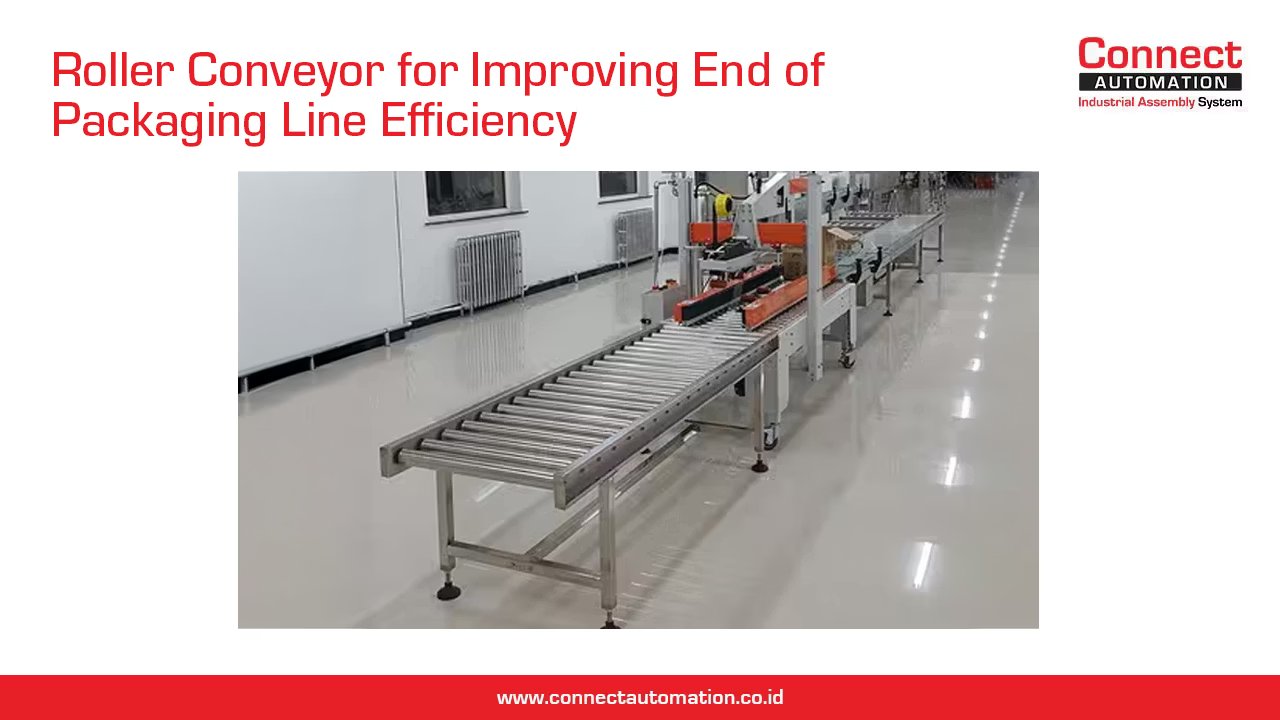
In many manufacturing industries, packaging is one of the final stages before products are transferred to finished goods warehouses, palletizing systems, or other downstream processes. However, even after products have been packaged, material flow management remains critical to ensure that production continues smoothly and efficiently.
One of the most widely used solutions in this area is the roller conveyor. With its ability to transport packaged products in a stable and efficient manner, roller conveyors have become an essential component of material handling systems at the end of packaging lines.
Why Does the End of a Packaging Line Need an Efficient Transfer System?
Once products have passed through processes such as sealing, labeling, coding, or packing, they often need to be moved to the next stage of operation. In modern manufacturing facilities, manual product handling can become a bottleneck, especially when production volumes increase and packaging machines operate at higher speeds.
Without an efficient transfer system, manufacturers may face several challenges, including product accumulation at the discharge point of packaging machines, increased labor requirements, and disruptions to the overall production flow.
For this reason, many companies implement conveyor systems to ensure products continue moving smoothly from one process to the next without limiting production output.
The Role of Roller Conveyors in End-of-Packaging Applications
Roller conveyors serve as a transfer system that connects packaging equipment with downstream operations. They allow products to move in an organized and controlled manner while minimizing the need for manual handling. At the end of a packaging line, roller conveyors are commonly used to:
- Transfer products away from packaging machines.
- Connect multiple processes within a production flow.
- Reduce product accumulation and bottlenecks.
- Maintain a continuous flow of materials.
- Improve overall operational efficiency.
Due to their simplicity, reliability, and effectiveness, roller conveyors are widely adopted across various manufacturing sectors.
Products Commonly Handled by Roller Conveyors
In end-of-packaging applications, roller conveyors are typically used for products that already have secondary packaging or are contained in stable carriers. Common examples include:
- Corrugated cartons.
- Cardboard boxes.
- Plastic crates.
- Tote boxes.
- Bundled products.
- Lightweight plastic containers.
Because these products generally have a flat and stable bottom surface, they can be transported efficiently using roller conveyor systems.
Typical Applications After the Packaging Process
1. Transfer from Carton Sealers
After cartons are sealed, roller conveyors can transport them to palletizing stations, inspection areas, or temporary storage locations without requiring manual handling.
2. Transfer from Case Packers
In case packing operations, roller conveyors move filled cartons to the next stage of production while helping maintain the throughput of the packaging equipment.
3. Transfer After Shrink Wrapping
Products leaving a shrink wrapper often need to be routed to collection areas, palletizing systems, or staging zones. Roller conveyors provide a simple and efficient transfer solution.
4. Transfer to Finished Goods Warehouses or Other Production Areas
In many manufacturing facilities, packaged products are not shipped immediately. Instead, they may be transferred to a finished goods warehouse or another production area within the same facility for additional processing or staging.
Roller conveyors help streamline these movements while maintaining an efficient production flow.
Integration with End-of-Line Automation Systems
As industrial automation continues to evolve, roller conveyors are increasingly integrated with various end-of-line automation solutions. Examples include:
- Automatic palletizing systems.
- Robotic palletizers.
- Barcode scanning systems.
- Checkweighers.
- Vision inspection systems.
- Product tracking and monitoring solutions.
This integration enables manufacturers to build more connected and efficient material handling systems while improving overall productivity.
Benefits of Using Roller Conveyors at the End of Packaging Lines
- Reducing Production Bottlenecks : Roller conveyors help maintain a smooth product flow after packaging, reducing the risk of accumulation and process interruptions.
- Minimizing Manual Handling : Automated product transfer reduces the need for operators to manually move products between processes, improving workplace efficiency.
- Improving Operational Efficiency : Products can be transported consistently and reliably from one stage to the next, helping optimize production performance.
- Supporting Automation Initiatives : Roller conveyors can be integrated into broader automation systems, making them a valuable component of modern manufacturing facilities.
- Maintaining Continuous Material Flow : A well-designed conveyor system helps ensure products move efficiently through the facility, supporting higher productivity and better operational control.
When Is a Roller Conveyor the Right Choice?
Roller conveyors are often an effective solution when:
- Products have already been packaged.
- The product base is flat and stable.
- Efficient transfer between production processes is required.
- The goal is to reduce manual handling after packaging.
- Integration with palletizing or end-of-line automation systems is planned.
Conclusion
Roller conveyors play a vital role in end-of-packaging line operations by enabling efficient, organized, and reliable product transfer. Whether moving cartons, boxes, plastic crates, or bundled products, roller conveyor systems help manufacturers reduce manual handling, minimize bottlenecks, and maintain a consistent flow of materials.
As part of a broader material handling and automation strategy, roller conveyors can significantly improve operational efficiency while supporting the growing demand for streamlined and automated production environments.
Connect Automation specializes in providing automation solutions, including conveyor systems, to improve efficiency across various industries. The company delivers cutting-edge technology to help organizations automate tasks and optimize workflows. Connect Automation helps businesses reduce manual efforts, boost productivity, and achieve better outcomes. With a customer-focused approach, the company designs tailored solutions to ensure smooth and effective automation transitions for long-term success.
Kawasan Industri Jababeka Tahap 1, Jl. Jababeka II D Blok C14L Cikarang, Indonesia (17530)
(021) 893 5060 Google Maps
Rungkut Industri III, No. 37, Rungkut Menanggal, Kec. Gn. Anyar Surabaya, Indonesia (60293)
(031) 9985 8624 Google Maps