REQUEST A FREE ESTIMATE!
Wire Mesh Conveyor for Cooling Drying and Baking Applications
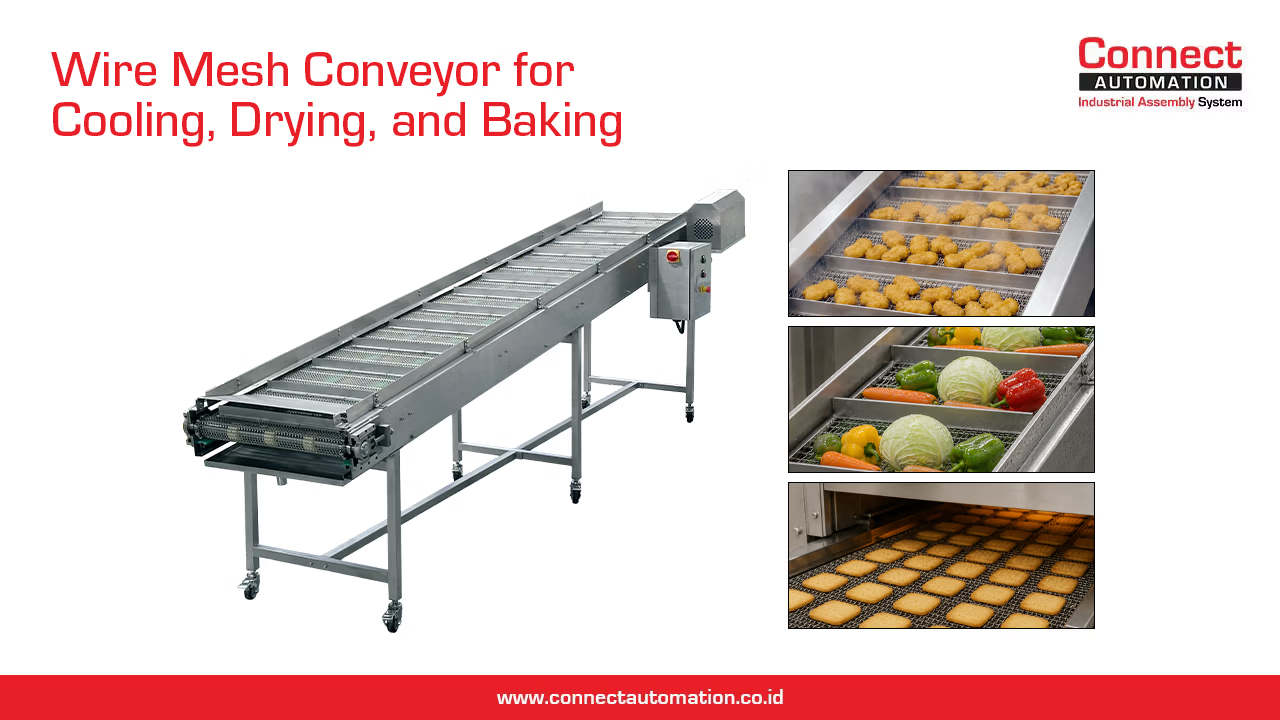
In many manufacturing processes, not all conveyors are designed to handle high temperatures, promote airflow, or support efficient drying. For applications such as cooling, drying, and baking, selecting the right conveyor system plays a crucial role in maintaining product quality, improving production efficiency, and simplifying maintenance.
One of the most widely used solutions for these applications is the wire mesh conveyor. Featuring an open woven metal belt and commonly constructed from stainless steel, a wire mesh conveyor allows air, heat, and liquids to pass freely through the belt, making it more suitable than conventional solid belt conveyors for temperature-sensitive processes.
In this article, we will explore why wire mesh conveyors are an excellent choice for cooling, drying, and baking applications across a wide range of industries.
What Is a Wire Mesh Conveyor?
A wire mesh conveyor is a conveyor system that uses a woven metal mesh belt to transport products. Unlike PVC or PU belt conveyors with solid surfaces, wire mesh conveyors feature an open structure that allows air, heat, steam, and water to flow through the belt.
For industrial applications, both the conveyor frame and mesh belt are often made of stainless steel, providing excellent resistance to corrosion, high temperatures, and frequent cleaning.
These characteristics make wire mesh conveyors ideal for production lines where products must be transported while simultaneously undergoing cooling, drying, or heating processes.
Why Is a Wire Mesh Conveyor Ideal for Cooling, Drying, and Baking?
1. Excellent Air Circulation
One of the greatest advantages of a wire mesh conveyor is its open design, which allows air to circulate freely around the product.
During cooling or drying, airflow is not limited to the top surface. Air can also reach the underside of the product, resulting in faster and more uniform cooling or drying compared to solid belt conveyors.
Improved airflow helps maintain consistent product quality while increasing process efficiency.
2. Suitable for High-Temperature Applications
Wire mesh conveyors are commonly used in high-temperature environments because stainless steel maintains its structural strength under elevated temperatures.
Unlike plastic conveyor belts, which have temperature limitations, wire mesh conveyors can withstand continuous exposure to heat, making them ideal for ovens, roasting systems, and other thermal processing applications.
This makes them a preferred solution for production lines that require products to move continuously through heated zones.
3. Superior Water and Liquid Drainage
In washing and drying applications, excess water must be removed quickly from the product and conveyor surface.
The open mesh construction allows water and other liquids to drain immediately through the belt instead of accumulating on the conveyor.
This not only improves drying efficiency but also helps maintain a cleaner production environment.
Such a design is especially beneficial for products that undergo washing or sanitation before moving to the next manufacturing stage.
4. Reduced Product Contact
Compared to solid conveyor belts, wire mesh conveyors provide a smaller contact area between the belt and the product.
This offers several advantages, including improved airflow around the product, reduced moisture retention underneath, and more effective heat transfer during thermal processing.
For certain products, reduced surface contact also helps preserve appearance and product integrity.
5. Easy to Clean for Hygienic Production
Stainless steel wire mesh conveyors are generally easier to clean than closed-surface conveyor belts.
Food particles, debris, and liquid residues are easier to identify and remove, making cleaning and sanitation more efficient.
As a result, wire mesh conveyors are widely used in industries that require high hygiene standards, including food processing, beverage manufacturing, and pharmaceuticals.
Wire Mesh Conveyor Applications in Cooling Processes
After heating or baking, many products require controlled cooling before packaging, inspection, or storage. Wire mesh conveyors help accelerate cooling by allowing natural airflow or forced air from cooling fans to circulate around the product.
Common cooling applications include:
- Cooling bread after baking
- Cooling biscuits before packaging
- Cooling ready-to-eat food products
- Cooling heated metal components
- Cooling plastic products after specific molding processes
Uniform cooling helps maintain product quality while minimizing the risk of deformation or damage.
Wire Mesh Conveyor Applications in Drying Processes
Wire mesh conveyors are also widely used in industrial drying applications. After products are washed or coated, excess moisture must be removed before the next production stage.
The open belt design allows air to pass through both the top and bottom of the product, resulting in more efficient drying. Typical drying applications include:
- Drying products after washing
- Drying packaging before labeling
- Drying metal components after washing processes
- Drying plastic components after cleaning
Many drying systems also integrate blowers or air knives with wire mesh conveyors to further improve drying performance.
Wire Mesh Conveyor Applications in Baking Processes
One of the most common applications for wire mesh conveyors is continuous baking. Products move steadily through tunnel ovens without requiring manual handling, while heat reaches both the upper and lower surfaces for more consistent baking results.
Typical baking applications include:
- Bread production
- Biscuits
- Cookies
- Crackers
- Flour-based snack products
- Various bakery products
Beyond the food industry, wire mesh conveyors are also used for industrial heating applications such as curing, heat treatment, and thermal processing of manufactured components.
Industries That Commonly Use Wire Mesh Conveyors
Thanks to their versatility, wire mesh conveyors are widely used across many industries, including:
- Food & Beverage
- Bakery
- Snack Manufacturing
- Meat Processing
- Seafood Processing
- Frozen Food
- Automotive Components
- Plastic Manufacturing
Each industry utilizes wire mesh conveyors based on its production requirements, particularly where products need to be transported while undergoing cooling, drying, or heating.
In addition to cooling, drying, and baking processes, wire mesh conveyors can also be applied across various industries with different production requirements. Their selection typically depends on factors such as product characteristics, process temperature, airflow requirements, and operating conditions. To learn more about which industries are suitable for wire mesh conveyors and how these systems can be applied to different production processes, see our detailed article on the topic.
Factors to Consider When Choosing a Wire Mesh Conveyor
Before selecting a wire mesh conveyor, several important factors should be evaluated:
- Type of product being conveyed
- Product weight and dimensions
- Operating temperature
- Conveyor width and length
- Wire mesh pattern and opening size
- Conveyor speed
- Production capacity
- Production environment (dry, wet, or high-temperature)
- Hygiene and cleaning requirements
Choosing the right specifications helps maximize conveyor performance while extending its service life.
Conclusion
A wire mesh conveyor is an ideal solution for cooling, drying, and baking applications because its open design promotes efficient airflow, heat transfer, and liquid drainage.
When constructed from stainless steel, wire mesh conveyors also provide excellent corrosion resistance, durability, and ease of cleaning, making them suitable for demanding industrial environments.
Whether your production process involves cooling baked goods, drying washed products, or transporting materials through high-temperature ovens, a stainless steel wire mesh conveyor can improve production efficiency while helping maintain consistent product quality.
Connect Automation specializes in providing automation solutions, including conveyor systems, to improve efficiency across various industries. The company delivers cutting-edge technology to help organizations automate tasks and optimize workflows. Connect Automation helps businesses reduce manual efforts, boost productivity, and achieve better outcomes. With a customer-focused approach, the company designs tailored solutions to ensure smooth and effective automation transitions for long-term success.
Kawasan Industri Jababeka Tahap 1, Jl. Jababeka II D Blok C14L Cikarang, Indonesia (17530)
(021) 893 5060 Google Maps
Rungkut Industri III, No. 37, Rungkut Menanggal, Kec. Gn. Anyar Surabaya, Indonesia (60293)
(031) 9985 8624 Google Maps