
REQUEST A FREE ESTIMATE!
Selecting a Belt Conveyor for Oily Products on a Production Line
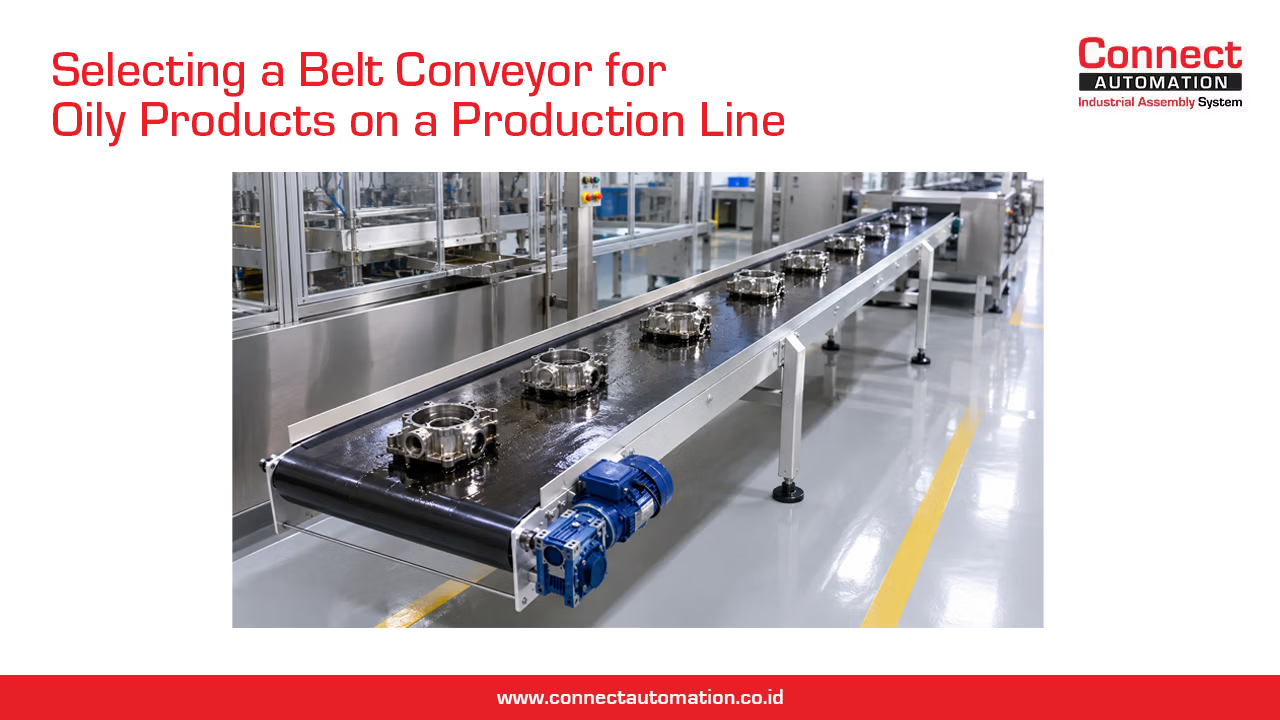
In manufacturing processes, not every product transferred by a conveyor is completely dry. Some components may carry oil, lubricant, grease, or process fluids from previous production stages.
This condition needs to be considered when selecting a belt conveyor. Product size and weight are important, but the condition of the product surface and the type of fluid that may come into contact with the belt can also affect the conveyor design.
Applications like these can be found across various manufacturing processes involving small parts, plastic components, accessories, motorcycle parts, and machined components. For light to medium-sized products, a belt conveyor can be designed around the characteristics of the product and the requirements of the production process.
What Are Oily Products?
In the context of conveyor applications, oily products do not mean products that are made of or consist of liquid. The term refers to products or components that still have oil, lubricant, grease, or process fluids on their surface when they are transferred.
Examples include components that:
- Have been exposed to lubricant during production
- Still carry oil residue after machining
- Have grease on certain areas
- Experience oil leakage during production or transfer
- Have a slippery surface due to process fluids
The amount and type of fluid carried by the product can also vary. Some products may only have a small amount of oil residue, while others may carry a larger amount of fluid. Therefore, the actual condition of the product should be understood before selecting the appropriate belt conveyor.
Industries Using Conveyors for Oily Products
Belt conveyors for oily products can be found in various manufacturing industries. These applications are not necessarily associated with large or heavy components. Some examples include:
1. Plastic Manufacturing
Plastic components and accessories may go through production processes involving lubricants or release agents. After production, these components can be transferred by conveyor to inspection, assembly, or packaging.
2, Automotive Components
In automotive component manufacturing, conveyors can be used to transfer small parts and motorcycle components from one process to another.
Examples may include accessories, small mechanical components, or parts that still carry oil from the production process.
3. Machining & Metal Components
Machined components may use cutting fluids or lubricants during the machining process. After machining, these components can be transferred by conveyor to inspection, cleaning, assembly, or another production stage.
4. General Manufacturing
Other manufactured components may also have oily surfaces as a result of the production process. As long as the product size and weight are within the conveyor's capacity, the system can be designed around the specific application.
Why Should Product Condition Be Considered When Selecting a Belt?
Belt conveyor selection commonly considers product size, weight, capacity, and conveyor speed. However, when products carry oil or lubricant, their surface condition should also be taken into account.
Oil may come into direct contact with the belt during product transfer. When this contact occurs repeatedly, the resistance of the belt material to the specific fluid becomes an important consideration.
The product surface can also affect how the product moves along the conveyor. A product that becomes slippery due to oil may require different handling considerations compared with a product with a dry surface.
For this reason, belt selection should be based on the overall application rather than the product type alone.
Choosing a Belt Conveyor for Products with Oil or Lubricant
There is no single belt type that automatically suits every oily-product application. The appropriate belt needs to be selected based on the actual operating conditions.
1. Type of Oil or Lubricant
The type of fluid that comes into contact with the belt is important information. Oil, lubricant, and grease can have different characteristics, so the belt material should be evaluated based on the specific fluid used in the production process.
Once the type of fluid is known, this information can be used as one of the references for selecting the appropriate belt material.
2. Frequency of Oil Contact
Consider how frequently the belt comes into contact with oil. For example, a product may only carry a small amount of oil residue occasionally, while another application may involve products with oily surfaces throughout the production process.
The more frequent the contact, the more important it becomes to consider both belt material and conveyor design from the beginning.
3. Product Surface Condition
A product with a small amount of oil may have different handling requirements from a product with a heavily lubricated or very slippery surface.
For small parts, product positioning and stability on the belt should also be considered to help keep the products on the intended conveyor path during transfer.
4. Product Temperature
If products leave a production process at an elevated temperature, this condition should also be considered when selecting the belt.
Temperature and oil exposure can occur together, making both factors relevant when evaluating the appropriate belt material.
What Else Should Be Considered Besides the Belt?
The belt is an important part of the conveyor, but the overall conveyor design should also be adapted to the product condition.
- Conveyor Frame : The frame material can be selected according to the production environment and process requirements. For areas requiring more frequent cleaning, the frame and conveyor components can be designed with maintenance and accessibility in mind.
- Side Guides : Small and slippery parts may shift more easily during transfer. Side guides can help keep products within the intended conveyor path. Their position and design can be adjusted according to the product's size and shape.
- Belt Surface : The belt surface should be considered based on the product characteristics. In addition to resistance to oil, product grip and stability during transfer are also important.
- Oil Collection : If oil can drip from the products, the conveyor design may include an appropriate collection area or system to help manage the fluid within the production area.
- Cleaning & Maintenance : A conveyor that frequently comes into contact with oil also requires attention to cleaning and maintenance. Easy access for cleaning the belt and other conveyor components can help keep the system ready for regular production activities.
What If the Products Are Small and Slippery?
Small parts carrying oil can have different handling characteristics compared with products with dry surfaces. Products may shift more easily while the conveyor is running, especially when they are small or have a slippery surface.
Several factors can be considered, including:
- Belt surface
- Conveyor speed
- Side guides
- Product spacing
- Product positioning on the belt
- Transfer design between conveyors
For certain applications, the conveyor can also be designed to help keep products in the appropriate position during transfer. This means that conveyor selection is not only about the load capacity, but also about how the product behaves while moving along the belt.
Examples of Belt Conveyor Applications for Oily Products
Belt conveyors for oily products can be placed at different points within a production line. For example:
Machining → Belt Conveyor → Inspection → Cleaning → Assembly
In this process, the conveyor transfers components from machining to inspection. After inspection, the components can continue to cleaning before entering the assembly process. Another example is:
Plastic Component Production → Belt Conveyor → Inspection → Packaging
Here, the conveyor transfers plastic components from production to inspection and then to packaging. For small parts:
Small Part Production → Belt Conveyor → Cleaning → Assembly
The conveyor can be designed according to product size, production volume, line speed, and the processes connected at both ends of the conveyor.
Information to Prepare Before Building a Conveyor
Before selecting a belt conveyor for oily products, it is useful to prepare the following information:
- Product type
- Product size and weight
- Type of oil, lubricant, or grease
- Amount of fluid carried by the product
- Frequency of contact with the belt
- Product temperature
- Production capacity
- Conveyor speed
- Product surface condition
- Side guide requirements
- Processes before and after the conveyor
- Cleaning and maintenance requirements
This information helps determine a conveyor design that is better suited to the actual production conditions.
Conclusion
Products carrying oil, lubricant, or grease can still be transferred using a belt conveyor when the system is designed around the characteristics of the application.
For small parts, plastic components, accessories, motorcycle parts, and machined components, belt selection should consider the type of fluid, frequency of contact, product surface condition, temperature, and handling requirements during transfer.
In addition to the belt, components such as the frame, side guides, belt surface, oil collection, and ease of cleaning can also be considered as part of the conveyor design.
By understanding the product and production process from the beginning, a belt conveyor can be designed to support product transfer according to the specific requirements of the production line.
Connect Automation specializes in providing automation solutions, including conveyor systems, to improve efficiency across various industries. The company delivers cutting-edge technology to help organizations automate tasks and optimize workflows. Connect Automation helps businesses reduce manual efforts, boost productivity, and achieve better outcomes. With a customer-focused approach, the company designs tailored solutions to ensure smooth and effective automation transitions for long-term success.
Kawasan Industri Jababeka Tahap 1, Jl. Jababeka II D Blok C14L Cikarang, Indonesia (17530)
(021) 893 5060 Google Maps
Rungkut Industri III, No. 37, Rungkut Menanggal, Kec. Gn. Anyar Surabaya, Indonesia (60293)
(031) 9985 8624 Google Maps