REQUEST A FREE ESTIMATE!
Why Do Many Industrial Processes Require Vertical Conveyors
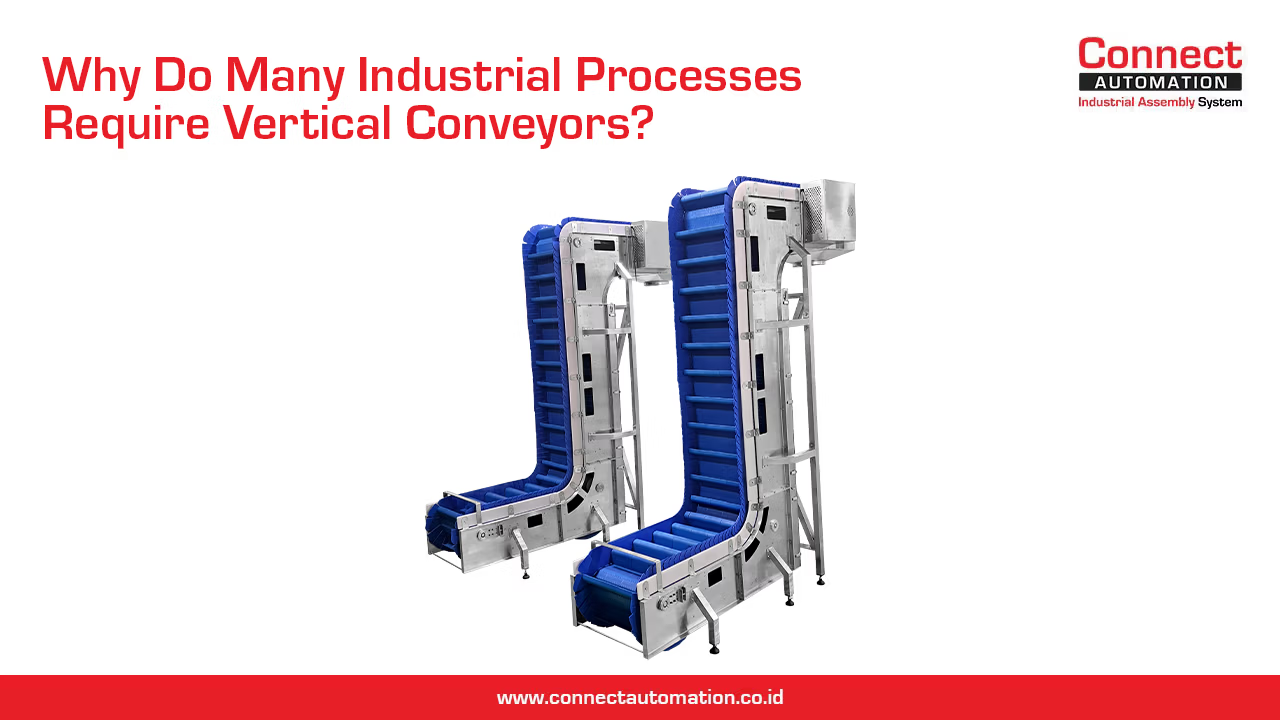
In industrial environments, material flow rarely stays on a single level. Many production processes are intentionally designed with height differences, not because of space limitations, but due to technical, operational, and process-driven requirements. This is where vertical conveyors become more than just an option—they become a necessity. Unlike horizontal conveyors that move materials across the same plane, vertical conveyors are designed to connect processes across different elevations, ensuring stable, controlled, and continuous material handling within complex production systems.
Height Differences as an Inherent Part of Industrial Processes
In many industries, vertical movement is not a workaround but a core part of the production logic. Common examples include:
- Feeding materials into hoppers from a higher elevation
- Transferring products downward for filling or packaging processes
- Moving materials to mezzanine floors or upper production levels
- Utilizing gravity-assisted flow for process efficiency
In such cases, relying on manual handling or conventional lifting equipment often leads to bottlenecks, safety risks, and inconsistent production flow.
The Role of Vertical Conveyors in Production Systems
A vertical conveyor is not merely a lifting device—it acts as a critical link between process stages. Its role is essential in maintaining continuity and balance within a material handling system. Key functions of vertical conveyors include:
- Automated transfer of materials or products between different floors
- Maintaining a smooth and continuous production flow
- Reducing product damage during elevation changes
- Seamless integration with existing horizontal conveyor systems
When properly designed, vertical conveyors operate in sync with production cycles without disrupting upstream or downstream processes.
Industrial Processes That Commonly Require Vertical Conveyors
- Hopper Feeding Systems : Many manufacturing processes require materials to be fed from an elevated position into hoppers or processing machines. Vertical conveyors enable consistent and controlled material feeding, improving process stability and accuracy.
- Filling and Packaging Operations : Filling processes often benefit from height differences, especially in food & beverage and chemical industries where gravity-assisted flow is preferred. Vertical conveyors allow products to be positioned correctly while maintaining hygiene and process precision.
- Buffering and Accumulation : In multi-level production layouts, vertical conveyors are frequently used as buffer links between processes. This helps prevent congestion, balance production rates, and reduce downtime.
- Transfer to Mezzanine or Elevated Areas Modern factories and warehouses increasingly use mezzanine floors to optimize space. Vertical conveyors provide a reliable solution for transporting materials to these elevated areas without relying on manual lifting or forklifts.
Industries That Commonly Use Vertical Conveyor Systems
Vertical conveyors are widely applied across various industrial sectors. Some of the most common industries include:
- Food & Beverage : Industry Used for raw material feeding, intermediate product transfer, and packaging processes, while meeting strict hygiene and safety standards.
- Pharmaceutical and Chemical Industries : Require precise, safe, and contamination-free material handling, especially in vertically arranged processes.
- FMCG and Packaging Industry : Vertical conveyors support high-speed, high-volume production lines by maintaining consistent material flow across multiple levels.
- Plastic and Injection Molding Industry Often used to transfer finished products, runners, or scrap materials to designated processing or recycling levels.
Warehouse and Logistics Operations
In multi-level warehouses and automated distribution centers, vertical conveyors play a key role in integrated material handling systems.
Vertical Conveyor Applications in Industrial Areas in Indonesia
In Indonesia, many industrial zones are developed with multi-level factory and warehouse designs to maximize land utilization. Areas such as Greater Jakarta (Jabodetabek), Cikarang, Karawang, and Surabaya commonly feature facilities where vertical material transfer is essential. In these regions, vertical conveyors are frequently selected because they:
- Integrate easily into existing building structures
- Require minimal structural modification
- Support efficient material flow in space-constrained facilities
This makes vertical conveyors a practical solution for maintaining productivity without expanding building footprints.
Key Considerations When Selecting a Vertical Conveyor
Before implementing a vertical conveyor system, several important factors should be evaluated:
- Type and characteristics of the material being handled
- Load capacity and required lifting height
- Desired speed and throughput
- Integration with other conveyors and production equipment
- Safety features such as guarding and emergency systems
A properly engineered vertical conveyor ensures long-term reliability, operational safety, and consistent performance.
Vertical Conveyors as Part of an Integrated System
It is important to view vertical conveyors as part of a complete material handling system, not as standalone equipment. Effective integration with horizontal conveyors, workstations, and production machinery significantly enhances overall system performance. With careful planning and system design, vertical conveyors contribute to improved efficiency, smoother material flow, and scalable production capacity without disrupting existing operations.
Conclusion
Many industrial processes require vertical conveyors not simply to save space, but because the production flow itself demands changes in elevation. From hopper feeding and filling operations to multi-level warehouses and complex production layouts, vertical conveyors play a vital role in maintaining efficient and reliable material handling. Understanding process requirements, industry applications, and facility conditions is key to determining whether a vertical conveyor system is the right solution. When implemented correctly, vertical conveyors become a long-term investment that supports productivity, safety, and operational stability.
Connect Automation specializes in providing automation solutions, including conveyor systems, to improve efficiency across various industries. The company delivers cutting-edge technology to help organizations automate tasks and optimize workflows. Connect Automation helps businesses reduce manual efforts, boost productivity, and achieve better outcomes. With a customer-focused approach, the company designs tailored solutions to ensure smooth and effective automation transitions for long-term success.
Kawasan Industri Jababeka Tahap 1, Jl. Jababeka II D Blok C14L Cikarang, Indonesia (17530)
(021) 893 5060 Google Maps
Rungkut Industri III, No. 37, Rungkut Menanggal, Kec. Gn. Anyar Surabaya, Indonesia (60293)
(031) 9985 8624 Google Maps