REQUEST A FREE ESTIMATE!
Why Choose Stainless Steel Wire Mesh Conveyors Guide
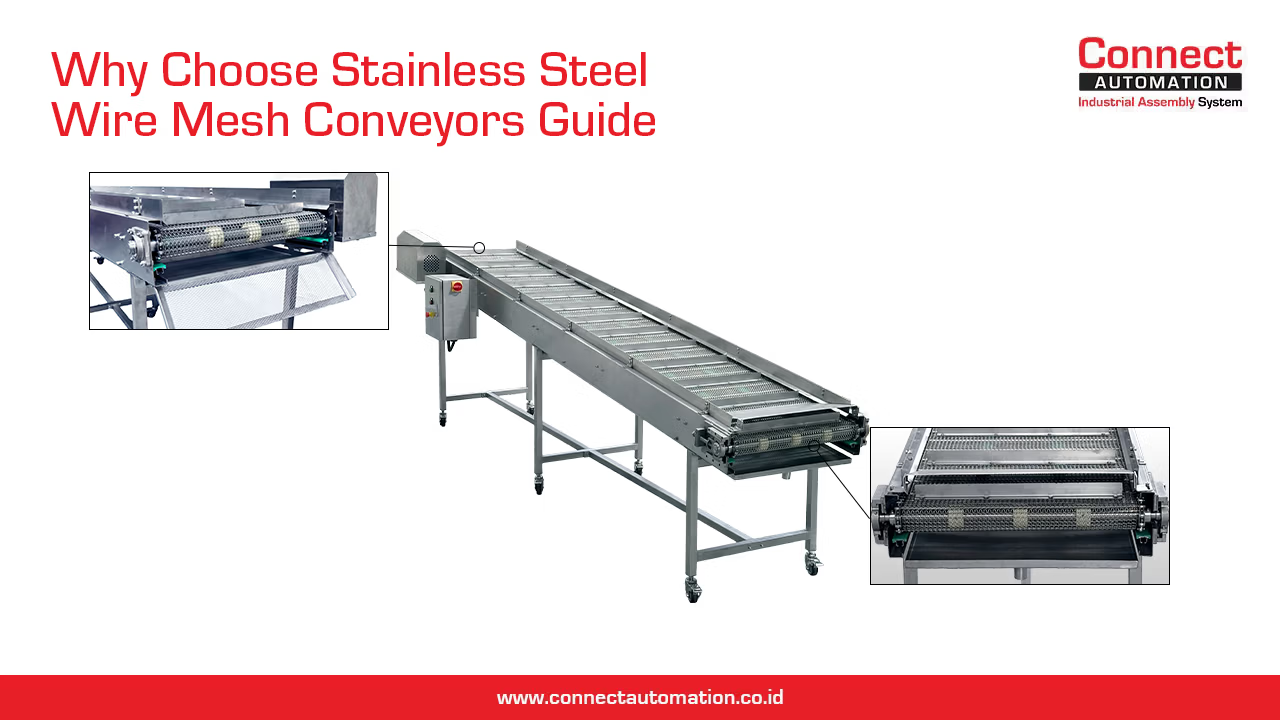
Selecting the right conveyor material is just as important as choosing the right conveyor design. In industrial manufacturing, the conveyor system operates continuously and is often exposed to moisture, heat, cleaning chemicals, and demanding production environments. As a result, the material used directly impacts the conveyor's durability, hygiene, maintenance requirements, and long-term operating costs.
Among the various materials available, stainless steel wire mesh conveyors have become one of the most trusted solutions across multiple industries. Their excellent corrosion resistance, high-temperature performance, and easy maintenance make them an ideal choice for modern production facilities.
But what makes stainless steel the preferred material for wire mesh conveyors? Let's take a closer look.
What Is a Stainless Steel Wire Mesh Conveyor?
A stainless steel wire mesh conveyor is a conveyor system that uses a woven stainless steel mesh belt to transport products throughout the production process. In many industrial applications, not only the mesh belt but also the conveyor frame and supporting components are manufactured from stainless steel to maximize durability and reliability.
Unlike PVC or PU belt conveyors that feature a solid conveying surface, a wire mesh conveyor has an open structure that allows air, heat, steam, and liquids to pass freely through the belt.
Because of these characteristics, stainless steel wire mesh conveyors are widely used in applications involving high temperatures, frequent washdowns, humid environments, and production processes requiring strict hygiene standards.
Advantages of Stainless Steel for Wire Mesh Conveyors
1. Excellent Corrosion Resistance
One of the primary reasons manufacturers choose stainless steel is its outstanding resistance to corrosion.
Production environments are often exposed to moisture, water, cleaning chemicals, or humid conditions that can cause ordinary metals to rust over time. Corrosion not only shortens equipment life but may also increase maintenance costs and affect production efficiency.
Stainless steel naturally forms a protective oxide layer that helps prevent corrosion, allowing the conveyor to maintain its performance even under challenging operating conditions.
2. Performs Well in High-Temperature Applications
Many industrial processes involve elevated temperatures, including baking, roasting, curing, drying, and heat treatment.
Unlike plastic conveyor belts that have temperature limitations, stainless steel maintains its structural strength and stability even during continuous exposure to heat.
This makes stainless steel wire mesh conveyors an ideal solution for tunnel ovens, industrial furnaces, and other thermal processing systems where reliability is essential.
3. Easy to Clean and Maintain
Cleanliness is a critical requirement in many manufacturing industries.
Stainless steel surfaces are smooth, non-porous, and resistant to contamination, making them easier to clean than many other materials. In addition, the open wire mesh design allows food particles, debris, and liquids to be easily identified and removed during cleaning.
Simplified cleaning procedures help reduce production downtime while supporting efficient maintenance schedules.
4. Suitable for Hygienic Production Environments
Industries such as food processing, beverage manufacturing, pharmaceuticals, and cosmetics require production equipment that supports strict hygiene standards.
Stainless steel is widely recognized for its sanitary properties because it is easy to clean and resistant to contamination when properly maintained.
Using a stainless steel wire mesh conveyor helps manufacturers maintain cleaner production lines while minimizing the risk of product contamination.
5. Longer Service Life
Although stainless steel typically requires a higher initial investment than alternative materials, it often provides greater value over the long term.
Its resistance to corrosion, heat, and continuous operation allows stainless steel wire mesh conveyors to remain reliable for many years with proper maintenance.
The result is lower replacement costs, fewer unexpected breakdowns, and reduced maintenance expenses throughout the equipment's lifecycle.
Why Is Stainless Steel the Best Material for Wire Mesh Conveyors?
Wire mesh conveyors are frequently used in demanding production environments where durability and reliability are essential. Stainless steel offers several key advantages that make it the preferred material:
- Excellent corrosion resistance
- High durability for continuous operation
- Resistant to many industrial cleaning chemicals
- Suitable for both wet and dry production environments
- Helps maintain product quality throughout production
- Requires less maintenance than materials prone to rust
- Provides long-term reliability and consistent performance
These advantages have made stainless steel the industry standard for many wire mesh conveyor applications worldwide.
Which Stainless Steel Grade Is Commonly Used?
Not all stainless steel grades offer the same level of performance. Choosing the appropriate grade depends on the production environment and application requirements.
1. Stainless Steel 304
Stainless Steel 304 is the most commonly used material for wire mesh conveyors.
It provides an excellent balance of corrosion resistance, mechanical strength, ease of fabrication, and cost-effectiveness.
For most industries—including food and beverage, bakery, pharmaceutical, packaging, and general manufacturing—Stainless Steel 304 delivers reliable long-term performance and meets the requirements of everyday industrial operations.
2. When Should You Choose Stainless Steel 316?
For more aggressive operating environments, Stainless Steel 316 is often the better choice. Its molybdenum content provides enhanced resistance to corrosion, particularly against chlorides, salt exposure, and certain chemicals.
Stainless Steel 316 is commonly recommended for:
- Chemical processing plants
- Marine industries
- Coastal manufacturing facilities
- Highly corrosive production environments
Although SS316 is generally more expensive than SS304, its superior corrosion resistance makes it a worthwhile investment for specialized applications.
3. Be Careful When Choosing Stainless Steel 201
Some wire mesh conveyors on the market are manufactured using Stainless Steel 201 because it offers a lower purchase cost. However, buyers should understand that SS201 provides significantly lower corrosion resistance than Stainless Steel 304 or Stainless Steel 316.
In humid environments, production areas with frequent washdowns, or applications requiring high hygiene standards, SS201 may become more susceptible to rust over time. For this reason, it is important to evaluate the total operating environment rather than focusing solely on the initial purchase price.
Want to learn more? Read our article on Stainless Steel 201 vs. Stainless Steel 304: Which One Is Better for Industrial Applications? to understand the key differences and choose the right material for your production needs.
Industries That Benefit Most from Stainless Steel Wire Mesh Conveyors
Because of their durability and hygienic properties, stainless steel wire mesh conveyors are widely used in industries such as:
- Food & Beverage
- Bakery
- Meat Processing
- Seafood Processing
- Electronics Manufacturing
- Automotive Components
In these industries, stainless steel conveyors improve equipment reliability while supporting product quality, operational efficiency, and sanitation requirements.
Factors to Consider Before Choosing a Stainless Steel Wire Mesh Conveyor
Before selecting a stainless steel wire mesh conveyor, several factors should be carefully evaluated:
- Stainless steel grade
- Operating temperature
- Production environment (dry, wet, or corrosive)
- Wire mesh belt type and opening size
- Load capacity
- Conveyor speed requirements
- Cleaning and sanitation frequency
- Drive system configuration
Considering these factors early in the project helps ensure the conveyor is properly matched to the production process and delivers the best long-term return on investment.
When Should You Choose a Stainless Steel Wire Mesh Conveyor?
A stainless steel wire mesh conveyor is the ideal choice when your production process involves:
- High-humidity environments
- Frequent washdown or sanitation procedures
- High-temperature operations such as ovens or furnaces
- Strict hygiene requirements
- Long service life with minimal maintenance
- Continuous industrial production
It is also an excellent solution for cooling, drying, and baking applications, where the combination of stainless steel construction and an open wire mesh design delivers superior airflow, heat transfer, and production efficiency.
Conclusion
Choosing a stainless steel wire mesh conveyor is about more than simply selecting a premium material—it is an investment in long-term reliability, operational efficiency, and product quality.
Stainless steel offers exceptional corrosion resistance, high-temperature performance, ease of cleaning, and an extended service life, making it the preferred material for demanding industrial environments.
When selecting a wire mesh conveyor, it is equally important to choose the appropriate stainless steel grade. For most industrial applications, Stainless Steel 304 provides the ideal balance of performance and value, while Stainless Steel 316 is recommended for highly corrosive environments. Although Stainless Steel 201 may offer a lower upfront cost, it should be selected carefully after considering the operating conditions and long-term maintenance requirements.
By choosing the right stainless steel material from the beginning, manufacturers can achieve greater equipment reliability, lower maintenance costs, and improved productivity throughout the life of the conveyor system.
Connect Automation specializes in providing automation solutions, including conveyor systems, to improve efficiency across various industries. The company delivers cutting-edge technology to help organizations automate tasks and optimize workflows. Connect Automation helps businesses reduce manual efforts, boost productivity, and achieve better outcomes. With a customer-focused approach, the company designs tailored solutions to ensure smooth and effective automation transitions for long-term success.
Kawasan Industri Jababeka Tahap 1, Jl. Jababeka II D Blok C14L Cikarang, Indonesia (17530)
(021) 893 5060 Google Maps
Rungkut Industri III, No. 37, Rungkut Menanggal, Kec. Gn. Anyar Surabaya, Indonesia (60293)
(031) 9985 8624 Google Maps