
REQUEST A FREE ESTIMATE!
What Is Safety Guarding and Why Its Essential in Production Area
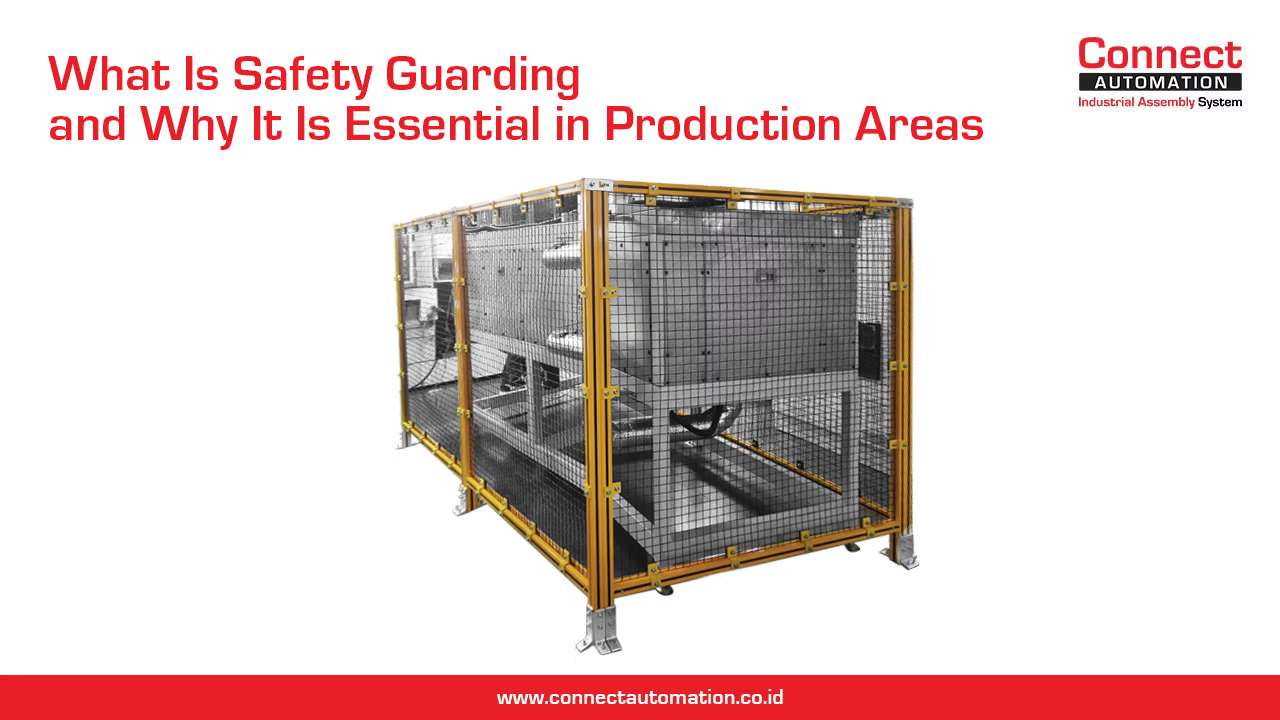
In production environments, machines operate without compromise. Conveyors keep moving, motors rotate continuously, and automated systems follow control logic—not human conditions around them. In manufacturing environments with high operational density, the risk of interaction between people and machines increases significantly. This is where safety guarding plays a critical role as a primary layer of protection. Many industrial workplace accidents are not caused by machine failure, but by human access being too close to hazardous areas. Safety guarding exists to prevent these risks at the source, rather than merely reducing the impact after an incident occurs.
What Is Safety Guarding?
Safety guarding refers to a physical protection system designed to restrict or control human access to hazardous machine areas. It is not limited to simple fences and can take various forms, such as:
- Protective panels
- Machine enclosures
- Covers for moving parts
- Modular safety fences
- Guarding with access doors or panels
Its primary function is not visual warning, but physical prevention of direct contact between operators and dangerous machine components—especially in production areas with dense and continuous workflows.
Key Functions of Safety Guarding in Production Areas
Safety guarding plays a vital role in maintaining safety and operational order, including:
- Protecting operators from injury risks. Such as entrapment, entanglement, or contact with moving machine parts.
- Defining work areas according to SOPs. Operators can only access areas intended for their tasks.
- Maintaining a safe distance between humans and machines. Particularly important for conveyor systems and automated equipment.
- Supporting a more organized production flow. Creating a safer, cleaner, and more controllable production environment.
Why Is Safety Guarding Mandatory in Production Areas?
1. High Risk of Injury Near Machinery
Machines do not have situational awareness. Once activated, they will continue operating even if a person enters a hazardous zone.
2. Human Error Is Unavoidable
In production environments with high output targets and shift-based operations, fatigue and reduced focus are common. Safety guarding acts as a passive protection layer that remains effective even when human error occurs.
3. Production Environments Are Dynamic
In facilities with dense activity, material flow, operator movement, and equipment operation often occur simultaneously. Without clear physical boundaries, the risk level increases significantly.
4. Prevention Is More Efficient Than Accident Recovery
Workplace accidents impact more than just personnel—they cause downtime, disrupt production flow, and create operational losses.
Production Areas That Require Safety Guarding the Most
Common areas that typically require safety guarding include:
- Conveyor systems
- Automated and semi-automated machines
- Loading and unloading zones
- Robot cells and mechanical arms
- Areas with rotating, cutting, or pinch points
In production environments with limited space and dense logistics flow, safety guarding helps establish clear and safe boundaries between people and machines.
Safety Guarding Does Not Stand Alone
In modern industrial systems, safety guarding rarely functions as a standalone solution. It is often integrated with sensors and interlock systems to create a more comprehensive safety approach.
- Interlock systems ensure machines stop automatically when a guarding door or panel is opened.
- Sensors detect door positions, operator presence, or specific conditions before allowing machines to operate.
This combination transforms safety guarding from a simple physical barrier into part of an active safety control system.
Safety Guarding vs Operator Awareness
Training, SOPs, and operator awareness remain essential. However, relying solely on human behavior is not sufficient—especially in high-intensity production environments. Safety guarding provides an additional fail-safe layer of protection that operates consistently regardless of human error.
Operational Benefits of Safety Guarding
Properly implemented safety guarding delivers long-term operational benefits, including:
- Reduced workplace accident risks
- Improved production stability and continuity
- Minimized downtime due to incidents
- Increased operator confidence and safety awareness
- A more professional and well-organized production environment
Conclusion
Safety guarding is not merely an optional machine accessory—it is a fundamental part of safe and sustainable production system design. In manufacturing environments with high efficiency demands and dense activity, physical protection combined with sensor and interlock systems becomes an essential requirement. A safe production area does not only protect operators—it also safeguards the continuity and reliability of overall operations.
Connect Automation specializes in providing automation solutions, including conveyor systems, to improve efficiency across various industries. The company delivers cutting-edge technology to help organizations automate tasks and optimize workflows. Connect Automation helps businesses reduce manual efforts, boost productivity, and achieve better outcomes. With a customer-focused approach, the company designs tailored solutions to ensure smooth and effective automation transitions for long-term success.
Kawasan Industri Jababeka Tahap 1, Jl. Jababeka II D Blok C14L Cikarang, Indonesia (17530)
(021) 893 5060 Google Maps
Rungkut Industri III, No. 37, Rungkut Menanggal, Kec. Gn. Anyar Surabaya, Indonesia (60293)
(031) 9985 8624 Google Maps