
REQUEST A FREE ESTIMATE!
What Is a Workstation and Its Role in the Production Area
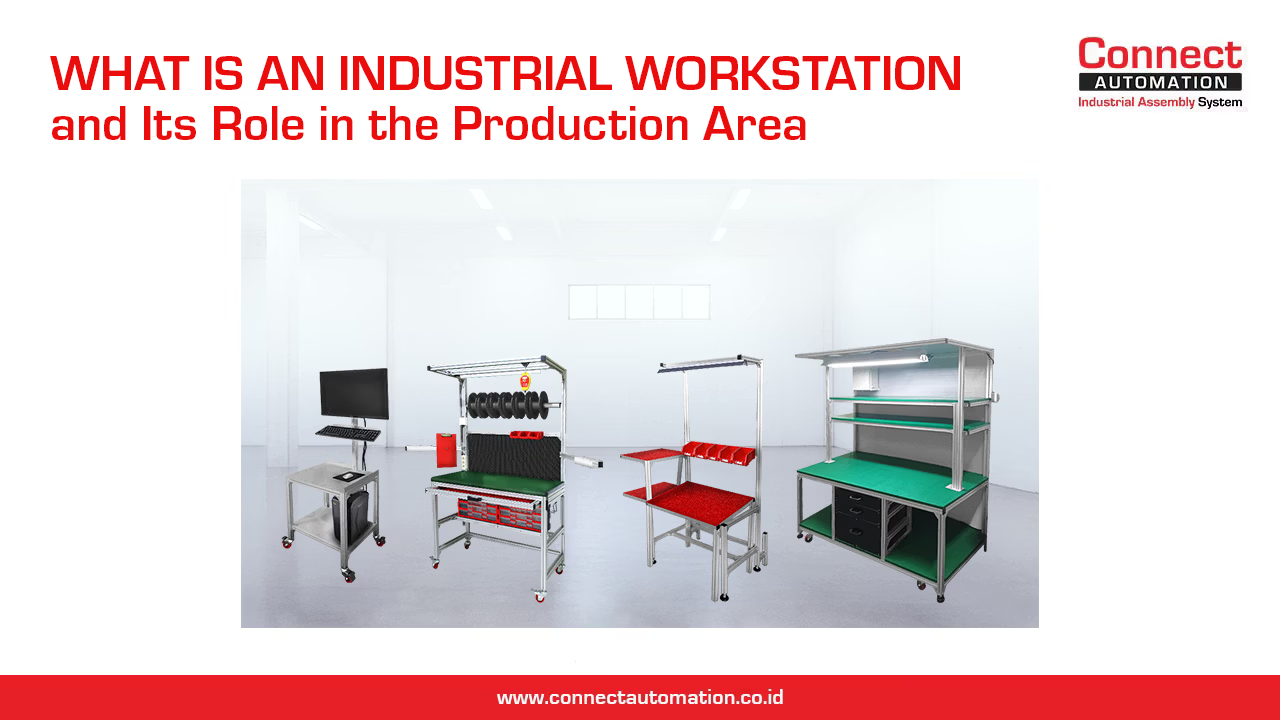
In modern industrial environments, efficiency and process consistency are critical factors in maintaining competitiveness. One important element that is often considered simple, yet has a significant impact on productivity, is the industrial workstation. A workstation is not merely a worktable, but an integral part of the production system designed to support efficient, ergonomic operations aligned with lean manufacturing principles.
Definition of an Industrial Workstation
An industrial workstation is a dedicated work area designed to support specific activities within the production process, such as assembly, packing, inspection, or other technical tasks. A workstation typically consists of a structural frame, work surface, and various supporting accessories such as shelves, tool hangers, lighting, and work panels. Unlike conventional work tables, industrial workstations are designed with a strong focus on functionality, workflow, and operator requirements, enabling consistent and repeatable production processes.
Main Functions of Workstations in the Production Area
A workstation serves as the central point of operator activity on the production floor. It is where daily operational tasks are performed repeatedly and systematically. The main functions of an industrial workstation include:
- Providing an organized working area
- Positioning tools and materials within easy reach
- Maintaining process consistency
- Supporting production targets
A well-designed workstation allows operators to work more efficiently and remain focused, without being disrupted by poor layout or disorganized equipment.
The Role of Workstations in Production Workflow
Within a production system, workstations form part of an interconnected workflow. Proper workstation placement and design help create a smoother process flow, reduce unnecessary operator movement, and minimize waiting time between operations. This structured approach is essential for maintaining production rhythm and ensuring that each process step follows the intended sequence.
Workstations and Operational Efficiency
Workstation design has a direct impact on operational efficiency. A workstation that is aligned with process requirements can:
- Reduce wasted working time
- Increase operator productivity
- Minimize the risk of errors
- Maintain consistent product quality
In the context of lean manufacturing, workstations play a key role in reducing waste, particularly motion waste, which refers to movements that do not add value. Proper workstation layout enables operators to perform tasks with shorter, controlled, and more efficient movements.
Relationship Between Workstations and Ergonomics
Ergonomics is a critical aspect of industrial workstation design. Proper working posture, appropriate work surface height, and ergonomic placement of tools help reduce operator fatigue and improve workplace safety. Within lean manufacturing practices, ergonomics and efficiency are closely related. Ergonomic workstations support operators by keeping tasks within an optimal reach zone, which helps:
- Control unnecessary movements
- Reduce the risk of injuries and workplace accidents
- Maintain stable performance over long operating periods
This approach supports lean principles that emphasize safe, consistent, and sustainable production processes.
Applications of Workstations in Various Production Areas
Industrial workstations are used across different production areas, each with specific functional requirements, including:
- Assembly workstations for component assembly
- Packing and labeling workstations for shipment preparation
- Inspection or quality control workstations for product verification
- Light maintenance workstations for servicing and minor repairs
Each application requires a workstation design tailored to the nature of the tasks and operator activities involved.
Workstations as Part of an Integrated Production System
Industrial workstations rarely operate as standalone units. In practice, they are often integrated with other systems such as conveyors, storage racks, and modular production systems. This integration helps create a more structured and efficient production flow from one process to the next. Such an integrated approach aligns closely with lean manufacturing, where all production elements are designed as part of a cohesive system rather than isolated components.
The Importance of Proper Workstation Design
Workstations that are designed without proper planning can lead to inefficient workflows, operator fatigue, and difficulties when scaling or modifying production layouts in the future. For this reason, workstation design should take into account:
- The type and sequence of work activities
- Operator requirements
- Production flow
- Ergonomic and lean manufacturing principles
- Future expansion or modification needs
Conclusion
Industrial workstations play a crucial role in production environments. More than just work tables, they are essential components of the production system that directly influence efficiency, ergonomics, and productivity. When designed correctly and aligned with lean manufacturing principles, workstations help create safer, more efficient, and scalable production environments.
Connect Automation specializes in providing automation solutions, including conveyor systems, to improve efficiency across various industries. The company delivers cutting-edge technology to help organizations automate tasks and optimize workflows. Connect Automation helps businesses reduce manual efforts, boost productivity, and achieve better outcomes. With a customer-focused approach, the company designs tailored solutions to ensure smooth and effective automation transitions for long-term success.
Kawasan Industri Jababeka Tahap 1, Jl. Jababeka II D Blok C14L Cikarang, Indonesia (17530)
(021) 893 5060 Google Maps
Rungkut Industri III, No. 37, Rungkut Menanggal, Kec. Gn. Anyar Surabaya, Indonesia (60293)
(031) 9985 8624 Google Maps