REQUEST A FREE ESTIMATE!
Types of Gravity Rollers and Their Applications in the Field
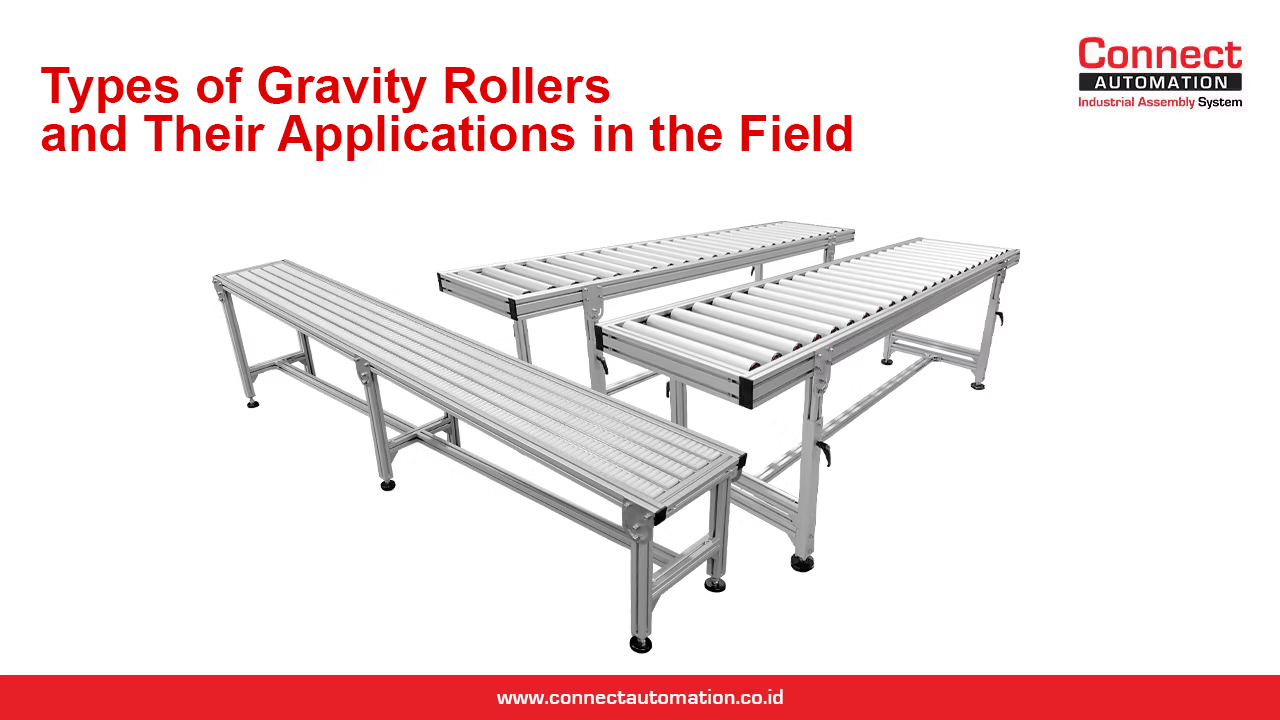
In material handling systems, gravity rollers are one of the simplest yet most effective conveyor solutions. This system operates without a motor and relies on gravity or manual force to move goods from one point to another.
Due to its simple design and low operational cost, gravity roller conveyors are widely used in warehouses, distribution centers, production lines, and loading dock areas. However, selecting the right type of roller is crucial to ensure optimal performance, load capacity, and long service life.
This article discusses the different types of gravity rollers based on material and design, along with their practical applications in industrial environments.
How Gravity Rollers Work
Gravity rollers operate based on the rotation of rollers mounted on shafts with bearings. Products placed on top of the rollers move due to:
- Inclined conveyor angle
- Manual pushing by operators
- The weight of the product itself
Several technical factors influence the performance of gravity rollers:
- Roller diameter
- Roller pitch (spacing between rollers)
- Product weight and dimensions
- Bearing quality
Heavier products require larger diameters and stronger roller materials to maintain smooth movement and durability.
Types of Gravity Rollers
A. Based on Roller Material
1. Stainless Steel Rollers
Stainless steel rollers are designed for applications that require high corrosion resistance and hygienic standards.
Characteristics:
- Excellent rust resistance
- Easy to clean
- Suitable for wet or humid environments
- Hygienic appearance
Applications:
- Food industry
- Beverage production
- Pharmaceutical facilities
- Areas with frequent washing procedures
These rollers are often combined with stainless steel frames to ensure full system durability and compliance with hygiene standards.
2. Galvanized Steel Rollers
Galvanized steel rollers are a cost-effective solution for general industrial use. The steel core is coated with a zinc layer to provide basic corrosion protection.
Characteristics:
- Strong and durable
- More economical than stainless steel
- Suitable for indoor environments
Applications:
- Warehouses
- General manufacturing
- Non-hygienic production areas
They are commonly used for handling cartons and medium to heavy loads.
3. Aluminum Rollers
Aluminum rollers are lighter than steel while still offering sufficient strength for medium-duty applications.
Characteristics:
- Lightweight
- Moderate corrosion resistance
- Easy to install and reconfigure
- Suitable for modular systems
Applications:
- Packaging areas
- Distribution centers
- Flexible conveyor layouts
Aluminum rollers are ideal when weight reduction and system flexibility are priorities.
4. Plastic Rollers (Smooth & Edge Rollers)
Plastic rollers are typically used for light to medium-duty applications and in environments where lower noise levels are preferred.
a. Smooth Rollers
Smooth rollers feature a flat and even surface.
Characteristics:
- Smooth surface
- Reduced friction
- Ideal for carton boxes
Applications:
- E-commerce warehouses
- Picking areas
- Packaging lines
b. Edge Rollers
Edge rollers are designed with raised edges or lips to help maintain product alignment on the conveyor line.
Characteristics:
- Improved stability for small products
- Reduced risk of items slipping off the conveyor
- Suitable for lightweight goods
Applications:
- Sorting areas
- Small package transfer
- Handling compact or unstable products
Connect Automation specializes in providing automation solutions, including conveyor systems, to improve efficiency across various industries. The company delivers cutting-edge technology to help organizations automate tasks and optimize workflows. Connect Automation helps businesses reduce manual efforts, boost productivity, and achieve better outcomes. With a customer-focused approach, the company designs tailored solutions to ensure smooth and effective automation transitions for long-term success.
Kawasan Industri Jababeka Tahap 1, Jl. Jababeka II D Blok C14L Cikarang, Indonesia (17530)
(021) 893 5060 Google Maps
Rungkut Industri III, No. 37, Rungkut Menanggal, Kec. Gn. Anyar Surabaya, Indonesia (60293)
(031) 9985 8624 Google Maps