
REQUEST A FREE ESTIMATE!
Table Top Chain Conveyor in the Food and Beverage Industries
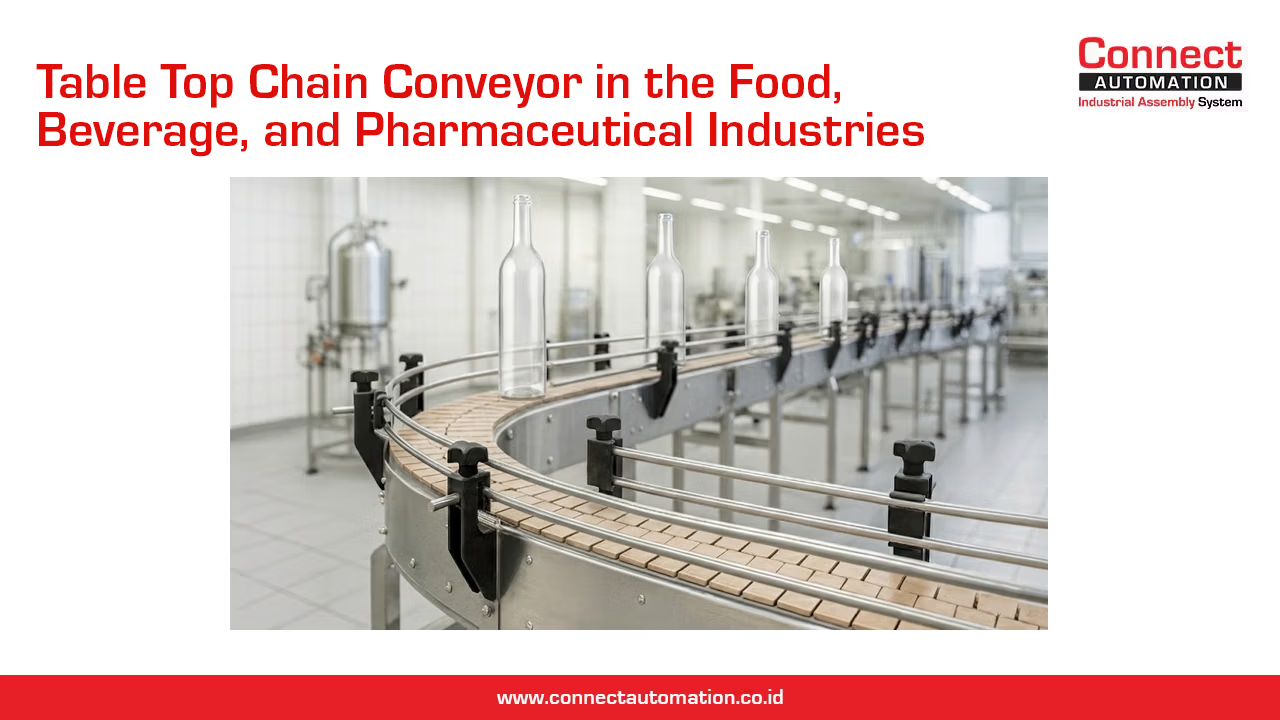
Table Top Chain Conveyor in the Food, Beverage, and Pharmaceutical Industries
In the food, beverage, and pharmaceutical industries, conveyor systems are not merely material handling equipment. They are critical components of the production process that must comply with strict hygiene, safety, and regulatory standards.
Products such as beverage bottles, sauces, liquid medicines, vials, and cosmetic containers are processed in high volumes and at high speeds. The transfer system must ensure stability, precision, and zero risk of contamination. For these reasons, the table top chain conveyor is widely adopted across these regulated industries.
This article explains the role of table top chain conveyors in food, beverage, and pharmaceutical production lines, with a particular focus on stainless steel frame construction and regulatory requirements.
Why Hygienic Industries Require Specialized Conveyor Systems
Unlike general manufacturing sectors, food, beverage, and pharmaceutical industries impose additional requirements, including:
- Food-grade or non-toxic materials
- Easy cleaning and sanitation
- Resistance to moisture and cleaning chemicals
- No particle generation
- Hygienic design with minimal dirt accumulation points
Improper material selection or poor conveyor design can lead to contamination risks, failed audits, product recalls, and costly production downtime.
The Importance of Stainless Steel Frames in Hygienic Conveyor Systems
One of the most critical aspects of conveyor design in hygienic industries is the frame material. Stainless steel is the standard choice for table top chain conveyor frames in these sectors.
Why Stainless Steel?
Stainless steel offers several essential advantages:
- Excellent corrosion resistance
- Rust-free surface
- High durability in wet environments
- Easy to clean and sanitize
- Resistant to chemical cleaning agents
- Long service life
The most commonly used grades include:
SS304
Widely used in food and beverage applications. It provides good corrosion resistance and cost efficiency.
SS316
Offers superior resistance to chemicals and corrosive environments. It is highly recommended for pharmaceutical facilities and areas with intensive chemical sanitation procedures. In regulated industries, using mild steel or non-stainless materials significantly increases the risk of corrosion and contamination.
Hygienic Frame Design Considerations
Beyond material selection, frame design plays a vital role in sanitation performance. Hygienic conveyor frames typically feature:
- Open-frame construction for easy cleaning
- Smooth surfaces without sharp edges
- High-quality weld finishing
- Minimal crevices to prevent residue buildup
- Adjustable support legs
These design elements simplify cleaning procedures and support quality inspections and audits.
Applications in the Food Industry
In food processing plants, table top chain conveyors are commonly used to transport:
- Sauce bottles
- Cooking oil bottles
- Dairy product containers
- Snack packaging
- Cup desserts
They connect filling, sealing, labeling, and packaging processes efficiently. Food manufacturers must comply with standards such as:
- Food and Drug Administration (FDA)
- Hazard Analysis and Critical Control Points (HACCP)
- ISO 22000
Conveyor materials that come into direct or indirect contact with products must be approved for food contact and must not react with the product.
Applications in the Beverage Industry
The beverage industry presents unique operational conditions:
- High-speed production lines
- Upright product handling (PET bottles, glass bottles, cans)
- Frequent exposure to water and liquid spills
Table top chain conveyors are particularly suitable because they:
- Provide stable support for upright bottles
- Perform well in wet environments
- Can be designed with curved layouts
- Support continuous flow operations
A stainless steel frame is essential to prevent corrosion caused by constant exposure to moisture.
Applications in the Pharmaceutical Industry
The pharmaceutical sector operates under the most stringent regulatory requirements. Products such as:
- Syrup bottles
- Injection vials
- Blister packs
- Liquid medicine containers
Must be processed in controlled environments with strict documentation and validation procedures. Common regulatory references include:
- Good Manufacturing Practice (GMP)
- World Health Organization GMP guidelines
- ISO 14644
In pharmaceutical environments, conveyor systems must:
- Generate no particles
- Be easy to validate
- Use traceable materials
- Resist disinfectants and cleaning chemicals
For these reasons, SS316 frames are often preferred over SS304 in pharmaceutical facilities.
Ideal Combination: Stainless Steel Frame and Food-Grade Chain
A typical hygienic configuration includes:
- Stainless steel frame (SS304 or SS316)
- Food-grade plastic flat top chain (POM / acetal)
- Stainless steel shafts and fasteners
This combination ensures:
- Product stability
- Hygienic operation
- Regulatory compliance
- Long-term durability
Risks of Using Inappropriate Conveyor Materials
Selecting non-compliant materials can result in:
- Rapid corrosion
- Product contamination
- High maintenance costs
- Increased downtime
- Audit failure
In regulated industries, these risks can significantly impact brand reputation and operational continuity.
Conclusion
In the food, beverage, and pharmaceutical industries, selecting the right table top chain conveyor requires careful consideration of both performance and compliance. Beyond operational efficiency, material selection and frame design are critical to meeting hygiene and regulatory standards. Stainless steel frames—whether SS304 for food and beverage or SS316 for pharmaceutical applications—provide corrosion resistance, sanitation reliability, and long-term durability. When combined with food-grade flat top chains, they form a robust and compliant conveyor solution. Investing in the right conveyor system is not only a technical decision but also a strategic investment in product quality, regulatory compliance, and operational excellence.
Connect Automation specializes in providing automation solutions, including conveyor systems, to improve efficiency across various industries. The company delivers cutting-edge technology to help organizations automate tasks and optimize workflows. Connect Automation helps businesses reduce manual efforts, boost productivity, and achieve better outcomes. With a customer-focused approach, the company designs tailored solutions to ensure smooth and effective automation transitions for long-term success.
Kawasan Industri Jababeka Tahap 1, Jl. Jababeka II D Blok C14L Cikarang, Indonesia (17530)
(021) 893 5060 Google Maps
Rungkut Industri III, No. 37, Rungkut Menanggal, Kec. Gn. Anyar Surabaya, Indonesia (60293)
(031) 9985 8624 Google Maps