
REQUEST A FREE ESTIMATE!
Table Top Chain Conveyor and Industrial Applications
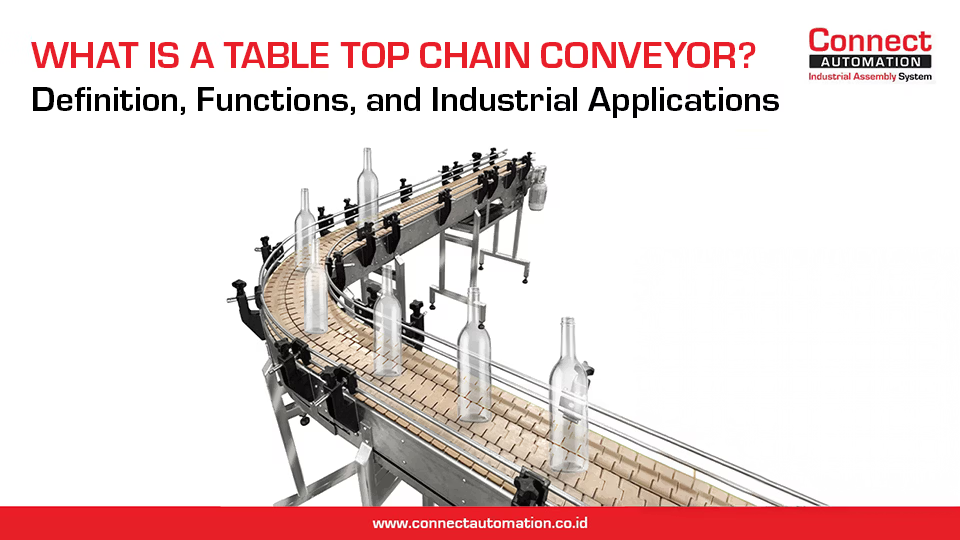
In modern production systems, speed and product stability are critical factors in maintaining operational efficiency. One of the most widely used conveyor systems for this purpose is the table top chain conveyor. This type of conveyor is specifically designed to transport products in a stable and controlled manner, especially standing products such as bottles, cans, and lightweight packaging.
Unlike conventional belt conveyors, a table top chain conveyor uses flat top chains with a rigid and precise surface structure. This makes it highly suitable for industries such as beverage, food processing, pharmaceuticals, cosmetics, and packaging lines.
This article provides a complete overview of its definition, working principle, functions, advantages, and industrial applications.
Definition of a Table Top Chain Conveyor
A table top chain conveyor is a conveyor system that uses flat top chains as the primary conveying medium to move products continuously from one point to another. The flat and rigid chain surface ensures stable product transfer, particularly for items that must remain upright during movement.
Main Components
A typical table top chain conveyor consists of:
- Flat top chain (plastic or stainless steel)
- Sprockets
- Conveyor frame (stainless steel or mild steel)
- Motor and gearbox
- Side guides / guide rails
- Support legs and structural frame
These components work together to create a reliable and durable product transfer system.
How a Table Top Chain Conveyor Works
The working principle is straightforward yet efficient. An electric motor drives a gearbox, which rotates the sprocket. The sprocket then pulls the flat top chain, allowing it to move continuously along the conveyor path. Products placed on the chain surface move together with the chain toward the next production stage. Key operational characteristics include:
- Smooth and stable movement
- Continuous flow operation
- Capability for straight and curved layouts
- Minimal product vibration
Because the system can be designed with horizontal curves, it is highly adaptable to complex factory layouts or limited production spaces.
Functions of a Table Top Chain Conveyor in Industry
In industrial applications, this conveyor system serves several important functions:
1. Product Transfer Between Machines
Connects filling, capping, labeling, and packaging machines efficiently.
2. Upright Product Handling
Ideal for transporting:
- PET bottles
- Glass bottles
- Beverage cans
- Plastic cups
- Cosmetic containers
3. Buffer and Accumulation Line
Can temporarily store products before entering the next processing stage.
4. Maintaining Product Stability
The rigid flat chain surface reduces the risk of tipping or misalignment.
Advantages Compared to Other Conveyor Types
Compared to standard belt conveyors, table top chain conveyors offer several advantages:
- Better stability for standing products
- Reduced slippage
- Higher transfer precision
- Ability to handle curved paths
- Easier maintenance
- Longer service life
For bottle and lightweight packaging applications, this system is generally more recommended than conventional belt conveyors.
Industrial Applications
Table top chain conveyors are widely used across various industries:
- Beverage Industry Used in bottled water, soft drink, juice, and canned beverage production lines.
- Food Industry Suitable for cup packaging, sauce bottles, and lightweight packaged products.
- Pharmaceutical Industry Commonly used for transporting medicine bottles and sterile packaging.
- Cosmetic Industry Ideal for lotion bottles, perfumes, and personal care products.
- Packaging Lines Connects wrapping, labeling, and cartoning machines.
Its flexible design allows customization based on production capacity and plant layout.
Common Specifications and Chain Materials
Typical specifications include:
- Chain width: 82.5 mm, 114.3 mm, and other sizes
- Chain materials: Plastic (POM / acetal) & Stainless steel
- Adjustable working speed
- Designed for light to medium load capacity
Material selection depends on product type, working environment, hygiene requirements, and production capacity.
When Should You Use a Table Top Chain Conveyor?
This system is highly recommended when:
- Products are transported in an upright position
- Curved conveyor paths are required
- Production space is limited
- Continuous and stable product flow is necessary
- The production line is integrated with automation systems
If your production line involves continuous transfer of bottles or lightweight packaging, a table top chain conveyor can significantly improve operational efficiency and product stability.
Conclusion
A table top chain conveyor is a highly efficient and stable conveyor system designed specifically for upright product transfer. Its flexible design, durability, and ability to handle curves make it a preferred solution in industries such as food and beverage, pharmaceuticals, cosmetics, and packaging. Selecting the right conveyor system directly impacts production efficiency, reduces downtime, and ensures a smooth workflow across your manufacturing line.
Connect Automation specializes in providing automation solutions, including conveyor systems, to improve efficiency across various industries. The company delivers cutting-edge technology to help organizations automate tasks and optimize workflows. Connect Automation helps businesses reduce manual efforts, boost productivity, and achieve better outcomes. With a customer-focused approach, the company designs tailored solutions to ensure smooth and effective automation transitions for long-term success.
Kawasan Industri Jababeka Tahap 1, Jl. Jababeka II D Blok C14L Cikarang, Indonesia (17530)
(021) 893 5060 Google Maps
Rungkut Industri III, No. 37, Rungkut Menanggal, Kec. Gn. Anyar Surabaya, Indonesia (60293)
(031) 9985 8624 Google Maps