
REQUEST A FREE ESTIMATE!
Sensors and Safety Interlocks the Building Process Stability
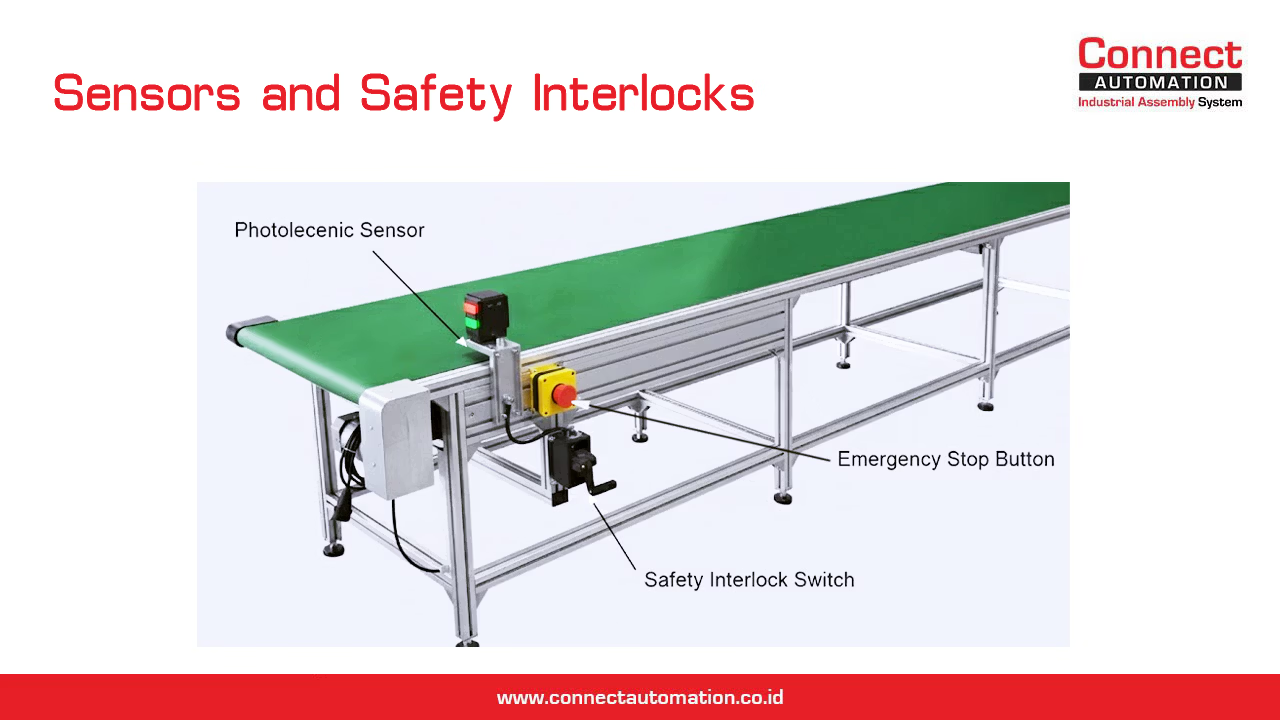
Sensors and Safety Interlocks: Building Process Stability Before Automation
Automation often fails not because of technology limitations, but because basic process discipline is missing. Before robotics, advanced PLC logic, or system integration can succeed, a production line must first be predictable, safe, and stable. This is where sensors and safety interlocks play a critical role. In conveyor-based systems especially, sensors and interlocks are not optional accessories. They are fundamental building blocks that help manufacturers earn the right to automate.
Why Sensors and Safety Interlocks Matter in Conveyor Systems
Conveyors are designed to move products continuously and consistently. However, without proper sensing and safety control, conveyors can easily become a source of:
- product jams
- collisions and damage
- unsafe operator interactions
- uncontrolled stops and restarts
Sensors and safety interlocks provide visibility and control, ensuring that the conveyor behaves in a predictable and safe manner.
Sensors: Turning Movement into Information
At their core, sensors convert physical events into usable signals. In conveyor applications, sensors are commonly used to detect:
- product presence
- position and spacing
- direction of movement
- accumulation and blockage
- speed and timing
This information allows the system to react logically, rather than blindly running.
Common Sensor Applications on Conveyors
1) Product Presence and Position Detection
Photoelectric or proximity sensors are widely used to:
- confirm product arrival
- stop products at precise locations
- trigger downstream actions
Without reliable detection, even the most advanced automation will struggle to function correctly.
2) Jam and Blockage Detection
Undetected jams are one of the biggest risks in conveyor systems. Sensors can:
- detect abnormal accumulation
- stop the conveyor before damage occurs
- prevent motor overload and belt wear
This not only protects equipment, but also improves uptime.
3) Flow and Spacing Control
Consistent product spacing is essential for:
- packaging machines
- inspection systems
- robotic pick-and-place
Sensors ensure that conveyors deliver products in a controlled and repeatable flow.
Safety Interlocks: Protecting People and Equipment
While sensors provide information, safety interlocks ensure protection. Safety interlocks are designed to:
- stop motion when guards are opened
- prevent unexpected start-up
- isolate hazardous zones
- enforce safe operating conditions
In conveyor systems, safety is inseparable from productivity.
Typical Safety Interlock Applications on Conveyors
1) Emergency Stop Systems
Emergency stop buttons placed along conveyor lines allow operators to:
- immediately stop motion
- prevent accidents
- respond quickly to abnormal conditions
Proper E-stop design ensures that stopping is fast, reliable, and controlled.
2) Guarding and Access Interlocks
Interlocked guards and covers prevent access to:
- moving belts
- rotating rollers
- transfer points
When a guard is opened, the system must respond automatically—without relying on human discipline alone.
3) Zone Safety and Segmentation
In larger conveyor systems, safety zones allow:
- localised stopping
- safer maintenance activities
- reduced downtime
This segmentation supports both safety and operational efficiency.
Sensors, Safety, and the “Earn the Right to Automate” Principle
One of the biggest automation mistakes is adding complexity to an unstable process. Sensors and safety interlocks help:
- eliminate unknown conditions
- reduce operator dependency
- standardise responses to problems
- reveal true process bottlenecks
Only when these basics are in place does higher-level automation become effective. In this sense, sensors and safety interlocks are not a cost, but an investment in automation readiness.
Integration with PLC and Control Systems
Sensors and safety interlocks are most effective when integrated with:
- PLC logic
- safety relays or safety PLCs
- alarms and status indicators
alarms and status indicators
- controlled stopping and restarting
- fault diagnostics
- consistent operating sequences
For conveyor systems, this integration ensures that material flow and safety logic work together—not against each other.
Designing Sensors and Safety into Conveyor Systems
At Connect Automation, sensors and safety interlocks are not added as an afterthought. Our design approach includes:
- understanding product characteristics
- analysing operator interaction points
- identifying potential hazards and failure modes
- selecting appropriate sensor and safety technologies
- ensuring compatibility with control systems
The goal is always the same: safe, stable, and predictable operation.
Conclusion
Sensors and safety interlocks are the foundation of reliable conveyor automation. They:
- stabilise material flow
- protect operators and equipment
- provide essential process visibility
- support future automation
By addressing safety and sensing early, manufacturers earn the right to automate—with confidence, clarity, and long-term reliability.
Connect Automation specializes in providing automation solutions, including conveyor systems, to improve efficiency across various industries. The company delivers cutting-edge technology to help organizations automate tasks and optimize workflows. Connect Automation helps businesses reduce manual efforts, boost productivity, and achieve better outcomes. With a customer-focused approach, the company designs tailored solutions to ensure smooth and effective automation transitions for long-term success.
Kawasan Industri Jababeka Tahap 1, Jl. Jababeka II D Blok C14L Cikarang, Indonesia (17530)
(021) 893 5060 Google Maps
Rungkut Industri III, No. 37, Rungkut Menanggal, Kec. Gn. Anyar Surabaya, Indonesia (60293)
(031) 9985 8624 Google Maps