
REQUEST A FREE ESTIMATE!
Lessons from the causes of school food poisoning cases
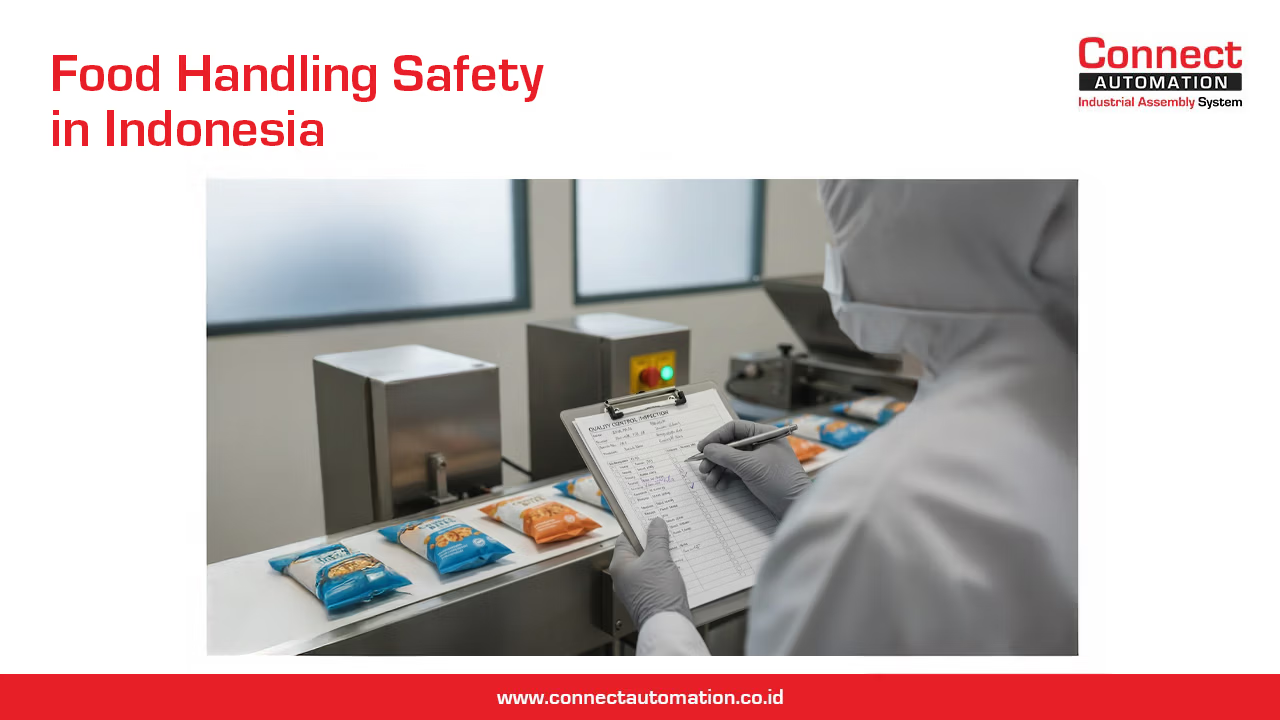
Food Safe Handling in Indonesia: Lessons from School Food Poisoning Cases and the Role of Process Design
Food safety in Indonesia has evolved from a purely operational concern into an issue of national urgency. In recent years, multiple cases of mass food poisoning in schools have affected hundreds, and in some instances thousands, of students. These incidents demonstrate how small failures in hygiene, sanitation, and process control can rapidly escalate into serious public health crises. In many cases, the root cause is not the food ingredients themselves, but how food is handled, stored, transferred, and served. This reality underscores the importance of proper food-safe handling practices, particularly for school canteens, catering services, central kitchens, and large-scale food production facilities.
Why Do School Food Poisoning Incidents Keep Happening?
Most school-related food poisoning cases follow a similar pattern. Food is prepared in large batches, often well in advance, packaged, and then distributed to multiple locations before consumption. Each stage of this process introduces potential risk. Common issues include:
- Inconsistent personal hygiene among food handlers
- Poor temperature control during storage and distribution
- Excessive manual handling during product transfer
- Inadequate cleaning and sanitation of equipment and work areas
- Lack of process documentation and monitoring
As production volume increases, these risks multiply and become systemic rather than isolated.
BPOM Regulations and the Food Safety Framework in Indonesia
Indonesia’s food safety system is overseen by the National Agency of Drug and Food Control (BPOM). A key regulatory foundation is Good Manufacturing Practices for Processed Food (CPPOB), which emphasizes that food safety must be built into the system, not inspected only at the final stage. The CPPOB framework highlights:
- Hygiene and sanitation control
- Process flow management
- Prevention of cross-contamination
- Consistent documentation and record keeping
- Internal audits and corrective–preventive actions
In practice, compliance with CPPOB requires food businesses to pay close attention to process design, not only human behavior.
Personal Hygiene: The First Line of Defense
This is where many food facilities begin to struggle. Manual product transfer increases dependence on human consistency and significantly raises the risk of:
- Cross-contamination
- Process delays and time variation
- Repeated direct contact with food
Modern food safety approaches recognize process flow design as an essential risk control measure. Structured, well-defined production flows help maintain consistency and reduce unnecessary handling—especially in high-volume operations. Within this context, systems such as conveyor food grade solutions become relevant. When designed specifically for food applications, these systems help maintain controlled product movement, reduce direct human contact, and support hygiene and sanitation requirements along a continuous production line.
Cleaning and Sanitation: Not the Same Thing
A common misconception in food facilities is treating cleaning and sanitizing as the same activity.
- Cleaning removes visible dirt, grease, and food residues.
- Sanitizing reduces microorganisms to safe levels using appropriate methods and chemicals.
Equipment and production systems, including product transfer systems, must be designed to be easy to clean and sanitize. Poorly designed surfaces, dead corners, or inaccessible areas can become hidden contamination sources—even when they appear visually clean.
Work Clothing and the Production Environment
Work clothing and protective equipment are part of the food safety control system, not mere uniforms. Uncovered hair, contaminated aprons, or personal accessories can act as contamination vectors. A well-organized production environment—with clear separation between raw and cooked areas and a logical process flow—plays a crucial role in preventing cross-contamination, particularly in continuous or high-throughput operations.
Documentation: Proof That the System Works
In food safety management, what is not documented is considered not done. Documentation is not simply an administrative requirement; it is a core risk management tool. Effective records allow businesses to:
- Monitor process consistency
- Detect deviations early
- Trace issues during incidents
- Demonstrate compliance with BPOM requirements
Without proper documentation, food safety systems cannot be objectively evaluated or improved.
From Compliance to Food Safety Culture
School food poisoning incidents serve as a reminder that food safety cannot rely on isolated controls. It requires an integrated approach that combines people, processes, equipment, and systems. A food safety culture develops when:
- Processes are designed to minimize risk
- Equipment supports hygienic operation
- Procedures are followed consistently
- Documentation is used for continuous improvement
Conclusion
Food-safe handling in Indonesia demands more than regulatory compliance alone. While BPOM regulations and CPPOB provide a clear framework, their effectiveness depends on how production systems are designed and implemented on the ground. By combining disciplined personal hygiene, proper cleaning and sanitation, consistent documentation, and well-designed production flows—including the appropriate use of conveyor food grade systems—food businesses can significantly reduce contamination risks and maintain public trust.
Connect Automation specializes in providing automation solutions, including conveyor systems, to improve efficiency across various industries. The company delivers cutting-edge technology to help organizations automate tasks and optimize workflows. Connect Automation helps businesses reduce manual efforts, boost productivity, and achieve better outcomes. With a customer-focused approach, the company designs tailored solutions to ensure smooth and effective automation transitions for long-term success.
Kawasan Industri Jababeka Tahap 1, Jl. Jababeka II D Blok C14L Cikarang, Indonesia (17530)
(021) 893 5060 Google Maps
Rungkut Industri III, No. 37, Rungkut Menanggal, Kec. Gn. Anyar Surabaya, Indonesia (60293)
(031) 9985 8624 Google Maps