REQUEST A FREE ESTIMATE!
Food Grade Conveyors Under CPPOB BPOM Standards
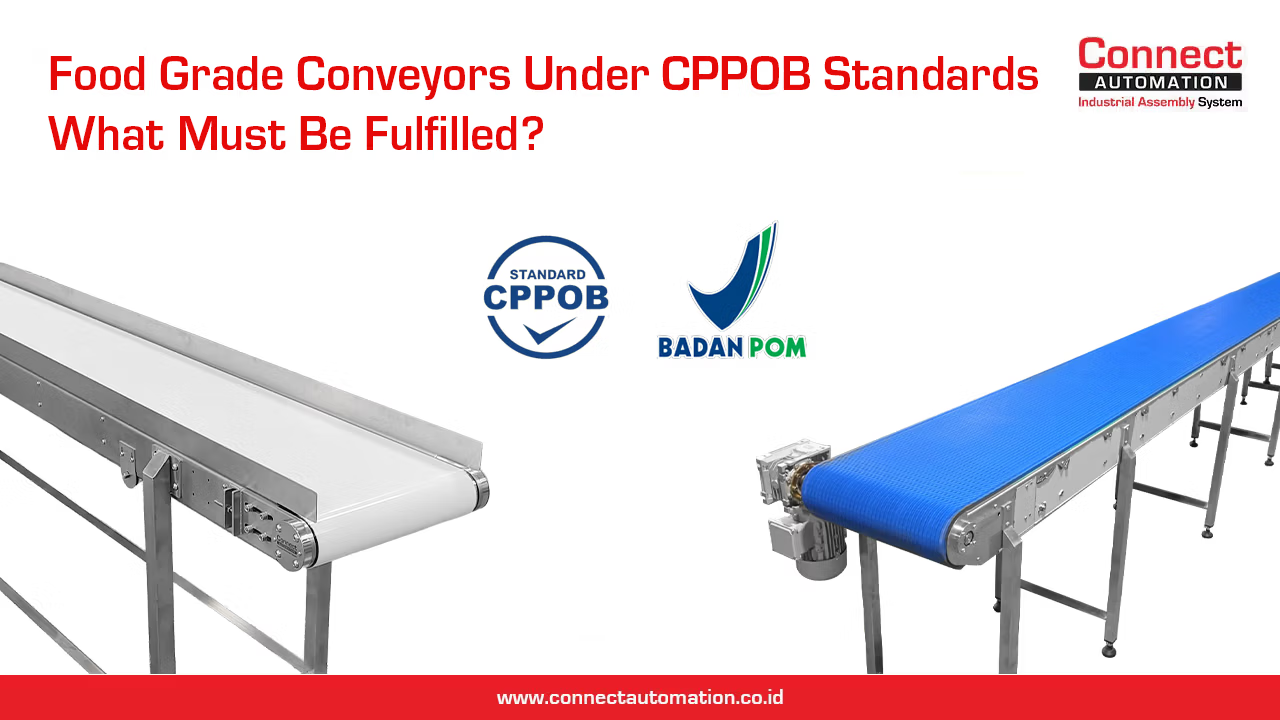
In the food and beverage industry, food safety is not determined only by raw materials or cooking processes. It is also strongly influenced by the equipment used throughout production. One of the most critical pieces of equipment is the conveyor system, because it often comes into direct contact with food products as they move along the processing line.
That is why the use of a food grade conveyor is essential under CPPOB principles, ensuring hygienic production, audit readiness, and minimal contamination risk. This article focuses specifically on one key question:
What requirements must a food grade conveyor meet to comply with good food production standards?
1. Conveyor Materials Must Be Safe for Food Contact
The most fundamental requirement of a food grade conveyor is the selection of appropriate materials. Food conveyors must be made from materials that:
- resist rust and corrosion
- do not react chemically with food products
- do not release harmful residues
- are suitable for food-contact surfaces
Common materials used in food applications include stainless steel frames and modular belts designed specifically for hygienic processing. Material selection is critical because conveyors operate continuously and directly affect product safety.
2. Conveyor Design Must Support Hygiene
Beyond materials, CPPOB emphasizes that equipment must be designed to support hygienic production. A conveyor system that follows hygienic design principles typically includes:
Poor conveyor design can lead to product buildup, which becomes a breeding ground for microorganisms.
3. Conveyors Must Be Easy to Clean and Sanitize
In food manufacturing, cleaning is not optional — it is part of the food safety system. A proper food grade conveyor should allow:
- fast daily cleaning procedures
- easy access to belts, rollers, and frames
- sanitation without requiring full dismantling
- ing to prevent moisture retention
Conveyors that are difficult to clean increase contamination risk, especially in wet, oily, or sticky food production environments.
4. Preventing Cross-Contamination at Transfer Points
Conveyors often operate at critical transfer stages between processes. If not properly managed, conveyors can become pathways for cross-contamination, such as:
- cooked products passing through areas exposed to raw ingredients
- belts not cleaned between production batches
- food residues trapped in conveyor gaps
5. Conveyors Must Support Standard Operating Procedures (SOPs)
Food production equipment must work in alignment with hygiene SOPs. A well-designed conveyor system should enable:
- fast daily cleaning procedures
- easy access to belts, rollers, and frames
- sanitation without requiring full dismantling
- effective drying to prevent moisture retention
Conveyors that are difficult to clean increase contamination risk, especially in wet, oily, or sticky food production environments.
4. Preventing Cross-Contamination at Transfer Points
Conveyors often operate at critical transfer stages between processes. If not properly managed, conveyors can become pathways for cross-contamination, such as:
- cooked products passing through areas exposed to raw ingredients
- belts not cleaned between production batches
- food residues trapped in conveyor gaps
For this reason, food grade conveyors must support clear process zoning and hygienic product flow.
5. Conveyors Must Support Standard Operating Procedures (SOPs)
Food production equipment must work in alignment with hygiene SOPs. A well-designed conveyor system should enable:
- consistent cleaning schedules
- routine visual inspections
- quick belt or component replacement
- proper sanitation documentation
In this context, conveyors are not just mechanical tools — they are part of the operational food safety system.
6. Conveyor Components Must Not Introduce Contamination Risks
Food grade conveyor requirements also include technical mechanical aspects, such as:
- lubricants must be food grade where applicable
- moving parts should not drip or leak onto products
- protective covers may be required in certain zones
- the structure must prevent metal fragments or particles from detaching
Even small mechanical issues can become major findings during hygiene audits.
7. Cleaning and Maintenance Documentation Is Part of the Standard
Under CPPOB principles, equipment control must be supported with proper documentation. Food grade conveyor systems should be included in records such as:
- daily cleaning logs
- preventive maintenance schedules
- belt and frame inspection reports
- component replacement history
Documentation ensures that conveyors remain consistently safe and production-ready.
Conclusion
Under CPPOB standards, conveyors are not merely tools for transporting products. They are a vital part of the overall food safety system. To meet food grade requirements, conveyors must fulfill key criteria such as:
- safe food-contact materials
- hygienic and cleanable design
- prevention of cross-contamination
- support for sanitation SOPs and inspections
- clear maintenance and cleaning documentation
By implementing conveyor systems that meet these standards, food manufacturers can improve efficiency while maintaining hygiene, product quality, and audit readiness.
Connect Automation specializes in providing automation solutions, including conveyor systems, to improve efficiency across various industries. The company delivers cutting-edge technology to help organizations automate tasks and optimize workflows. Connect Automation helps businesses reduce manual efforts, boost productivity, and achieve better outcomes. With a customer-focused approach, the company designs tailored solutions to ensure smooth and effective automation transitions for long-term success.
Kawasan Industri Jababeka Tahap 1, Jl. Jababeka II D Blok C14L Cikarang, Indonesia (17530)
(021) 893 5060 Google Maps
Rungkut Industri III, No. 37, Rungkut Menanggal, Kec. Gn. Anyar Surabaya, Indonesia (60293)
(031) 9985 8624 Google Maps