
REQUEST A FREE ESTIMATE!
Difference Between Timing Belt and Timing Chain on Conveyors
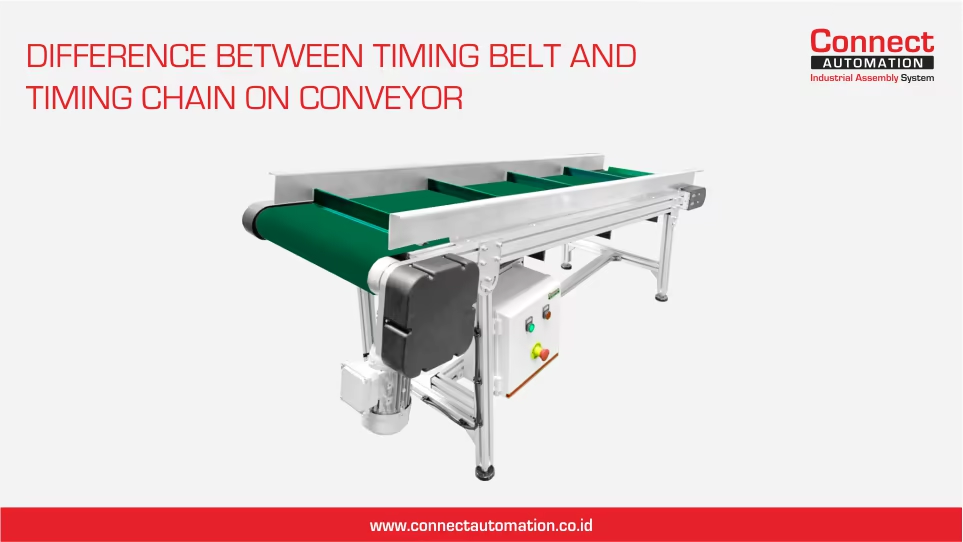
The use of timing belts and timing chains are two different types of mechanisms used in industrial applications for the purpose of transferring power and controlling the movement of materials. In terms of material, the resulting work performance is also different. Although both have similar functions, there are marked differences between them in terms of design, benefits, and usage. It is very important for you to know the differences, uses and advantages of each timing belt and timing chain on conveyors.
Timing Belt
The timing belt is one of the components in the conveyor driving machine. This component functions to maintain engine performance by synchronizing the rotation of the crankshaft and linkage shaft so that the engine valve can open and close at the specified time. The belt is equipped with teeth that mesh with the pulley to provide precise motion control. Timing belt conveyors are widely used in industries that require precise positioning and smooth operation, such as packaging, food processing and pharmaceuticals.
Timing Belt Materials
The material used to make timing belts is rubber with hard teeth so that it can mesh with the camshaft and crankshaft gears. This can allow the engine valves to open and close properly. Apart from that, the timing belt also plays an important role in preventing the piston from hitting the valve in an engine that is experiencing problems. There are two main components in a timing belt. First, a formed cable is inside which functions to carry the torque load. Second, the plastic compound used to shape the teeth and cover the wires themselves. Apart from these two components, there are other components, namely the timing belt strap which is made of fiberglass, polyester or Kevlar.
Advantages of Timing Belts
The advantages of using a timing belt include quiet operation, minimal vibration, and the ability to deliver precise and accurate motion. In addition, timing belts require relatively low maintenance, maintain a constant speed ratio, are resistant to slipping, and offer good resistance to abrasion, corrosion, chemicals, and contaminants. This system is also more energy-efficient and cost-effective in terms of operational expenses.
However, timing belts also have some limitations, such as relatively high replacement costs and lower power capacity, which makes them more suitable for applications with shorter distances and lighter loads.
Timing Chain
A timing chain is a mechanical component in the form of a metal chain that is used as a transmission system to transfer power and maintain synchronized movement in machinery or conveyor systems. In industrial conveyor applications, the timing chain acts as a connector between the drive motor and other conveyor components so that the movement remains stable and controlled.
The term chain belt is also commonly used in industrial applications, although it does not always have the same meaning as a timing chain. In some conveyor systems, a chain belt may refer to a conveyor that uses chains as the product-carrying medium or as part of the conveying mechanism itself. A timing chain, on the other hand, specifically functions as a power transmission component that ensures synchronized movement between different conveyor components.
Unlike timing belts, a timing chain in a conveyor system uses a metal chain driven by a motor through a sprocket system. Because it is made of steel or alloy metal, a timing chain has a more robust construction and is specifically designed to handle heavier loads.
Functionally, a timing chain serves as a power transmission and synchronized drive system within the conveyor. However, its characteristics differ from a timing belt, particularly in terms of material composition, strength, and resistance to high loads.
In many industrial conveyor systems, a timing chain is commonly used when the system requires higher strength and the ability to handle heavy loads consistently.
Advantages of a Timing Chain Conveyor:
- Capable of transporting heavy materials in a stable manner
- High durability for long-term operation
- Suitable for heavy industrial applications and harsh working environments
- Strong power transmission capability over longer distances
Advantages of Timing Chain
The advantage of using a timing chain conveyor lies in its ability to handle heavy loads without compromising accuracy or reliability. Its sturdy construction ensures long life even in harsh conditions. Additionally, the design allows for easy maintenance and replacement when necessary. On the other hand, the advantage of using a timing belt conveyor lies in its quieter operation due to reduced vibration compared to a chain conveyor. It also offers excellent positioning accuracy while maintaining flexibility for a wide range of applications. In short, timing chain conveyors and timing belt conveyors play an important role in industrial environments by providing reliable motion control solutions. The choice between the two depends on specific application requirements such as load capacity, precision requirements and environmental conditions. Understanding the benefits, advantages and proper use of each type can help businesses optimize material handling processes effectively.
Timing Belt and Timing Chain Conclusion
The use of timing belts and timing chains for conveyor components has different characteristics in terms of material and work performance. Both of them have no particular features that can differentiate which one is the best, it all comes down to your needs.
If you have questions regarding timing belts and timing chains on conveyors, please come and consult with us, FREE!!
Connect Automation specializes in providing automation solutions, including conveyor systems, to improve efficiency across various industries. The company delivers cutting-edge technology to help organizations automate tasks and optimize workflows. Connect Automation helps businesses reduce manual efforts, boost productivity, and achieve better outcomes. With a customer-focused approach, the company designs tailored solutions to ensure smooth and effective automation transitions for long-term success.
Kawasan Industri Jababeka Tahap 1, Jl. Jababeka II D Blok C14L Cikarang, Indonesia (17530)
(021) 893 5060 Google Maps
Rungkut Industri III, No. 37, Rungkut Menanggal, Kec. Gn. Anyar Surabaya, Indonesia (60293)
(031) 9985 8624 Google Maps